The Vanguard 100: MENA’s Architects of Tech, AI and Innovation – Samsung’s Omar Saheb
Omar Saheb
Vice President Marketing & Online Business
Samsung MENA CMO
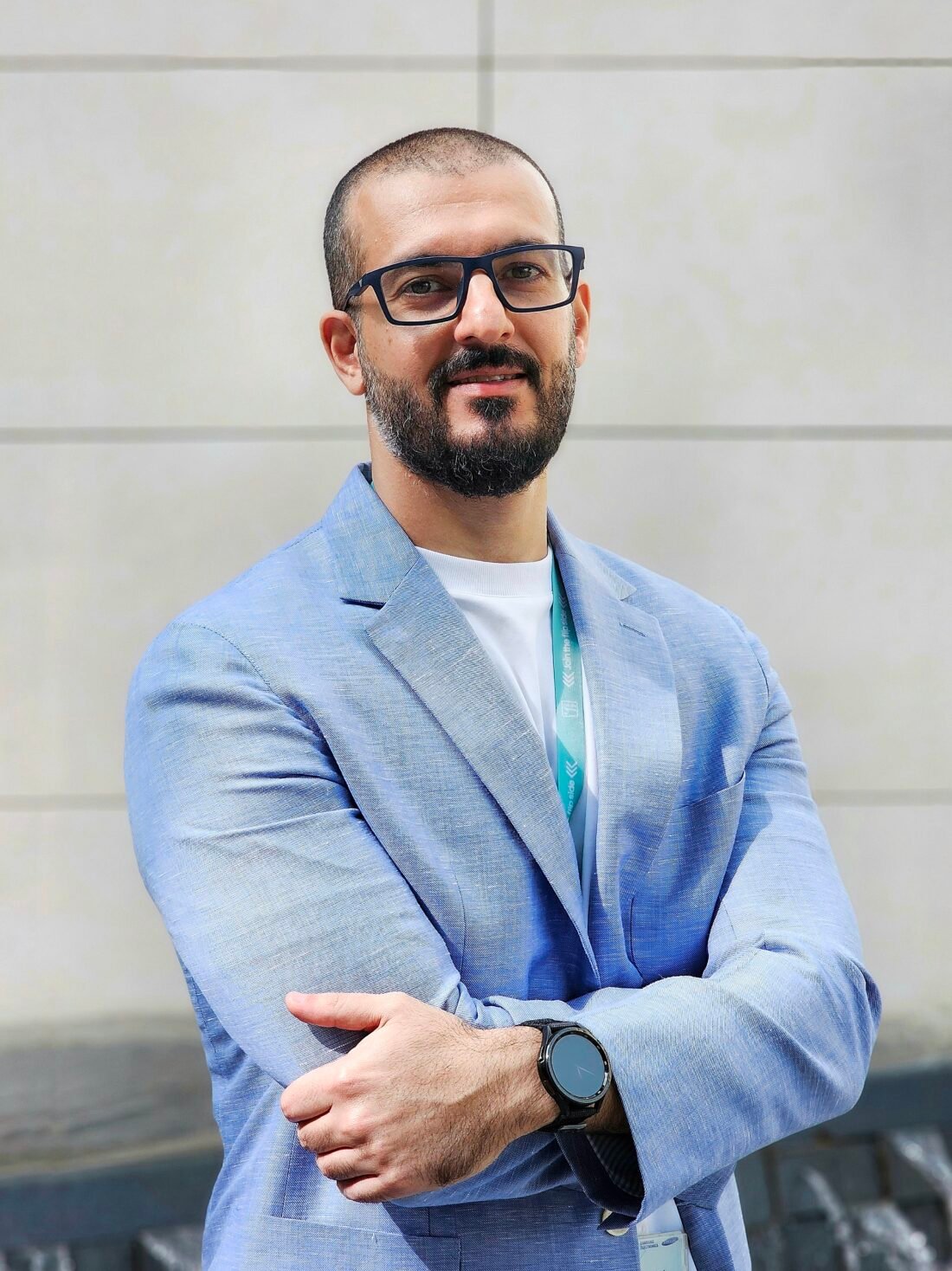
We asked Omar Saheb how a brand markets AI that consumers already hold in their hands, why the best AI marketing shows what life feels like rather than what the features do, and why AI is set to become the invisible layer across everything we use.
BB: Samsung is one of the few brands where AI isn’t a marketing narrative, it’s already in the hands of millions of consumers here. How does that change the way you approach marketing AI, compared with brands still trying to explain what AI even means?
OS: The biggest shift for us is moving from explaining AI to letting people experience it.
AI can quickly become a list of features and technical terms that mean very little until they solve something for you. So our approach is simple: make AI useful, intuitive and relevant to everyday life.
That is the thinking behind our vision of AI Companion to AI Living. Galaxy AI on mobile, AI experiences across our TVs and intelligence built into our home appliances are all designed to work naturally around people and their daily routines.
So rather than marketing the technology itself, we focus on the moments where it makes a real difference. Live Translate helping you communicate in another language, AI making something you do every day simpler, or connected devices understanding what you need.
For me, that is when AI becomes meaningful. Not when consumers understand how technology works, but when they experience something useful and wonder how they ever lived without it.
BB: What’s one campaign or initiative from the past year you’d point to as evidence of where AI driven consumer marketing at Samsung MENA is actually heading?
OS: ’d point to our Ramadan campaign this year because it really brought our AI Living vision to life.
Ramadan is one of the most meaningful moments in our region, but also one of the busiest. Instead of focusing on individual AI features, we showed how Galaxy AI, SmartThings and our connected ecosystem can make everyday life a little easier, whether that is managing work and family, planning meals, staying connected or simply creating more time for the people who matter.
For me, that is where AI driven marketing is heading. Less about telling consumers what AI can do, and more about showing them what life with AI can feel like.
Ultimately, the best measure of success is not whether people remember the name of an AI feature. It is whether they experience the value, adopt it and start wondering how they managed without it.
BB: Where do you see the biggest gap between how AI enabled devices are discussed publicly and how consumers across the region are actually using the AI features already on their phones?
OS: I think the biggest gap is between what gets talked about and what actually gets used.
Public conversation around AI still tends to focus on benchmarks, model capabilities and who has the most advanced technology. But consumers are much more practical. They care about whether AI makes something they already do faster, easier or simply better.
In our region, that can be switching naturally between Arabic and English, translating a conversation in real time, editing a photo in seconds, summarising information or, increasingly, using agentic AI to complete tasks across different apps.
And that is actually a good thing. People don’t need to think, “I’m using AI.” They just need to feel that their phone understands them better and helps them get things done.
For me, that is when AI really wins: when we stop talking about the technology and start talking about the time, effort and friction it removes from people’s lives.
BB: What’s a lesson from marketing AI at this scale, across such a diverse set of MENA markets, that you think other consumer brands underestimate?
OS: The biggest lesson is that MENA is a region, not a single market.
We sometimes talk about localisation as translating an English campaign into Arabic. But the reality is much more complex. Arabic itself differs across markets, North Africa has strong French speaking audiences, the Gulf has incredibly diverse expatriate communities, and consumer behaviours, cultural references and expectations can change significantly from one country to another.
With AI, this becomes even more important because the technology is personal by nature. It needs to understand your language, your context and increasingly how you live.
So for us, the principle is to have one strong global vision, but make it locally meaningful. The technology can be consistent, but the way we bring it to life cannot always be the same.
I think brands sometimes underestimate that. Localisation is not the last step of marketing in MENA. It has to be part of the strategy from the beginning.
BB: Looking at MENA’s technology and innovation sector as a whole, what’s the shift you expect to matter most over the next two to three years?
OS: The biggest shift will be from AI as a feature to AI becoming the invisible layer across everything we use.
Today, we still talk about AI features individually. Over the next few years, I think consumers will simply expect intelligence to be built into every experience, across their phone, TV, appliances, wearables and eventually new form factors like intelligent eyewear.
That changes the competition as well. It becomes less about who has the longest list of AI features and more about who can create the most useful, connected and trusted ecosystem around the consumer.
For Samsung, that is particularly exciting because of the breadth of devices we already have in people’s lives. The opportunity is to connect those experiences so AI understands your context and helps you throughout your day, often without you having to ask.
In two or three years, I don’t think we will talk nearly as much about “using AI.” We will simply expect our technology to understand us, anticipate what we need and make life easier. The brands that deliver that naturally and responsibly will be the ones that matter most.