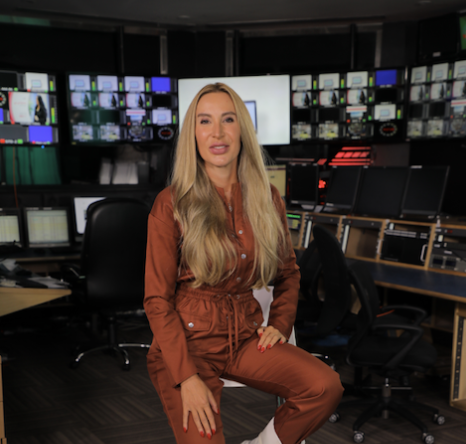
Signals For 2026: TP Connects Technologies’ Namrata Balwani
By: Namrata Balwani: Chief Marketing Officer, TP Connects Technologies

One Defining Shift from 2025
2025 was the year of AI experimentation.
Across marketing teams, 2025 was defined by testing, piloting, and learning. New tools appeared faster than we could keep up. Keeping track of developments across OpenAI, Gemini, Anthropic et al was hard! We experimented with content generation, automation, analytics, and agents, often in silos.
That experimentation was necessary. It helped teams understand what AI could do, where it helped, by genuinely adding speed and scale, and just as importantly, where it didn’t. But it also exposed deeper issues: unclear strategy, fragmented data, misaligned teams, and skills gaps that technology alone cannot solve.
By the end of 2025, many teams realised that AI does not compensate for unclear strategy, weak positioning, fragmented data, or misaligned operating models. It amplifies whatever already exists. Experimentation without direction led to activity, not real advantage.
In the Middle East in particular, where optimism, ambition, and investment remain high, the conversation started to shift. It moved from “Can we use AI?” to “How do we use it at scale, and in a way that actually creates value?”
Narrowing use cases, embedding them deeply into workflows, and investing time in bringing teams along – this is the work that is ongoing. It requires leadership focus, change management, and patience. By the end of 2025, AI stopped feeling like novelty and started feeling like a leadership mandate.
One Grounded Prediction for 2026
2026 will mark the shift toward AI-enabled marketing engines.
A marketing engine will mean moving from isolated use cases to embedded workflows. From speed & experimentation for its own sake to real solutions and impact. AI will no longer sit at the edges of marketing.
In practice, AI-enabled marketing engines won’t be a single system or tool. They will shift AI upstream into planning, decision-making, and customer experience design with usage becoming more connected and embedded into planning, content, customer experience, and insight generation. These systems will continuously learn, adapt, and inform action rather than operate as isolated use cases, increasingly influencing not just how marketing is executed, but how priorities are set.
The next competitive edge will be empathy at scale: using AI not just to predict behaviour, but to understand intent and emotional context, responding with relevance and timing that feels more human. This is where differentiation will be created, especially in complex and culturally nuanced markets like ours.
CMOs who succeed in 2026 will be those who combine technological fluency with human judgement, who embed AI into everyday workflows while protecting the emotional core of the brand.