Signals For 2026: What’s Shaping The Future Of Brands, Media And Technology?
From marketing and media to commerce, creators and AI, industry leaders decode the forces shaping what comes next. A curated view of the shifts, bets and blind spots defining the signals for 2026.
Reading the Signals – A Word From The Editor
Predictions are easy. Signals take attention.
As the industry looks ahead to 2026, the most meaningful insights aren’t coming from trend lists or tidy forecasts. They’re emerging from where pressure is building, where investment is accelerating, and where conversations have gone quiet.
Signals for 2026 is not a balanced inventory of disciplines. It’s an editorial reading of where the industry’s energy is concentrating and what that focus reveals about the year ahead.
Marketing, communications, digital and advertising dominate this conversation, reflecting sectors facing structural change rather than incremental improvement. Questions around performance, trust, creativity, and measurement are no longer theoretical. They’re shaping how organisations operate and grow.
Other areas appear with fewer voices, not because they matter less, but because their evolution is happening more quietly. Loyalty, customer experience, creators, and brand building are being absorbed into broader platforms and operating models. Their relative silence is itself a signal.
Technology and AI cut across everything. No longer a standalone topic, AI is becoming infrastructure influencing how media is bought, creativity is produced, and value is delivered.
Together, these perspectives offer a clear view of the industry’s current state of mind. Some signals are loud. Others are subtle. All point in the same direction: 2026 will reward clarity, adaptability, and intent not familiarity.
Chapter 1: Growth, Performance & the Marketing Engine
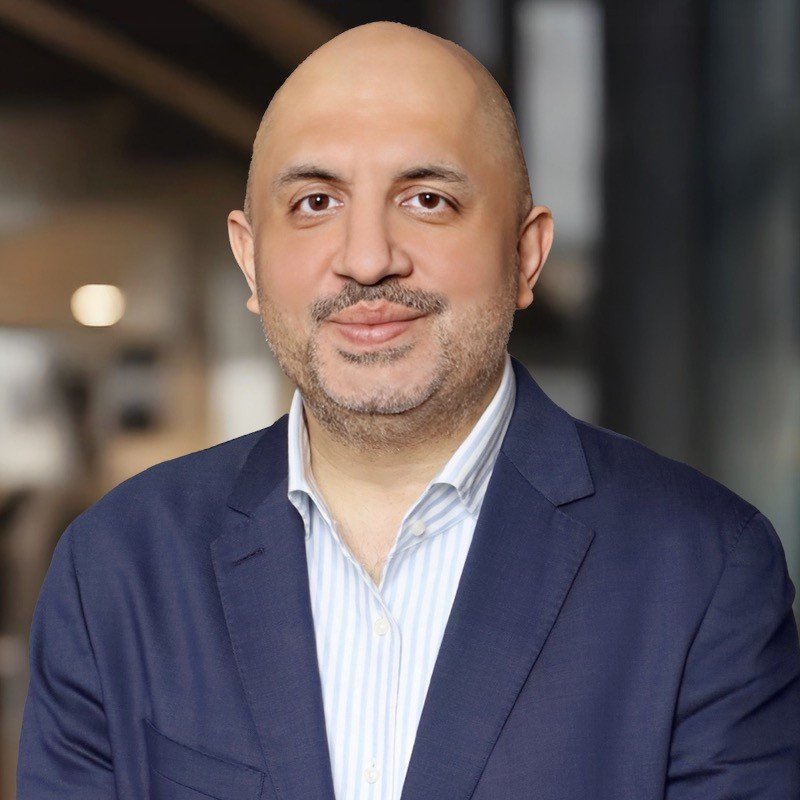
Aamir Allibhoy: General Manager, SRMG Labs
Defining shift from 2025
In 2025, it became more than evident that attention cannot be bought and must be earned through cultural relevance, true value, and a clear point of view. Nowhere was this more evident than in Saudi Arabia, particularly across FMCG and Retail, where the rise of homegrown brands did not just challenge established global players but the status quo itself. By moving beyond surface level localization and trend chasing, staying close to real consumer realities and pain points, and proving that creativity had regained its commercial power, these brands showed that in a crowded, performance driven landscape, bold ideas grounded in genuine value, and not just media efficiency, were the true differentiator, driving deeper trust and disproportionate business impact.
Bold, grounded prediction for 2026
Looking ahead to 2026, I believe brands will be judged less on what they say they stand for and more on who they make things possible for. In Saudi Arabia and the wider GCC, the strongest growth will come from brands that focus on democratizing access, not just aspiration, by opening up categories through inclusion, fair value, and thoughtful design. Global businesses and brands will have to work harder than ever to deliver on this in truly authentic ways. Equality, happiness, and self-worth will move from nice words to real actions, shaping products, pricing, and even content, alongside everyday experiences that ultimately decide which brands people choose to bring into their lives.
Ali Rez :Regional Chief Creative Officer, IMPACT BBDO

2025 made one thing unmistakably clear: despite rapid shifts in platforms, tools, and AI capability, the fundamentals of effective marketing and creativity remain unchanged. What has changed is the speed, scale, and noise surrounding those fundamentals, which makes mastery of them more critical than ever.
At its core, great effective creative work still comes from human ingenuity, insightful storytelling and a deep, empathetic understanding of your audience.
AI didn’t replace these, it exposed them. As AI made content easier, faster, and cheaper to produce, it also flooded the market with even more average work than before. In 2025, brands learned that technology amplifies whatever you bring to it: brilliance or mediocrity.
The answer is in the headline here: being bold. The defining characteristic of successful brands and agencies in 2026 won’t be scale, efficiency, or even innovation alone — it will be boldness with intent. In a world saturated with competent, AI-assisted output, playing it safe will be the riskiest move of all. Being average will no longer cut it.
The true competitive advantage won’t be having access to new tools, it will be knowing what to do with them. Teams that pair AI with sharp strategic thinking, cultural awareness, and emotional intelligence will produce the best kind of work that cuts through. Those that chase novelty without purpose will find it tougher to stand out.
With bold ideas, a bold plan to use AI, and boldly building relationships based on trust, the most successful brands and agencies will be the ones using boldness as a competitive advantage.
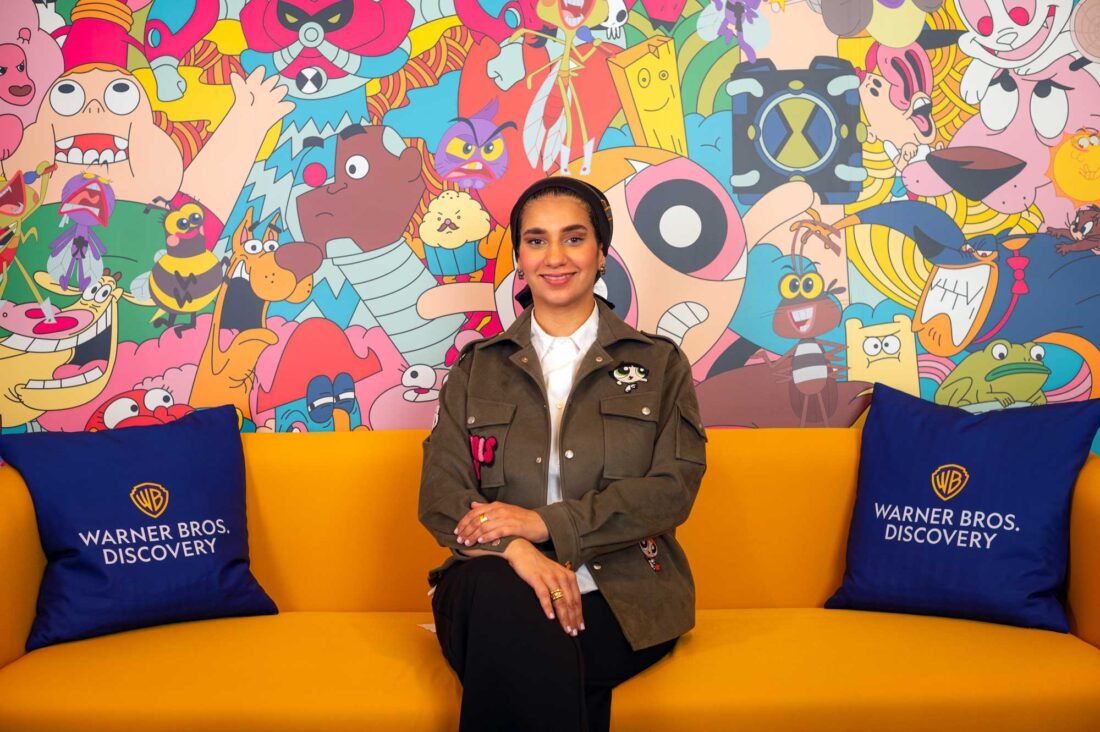
Aya Hammad: PR & Digital Marketing Manager, Warner Bros. Discovery MENA
One defining shift or lesson from 2025
While AI and technology offer powerful tools, they cannot replace the human touch in creating content that truly connects. Our success came from balancing innovation with human creativity, making sure every story we tell is shaped by real talent, intuition, and cultural understanding.
This year also showed the value of being flexible and responsive in a fast-changing media landscape, using strategic thinking, creative storytelling, and deep industry expertise to stay ahead. Making content accessible everywhere and supporting creators in reaching new audiences became more important than ever, and flexible approaches to co-production and distribution helped build stronger partnerships.
Localization proved to be a key part of making global content feel personal and relevant. From high-quality dubbing with cultural nuance to collaborations with local influencers, we learned that authenticity and human insight are what make content truly resonate with audiences.
2026: Predictions for the Region
In 2026, our focus will be on growth and human-led creativity. We aim to deliver content that resonates globally while being locally relevant, expand our distribution and revenue opportunities, and strengthen our networks and teams. Our strategy combines bold storytelling with operational excellence, ensuring we remain agile in a rapidly evolving media landscape.
Our IP and content strategy focuses on building a strong slate anchored in key Discovery Global IP, while developing the next global Chief Narrative Offering. We are greenlighting a strategic portfolio of short-form originals, exploring new genres such as anime to diversify our content, and launching new IPs with global impact and scale. On the operational side, we are committed to ensuring full business readiness to support growth, investing in our people through development and empowerment initiatives, and building a culture that encourages creativity, collaboration, and adaptability.
Dina Maher: Head of Advertising and Partnerships, Breadfast

Defining shift / lesson from 2025
In 2025, the biggest shift was the transition from media buying to business building. Advertising moved beyond impressions to focus on integration, where media, commerce, data, and experience function as a single system. The successful brands were those that embedded advertising directly into the customer journey to drive measurable business outcomes rather than just visibility.
Bold, grounded prediction for 2026
In 2026, e-commerce advertising will evolve from simple placement to experience creation. The most effective advertising will feel like added value within the customer journey rather than a traditional ad. To create differentiated experiences, brands must invest intentionally in advertising depth and partnerships that genuinely benefit the consumer. The strongest growth will emerge from ecosystems where brands, platforms, and partners collaborate to deliver better pricing, convenience, and content.
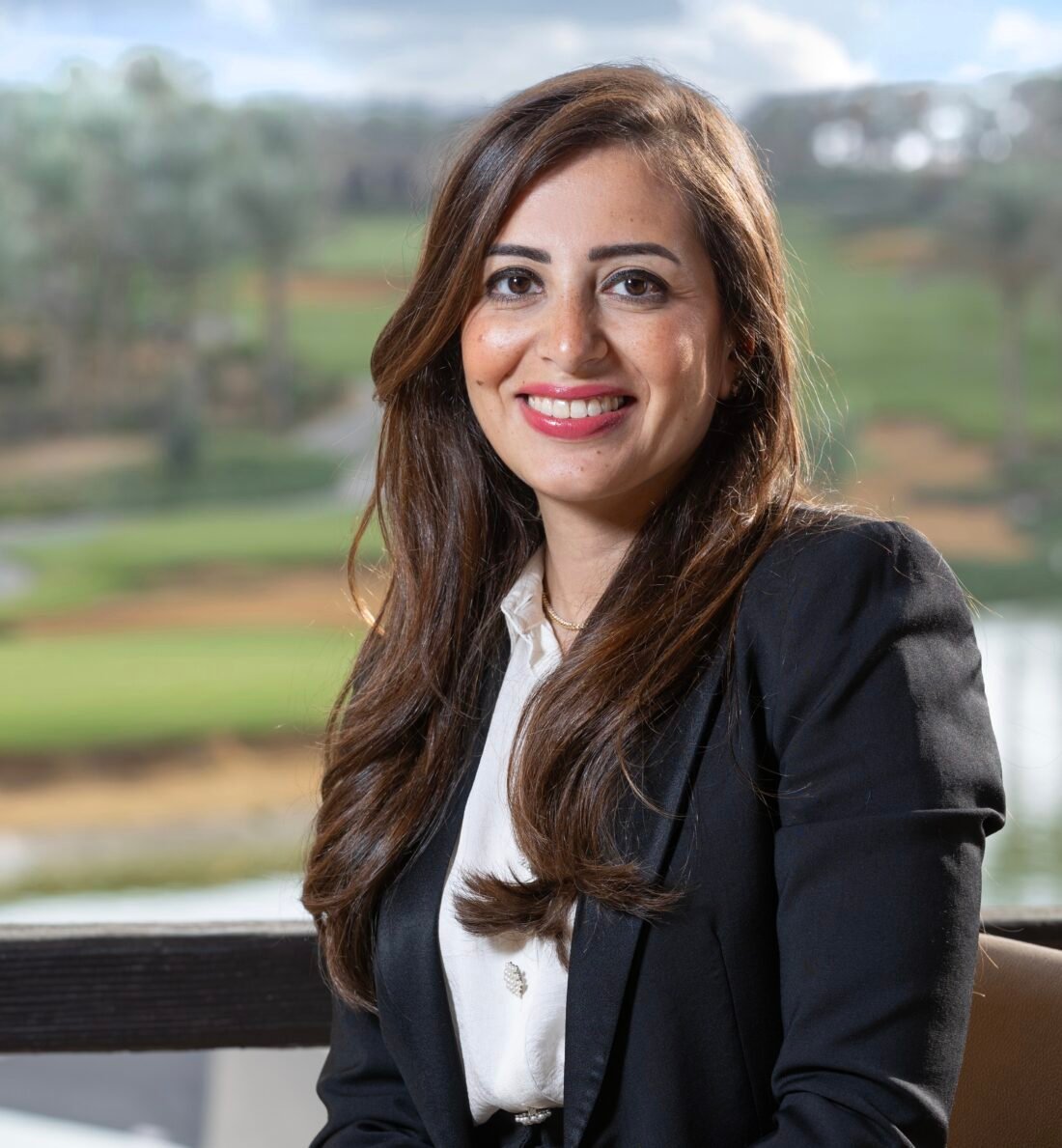
Engy El Maghraby: VP of Marketing, Beyti
Defining Shift from 2025
One of the most defining leadership lessons for me in 2025 was learning how to consciously balance intervention with trust. Leadership is not about constant presence or control; it’s about judgment. Knowing when to step in to protect value, clarity, or strategic direction and when to deliberately step back and allow teams to operate independently.
In 2025, my teams gifted me precious leadership experiences driven by curiosity and courage. I was asked and I asked fundamental questions. We challenged each other to think deeper and sharper and to act 10x bolder.
Leadership is hugely situational. It requires reading the moment, the team’s maturity and then acting accordingly. Allowing teams to fly solo creates space for accountability, confidence, and innovation. Teams grow faster when they are trusted to make decisions, navigate ambiguity, and learn from success and failure. Stepping in, on the other hand, should be purposeful to recalibrate with intention and to protect long term value.
Grounded Prediction for 2026
In 2026, the pace of change will become extreme and unavoidable. AI is already transforming how ideas are created, narratives are shaped, and concepts are developed, producing work at unprecedented speed and quality. This shift will accelerate even further, fundamentally changing how marketers operate.
For marketers, AI will be a powerful weapon, but only for those who learn how to use it strategically. Speed alone will not be enough. As outputs become faster and more abundant, true advantage will come from thinking deeper. The risk with AI is that it exposes weak thinking, shallow insights, and disconnected strategies.
Success in 2026 will require an obsessive level of connectedness between consumer behavior, customer experience, and the business situation. Marketers who win will be those who deeply understand and appreciate the context: what problem truly needs solving, why it matters, and how it connects to growth.
Getting the basics right will become the ultimate differentiator. Understanding the consumer beyond data points, reading signals quickly, and cultivating sharp, meaningful insights will separate leaders from followers. AI will amplify capability, but insight, judgment, and clarity will continue to decide who wins.
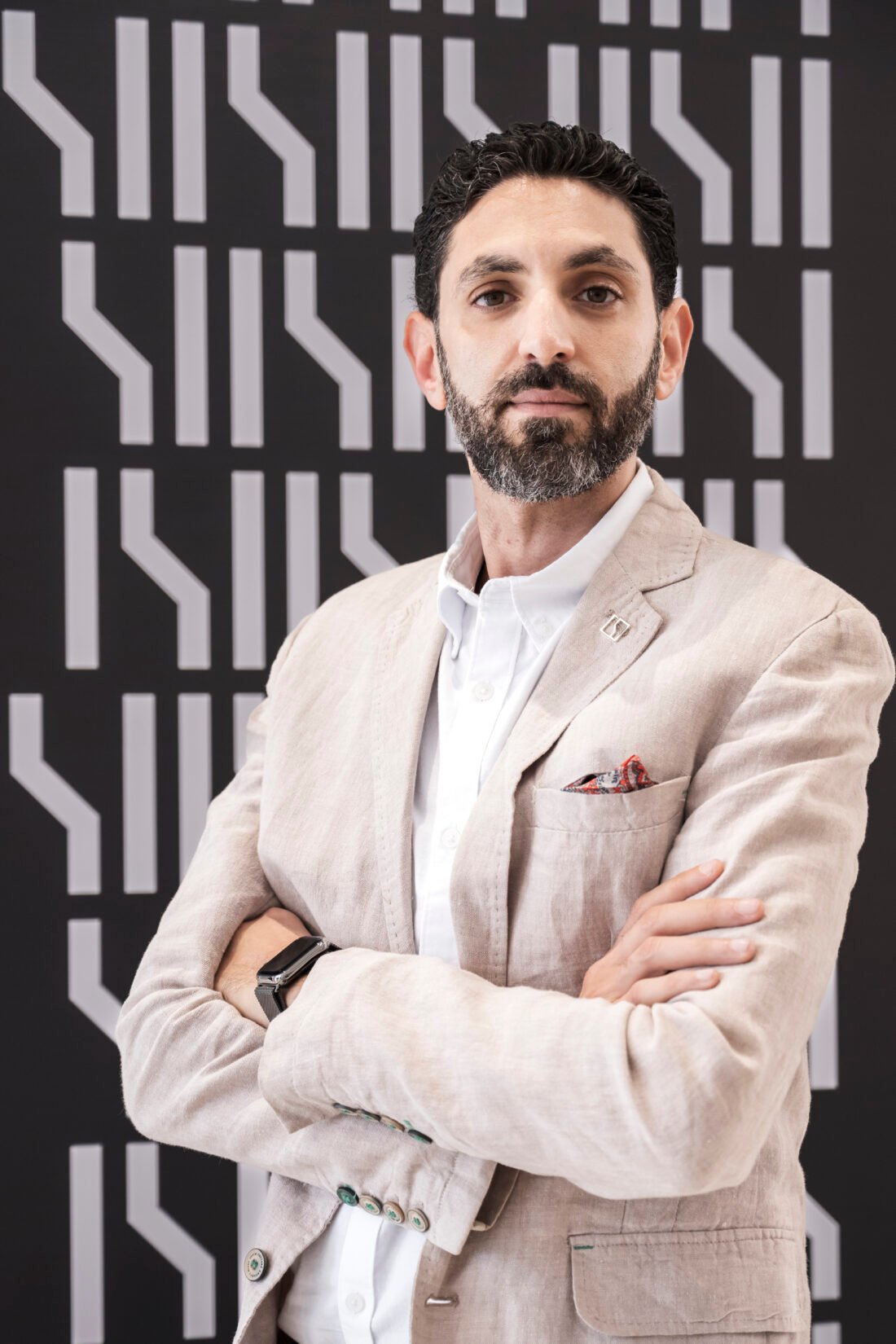
Haitham El-Bawab: Regional Marketing Director – Zeekr Group, Middle East & Africa
From Innovation to Confidence: How Brands Will Win the Next Phase of Growth
2025 marked an important inflection point for the mobility sector in the Middle East, not because of any single technological breakthrough, but because of a noticeable shift in customer expectations.
One of the most valuable lessons from the past year was that the market has matured faster than many anticipated. Audiences are no longer impressed by innovation alone. They are more informed, more discerning, and increasingly focused on how progress translates into real, everyday value. Across premium mobility, success became less about announcing what is new, and more about clearly expressing why it matters.
As competition intensified, clarity emerged as the true differentiator. Customers are no longer evaluating products purely on specifications or features. They are assessing brands, and by extension leadership, through confidence, coherence, and long-term intent. The strongest performers in 2025 were those who communicated with consistency and purpose, connecting advanced engineering and design with human relevance, without overcomplicating the message.
Another defining insight from the year was the importance of context. The Middle East and Africa are not a single market, but a collection of diverse realities shaped by infrastructure, climate, driving behavior, and cultural expectations. Leaders who acknowledged these nuances, and adapted their narratives accordingly, were better positioned to build credibility and trust. Global ambition remains essential, but it must be translated thoughtfully at a regional level to resonate authentically.
Looking ahead to 2026, I believe the next phase of growth will be shaped less by persuasion and more by assurance.
As innovation becomes more accessible and widespread, the role of leadership, and marketing in particular, will evolve. The focus will shift toward reinforcing confidence: confidence in product integrity, in long-term commitment, and in the overall ownership experience. Volume will matter less than authority, and visibility less than substance.
This will require a more deliberate approach to communication. Thoughtful storytelling, meaningful media engagement, and content that informs rather than overwhelms will play a central role in shaping perception and preference. Innovation will continue to be critical, but it will increasingly be evaluated through usability, design integrity, and lasting value rather than novelty.
Regionally, leadership teams will be expected to operate as strategic ambassadors of the brand, aligning global vision with local realities while supporting both commercial objectives and long-term equity. In a fast-moving and highly competitive landscape, consistency, clarity, and confidence will become the strongest signals of leadership.
Ultimately, 2026 will reward organizations and leaders who communicate with intent and restraint. Not by chasing attention, but by demonstrating how progress genuinely improves life, on the road and beyond.
Hania Serry: Chief Marketing Officer, Savola Foods

A Defining Shift in 2025
2025 was not simply a year of evolution; it was a year of reorientation.
The consumer value equation in MENA shifted more dramatically than at any point in recent memory. We saw value expand beyond functionality and price to encompass cleaner nutrition, ingredient transparency, responsible packaging, cultural fluency, digital ease, and—above all—brand equity with purpose, not just presence.
This shift intensified as private labels grew in quality and credibility, and discounters shaped new perceptions of value. Consumers compared more sharply, scrutinized more deeply, and rewarded brands that enriched their daily lives—not just their shopping baskets.
A defining accelerant of this new value landscape is the region’s demographic profile. With one of the youngest populations globally, brands must operate across two horizons:
- Safeguarding trust among today’s core household decision-makers, and
- Building relevance with tomorrow’s growth consumers, who expect modernity, sustainability, and authentic inspiration.
A compelling example of this dual relevance is the evolution of Afia under its new platform “Discover Better.”
This idea became the brand’s organizing force in 2025:
- Equity Restage – Afia redefined its voice, connecting more meaningfully with younger consumers while reinforcing its heritage with long-standing households.
- Biodegradable Bottle – The region’s first biodegradable edible oil bottle transformed sustainability from a corporate principle into an everyday kitchen reality.
- Afia Kitchen Platform – A vibrant ecosystem where influencer chefs and real consumers share stories, rituals, and recipes—shifting Afia from a product into a cultural space.
- Continued growth into Tuna, Spices, and Snacking – Extending Afia’s idea of “better” into more daily food moments.
This widening ambition mirrors a broader shift across Savola. We are investing in brand equities more than ever before – including Arabi, Rawaby, Ganna, and Bayara – each shaping modern food experiences across the region.
Underpinning all of this, is the rise of AI and e-commerce, now central to understanding consumers, localizing content, and creating frictionless engagement—especially for digital-native younger households. But one truth remained constant: technology amplifies brands that stand for something; it does not define them.
Prediction for 2026
2026 will be the year Value-Centric Branding becomes the primary competitive driver in MENA. Brands will need to deliver value across functional, nutritional, emotional, and societal dimensions—anchored by equity that is earned continuously across generations. 2026 will be the year the market clearly separates brands that are simply available from those that are truly preferred.
Three Forces That Will Shape This Shift:
- AI + e-commerce as the new architecture of relevance, driving personalization, adaptive creativity, and seamless omnichannel journeys.
- Trust and affinity as decisive strategic currencies. Consumers will seek clarity, reliability, and emotional reassurance amid economic and information complexity.
- Sustainability as a lived expectation: Cleaner formulations, reduced or biodegradable packaging, and tangible responsibility—amplified by innovations like Afia’s biodegradable bottle—will shape trust and choice.
The brands that win in MENA’s next chapter will be those that empower consumers to discover better in their routines, their food journeys, and their vision for the future.
Hind AbuAlia: Head of Marketing, EMEA & APAC Expansion, Amazon Ads
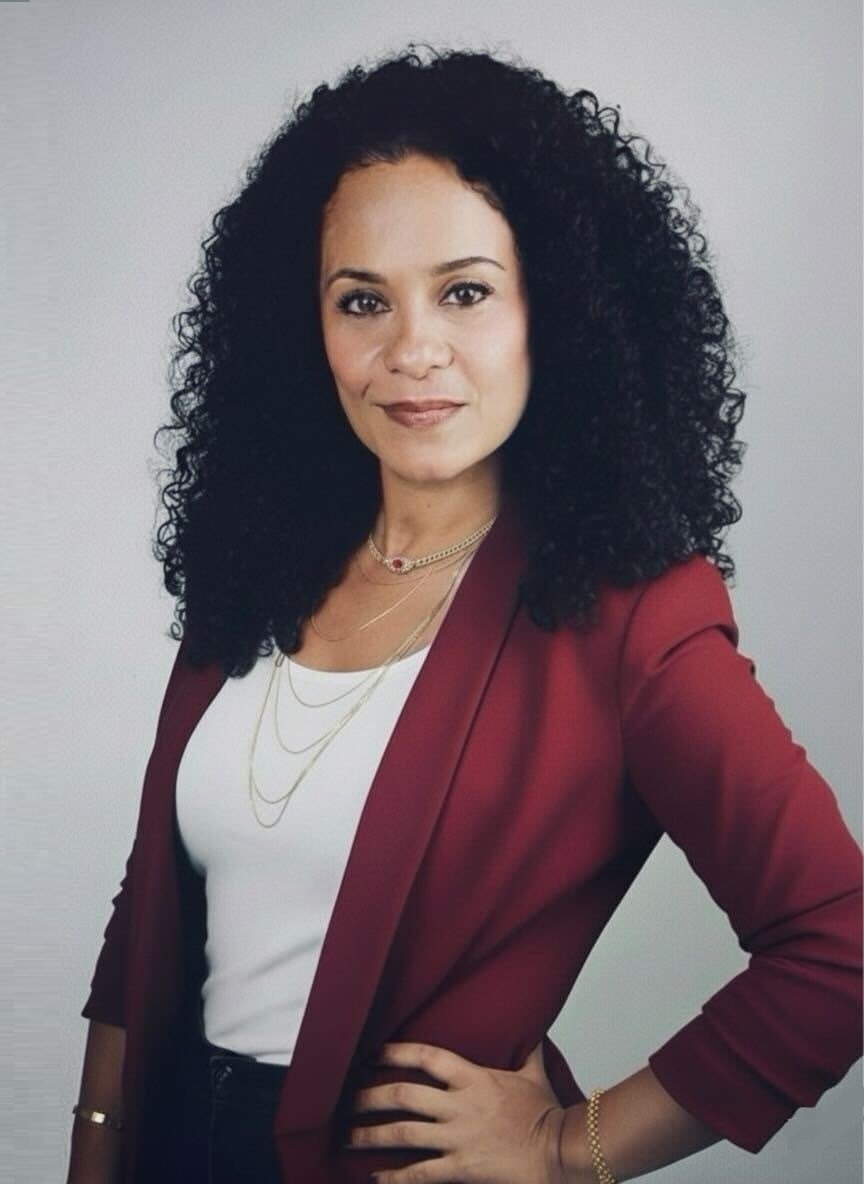
2025: Reclaiming the Human Signal through Strategic Rationalization
Looking back, 2025 was a period defined by strategic depth, clearing out the noise, and “shedding” outdated tactics. The industry underwent a strategic rationalization. We sifted through flashy tech and realized that we need to focus deeply, with methodical work of understanding people and consumers. In the UAE and KSA, where 72% of shoppers now complete their purchase journey in a single day, “speed” was our greatest teacher. However, we learned that speed without a human anchor is just noise. Successful brands used this period of introspection to isolate the “human signal”, recognizing that in high-anxiety periods, positivity and unity in advertising perform significantly better. We stopped just “targeting” and started “listening,” simplifying the customer journey to meet the instantaneous intent of our region.
2026: Galloping Toward the Age of Conscious Builders
As we move into 2026, the energy is shifting from deep rationalization and over stimulation to high-velocity intentional creation. The marketer’s role is fundamentally evolving into a Growth Steward, architecting and enabling growth with an evolved toolkit. To win in this new era, we can anchor our strategies in some defining shifts:
Intentional Fluidity: We’re seeing customers make highly considered trade-offs. They’ll invest in quality, experience, or brands that signal meaning and trust, while being ruthlessly practical elsewhere. These aren’t two different audiences. They’re the same people navigating uncertainty with intention. The more useful lens now is context: where someone is in their day, their mindset at that moment, and what role a category plays in their life. The journey is no longer linear, and it’s rarely singular. It stretches across content, culture, commerce, and community, often collapsing decision-making into a very short window. For marketers, this demands a different kind of design. Not more messages, but more coherence. Not rigid funnels, but systems that can flex, allowing brands to show up with the right tone, value, and creativity depending on intent. This is where creativity expands beyond communication and becomes part of the operating model: shaping experiences, guiding choices, and staying relevant as priorities shift. In 2026, growth won’t come from chasing either premium or value audiences. It will come from understanding how people move fluidly between both, and building journeys that feel intuitive, respectful, and human, regardless of price point.
Cultivating Emotional ROI: We are entering the “Escape Economy,” a global shift projected to reach $13.9 trillion by 2028. Consumers are seeking sanctuary from “doomscroll fatigue”. In 2026, the most resonant brands won’t be the loudest; they will be the “modern mythmakers” that offer immersive, joyful experiences that restore connection.
Creators as Founder: The “Creator Economy” is declining; the “Creator Enterprise” has arrived. We are moving past tactical “shout-outs” toward strategic partnerships where creators are treated as entrepreneurs and culture architects. Initiatives like the Amazon Creators Foundry are the blueprint for this, empowering regional creators to turn a following into a scalable business storefront.
Hussein Elbaz: Senior Marketing Manager, Chery UAE

In 2025, one of the most defining lessons for marketing across the MENA region has been the shift from communication to connection. Audiences did not disengage from brands—they disengaged from one-way, overly polished advertising that felt disconnected from real life.
In a region shaped by culture, community, and conversation, the brands that stood out were those that moved beyond broadcasting messages and instead showed up as participants in people’s daily lives.
This shift is clearly reflected in the rise of UGC and human-led video content, where real voices, creators, and lived experiences consistently outperformed static, highly produced creative.
Imperfection became a strategic advantage, signalling authenticity, trust, and cultural fluency. In 2025, engagement was no longer a metric to measure in isolation; it became the creative idea itself, marking a broader transition from impression-driven advertising to interaction-driven brand building.
Looking ahead to 2026, artificial intelligence will fundamentally reshape the marketing landscape in the region, but its true impact will extend beyond automation and efficiency.
As AI enables brands to produce content at unprecedented speed and scale, the risk of sameness will increase. In this environment, human insight, taste, and emotional intelligence will become more valuable than ever.
The most successful brands in MENA will be those that use AI to enhance relevance, anticipate consumer needs, and make smarter decisions,while remaining deeply human in how they connect—culturally aware, conversational, and purpose-led.
AI will become a powerful engine for growth, but humanity will remain the compass. In a region where relationships matter as much as reach, the brands that win in 2026 will be those that balance technological intelligence with genuine human connection.
Jon Marchant: Group President MENA, Memac Ogilvy

One Defining Shift
My one defining shift in 2025, was one that we have suspected for quite some time, that nobody trusts corporate messaging any more… but they do absolutely trust Creators! Specifically, Creator Marketing was unequivically proven to be a powerful brand-building channel, delivering high ROI comparable to TV in the long term, as reported in the IPAs October study.
At Ogilvy, we always talk (and excel in) brand building in a social-first world, and so it was a great affirmation for how we already treat influencer marketing…that is consideration always at the planning stage and definitely not as an add-on, assessing how well a brands’ world connects with a creator’s world, and how they can enable active participation in culture.
Brands grow faster when they build with creators, not around them. Why? Because creators deliver what the feed economy makes scarce: attention, relevance and trust.
To conclude, 2025 underlined that Creator Marketing isn’t simply a ‘nice to have’ any more, but rather the backbone of any sound modern, brand-building approach.
One Bold Grounded Prediction
It was the great Lee Clow that once said “we get paid like we’re doing our clients’ laundry”. That was back in 2012 and so in 2026 I think as an industry we have an opportunity to finally lay this quote to rest. Aritifical intelligence is a gift that could help us finally rip down the time & materials business model and it’s up to agencies to seize that opportunity, working out how we can move to a hybrid model of fixed fees, tech fees and outcome-based fees.
Specifically this is about pivoting from cost of input to tangible business outcomes, and as AI has been able to expedite certain tasks and automate the slightly more mundane, hence freeing up more time for our amazing talents, the stage is set to put the spotlight on how strategic & creative excellence and the human imagination can deliver genuine unreasonable impact.
Speaking of gifts, in “WPP Open”, we at Ogilvy have the power at our fingertips to deploy the world’s most powerful AI tool designed specifically for the advertising industry. And our folks in MENA are definitely leaning in! We currently have a 70% adoption rate across the region, upskilling our talent to a new breed of what our EMEA CEO Patou Nuytemans refers to as ‘Augmented Creative Solutionists’. This is all fuelled by our technologically advanced and growth-hungry client partners across the GCC who are cheering us on.
And hence the end goal of leveraging human ingenuity and technology is to transition to hybrid commercial models that prove a disproportionate impact not on outputs, but on business results. I can’t think of a single client who wouldn’t say ‘yes please!’ to that.
Katerina Dixon: AVP Regional Marketing and Corporate Communications MEIA, Shangri-La Group
What is increasingly clear is that relevance today is not driven by novelty alone, but by meaning. In a region as diverse and fast-moving as the Middle East, guests are becoming more thoughtful about the brands they choose to engage with, and why.

At Shangri-La, our approach to marketing last year has been shaped by balance, evolving how we communicate, while staying anchored in who we are. Over the past year, rather than focusing on one defining moment, we concentrated on a series of campaigns and initiatives that allowed each destination to express its own identity. The aim was never to replicate a global formula, but to ensure our values came through in a way that felt locally relevant and emotionally real.
One of the biggest shifts we’ve seen is a move away from surface-level storytelling. Guests today are looking for substance. They want experiences, and campaigns, that feel considered and intentional. As a global brand, our challenge isn’t about being the loudest or the most experimental. It’s about being clear, consistent and honest in how we show up.
This thinking shaped our work across markets. Paris continues to lean into its elegant, timeless rituals. Abu Dhabi brings families and communities together especially and takes part in city-wide events. Mauritius highlights its local culture and natural rhythm. Each destination has its own heartbeat, and our role is to respect that, rather than override it. For us, this isn’t a marketing strategy, it’s simply how we believe brands should operate.
As the world becomes more digital and interconnected, the idea of luxury is also changing. It’s no longer defined by how impressive something looks, but by how it makes you feel. Trust plays a central role here, particularly for legacy brands like us. And trust isn’t permanent – it needs to be earned again and again. Reinvention doesn’t mean abandoning identity, but instead it means finding new ways to express it through thoughtful storytelling, partnerships and meaningful moments.
Looking ahead to 2026, my prediction is that brands will need to move from personalisation to participation. Audiences won’t just want tailored messaging and they’ll want to feel involved. The strongest campaigns will be those that invite collaboration, create shared experiences and build genuine community.
Technology will continue to evolve, but it shouldn’t be the headline. Used well, it can support connection. Used poorly, it can distance brands from the people they’re trying to reach. For us, the focus remains on deepening emotional connection because trends may change but human warmth doesn’t.
At Shangri-La, we don’t just think in terms of campaigns. We think in terms of stories, memories and relationships. And that’s where meaningful marketing begins.
Mitin Chakraborty, Head of Marketing, Babyshop

The Marketer’s Balancing Act:
What 2025 taught us and why Trust will matter more than ever
Looking back at 2025, what stayed with me most was not a particular technology, platform, or campaign format. It was the growing tension in the role of marketing leadership itself.
Senior marketers were expected to zoom out more than ever before. To understand the business in its entirety, growth pressures, margins, customer behaviour, long-term brand value. To bring clarity to leadership conversations that were increasingly complex and interconnected. That expectation has not gone away.
But what changed meaningfully in 2025 was the need to zoom in just as deliberately.
As automation, AI tools, and content velocity accelerated, execution became fragile. Not because teams lacked capability, but because scale exposed gaps quickly. Brand consistency, quality control, and governance could no longer sit comfortably a few layers down. Decisions around how AI was used, how content was produced, and how experiences were stitched together started showing up directly in front of customers.
The most effective marketers I saw last year were not those who stayed at one altitude. They moved between the two. Zooming out to connect dots, but zooming in to protect standards. Not to micromanage, but to stay accountable for what the brand actually put into the world.
That balance becomes even more important as we look towards 2026, because trust is about to become far more precious.
We are entering a phase where brands will be able to generate almost everything at scale, content, journeys, personalisation, even emotion. When that happens, consumers become sharper judges. Polished is no longer impressive. Fast is no longer enough.
Trust will be built through what feels human.
You can already see this in how influencer marketing is evolving. Audiences are far more sceptical of transactional endorsements. They are quicker to question intent, alignment, and authenticity. The brands that will earn trust are not the ones chasing reach, but those building long-term relationships with fewer, more credible voices who genuinely fit.
The same applies to experiences. Live events, community moments, and physical or human-led interactions matter because they are harder to fake. When a brand shows up consistently, listens, and creates value beyond selling, trust accumulates quietly.
Communities, loyalty programmes, and owned platforms will matter for the same reason. Not because they are fashionable, but because they allow brands to be present over time, to educate, support, and respond. Trust is built in continuity, not bursts.
The uncomfortable truth is that trust cannot be automated. It cannot be hacked or accelerated. It requires restraint in a world obsessed with speed, and judgement in a world driven by tools.
The marketers who will lead in 2026 are those who can zoom out to safeguard trust at a systemic level, and zoom in to earn it through everyday experiences. In an increasingly automated world, the most human brands may hold the strongest advantage of all.
Luqman Sohail: Martech and Growth Director, Platformance
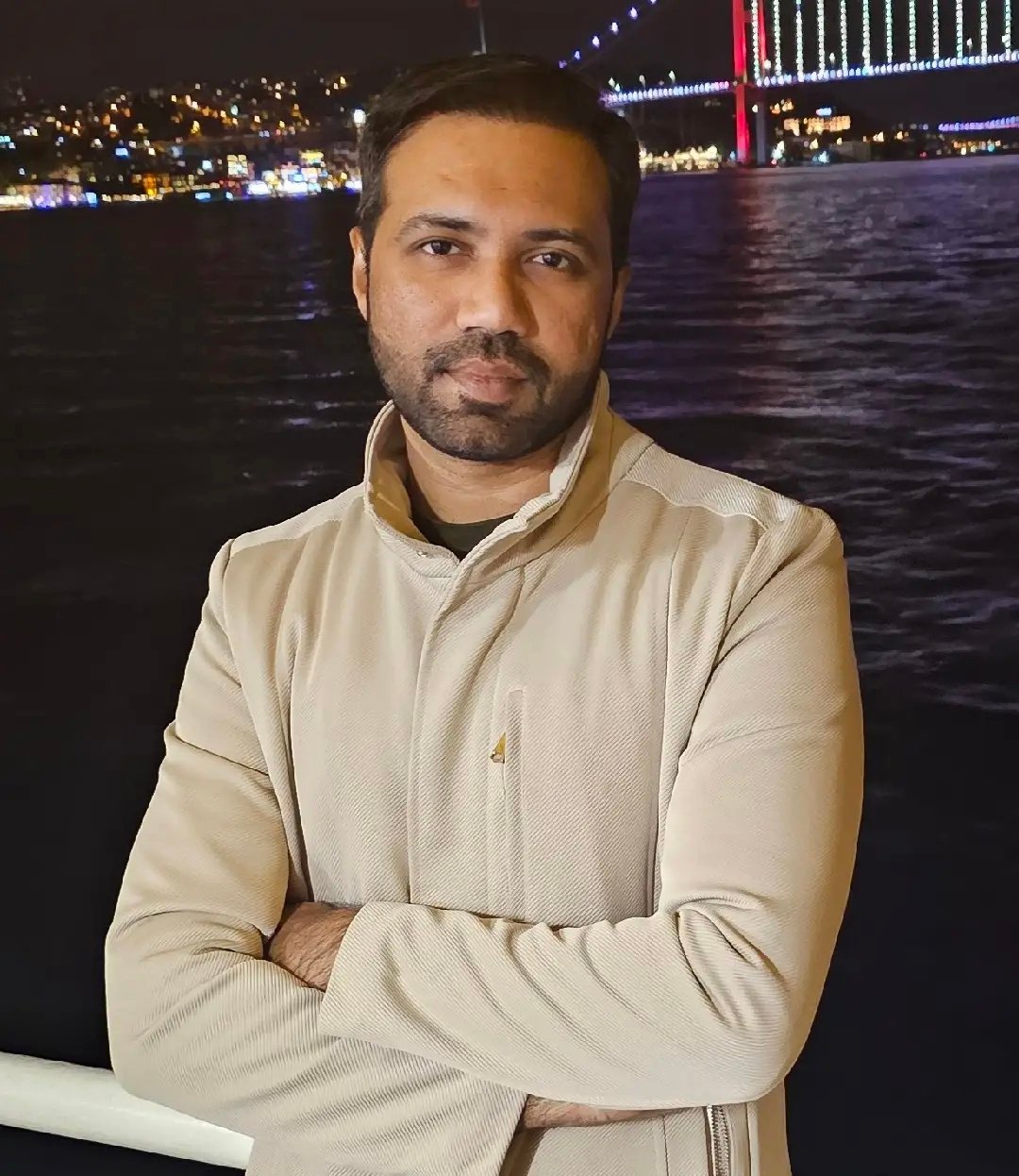
5 Martech Trends I Believe Will Shape the Next Few Years
Every few years, marketing goes through a “buzzword storm.” We’ve done this with programmatic, CDPs, personalization, cookies, and now AI. But after diving deep into where martech is heading, I don’t see this wave as just another hot trend.
I think we’re entering a phase where marketing, technology, and operations fuse together, and the winners will be the ones who can work comfortably at that intersection.
- No-code turns marketers into builders
For a long time, marketing ideas lived as briefs and slides, waiting for someone technical to make them real. No-code tools change that. The person who imagines the journey can now build it, workflows, pages, automations, even simple apps.
What this means in practice
- ideas launch in days, not weeks
- experiments become continuous
- execution sits inside the marketing team
The biggest change is mindset: ownership replaces dependency.
- The Great App Explosion reshapes the customer journey
We are moving from a world of a few big platforms to one filled with countless small, embedded experiences. Ads act like tools. Emails behave like apps. Chat becomes a transaction space. The line between product and marketing fades.
What it means for marketers
Marketing doesn’t end at the click anymore. The experience itself communicates the brand.
We stop asking “What should we say?” and start asking, “What can the user do here?”
- Big Data ➜ Big Operations (and quality finally beats quantity)
Companies already sit on massive amounts of data. The problem now isn’t collecting more, it’s acting on it in a clean, reliable way. With AI in the loop, messy data doesn’t just confuse dashboards; it produces wrong decisions at scale.
What it means for marketers
Operations become as important as strategy.
Bragging rights shift from “we have so much data” to
“our data is actually usable.”
- Content stays king but context becomes God
Content still matters. But without context, intent, timing, behavior, channel, it becomes noise. In an AI-mediated world of assistants and recommendation systems, the moment matters as much as the message.
Relevance becomes the real competitive edge. Customers don’t want more content. They want the right thing at the right time with the least friction.
- AI becomes a teammate, not just a tool
AI will sit across the entire marketing workflow: research, planning, creative, optimization, reporting and service. It doesn’t replace marketers, it changes what they spend time on.
Impact
- agents draft and analyze automatically
- marketers move from typing to guiding
- teams become leaner but more capable
Across all five trends, the theme is clear:
Marketing is moving from doing tasks To designing the systems that do the tasks
Those who learn to build, respect data quality, think in experiences, understand context, and work confidently with AI will shape the next chapter of martech.
Manisha Bhatia : Head of Strategy and Planning (KSA), IMPACT BBDO

One Defining lesson of 2025 Taught us that when creativity becomes self-expressive before it becomes useful, it stops working.
One Bold, grounded prediction for 2026 The most successful brands will move creativity out of the spotlight and back into service designing ideas that earn their place in people’s lives, not their feeds.
The defining lesson of 2025 wasn’t about AI, platforms, or pace.
It was about focus.
As creative output became easier to produce and faster to distribute, it also became more personal.
Ideas carried signatures.
Opinions turned into content.
Visibility became a proxy for value.
In most cases, the work reflected the people behind it more than the brands it was meant to serve.
Arrogance? No. More likely a symptom of an industry under pressure.
Speed rewarded reaction.
Algorithms rewarded presence.
And somewhere along the way, creativity slipped from being in service of people to being performed at them.
2025 taught us this: when creativity prioritises self-expression over usefulness, it stops creating impact.
This lesson sets the stage for what comes next.
In 2026, the most meaningful shift will be a return to responsibility.
As AI removes friction from making, judgement becomes the differentiator.
Fewer ideas will ship, but the ones that do will be expected to work harder, last longer, travel deeper, and contribute something real to people’s lives.
This won’t look like restraint for restraint’s sake. It will look like confidence; brands that know when to speak and when not to. Ideas that don’t just launch, but live.
And so, the bold prediction for 2026 is this:
The industry will stop rewarding the loudest voices and start valuing the clearest intentions.
Because when attention is unlimited, meaning becomes scarce.
And the brands that win won’t fill the feed.
They’ll earn the absence.
If this idea disappeared tomorrow, who would miss it?
Mazen Jawad: CEO, Horizon Holdings
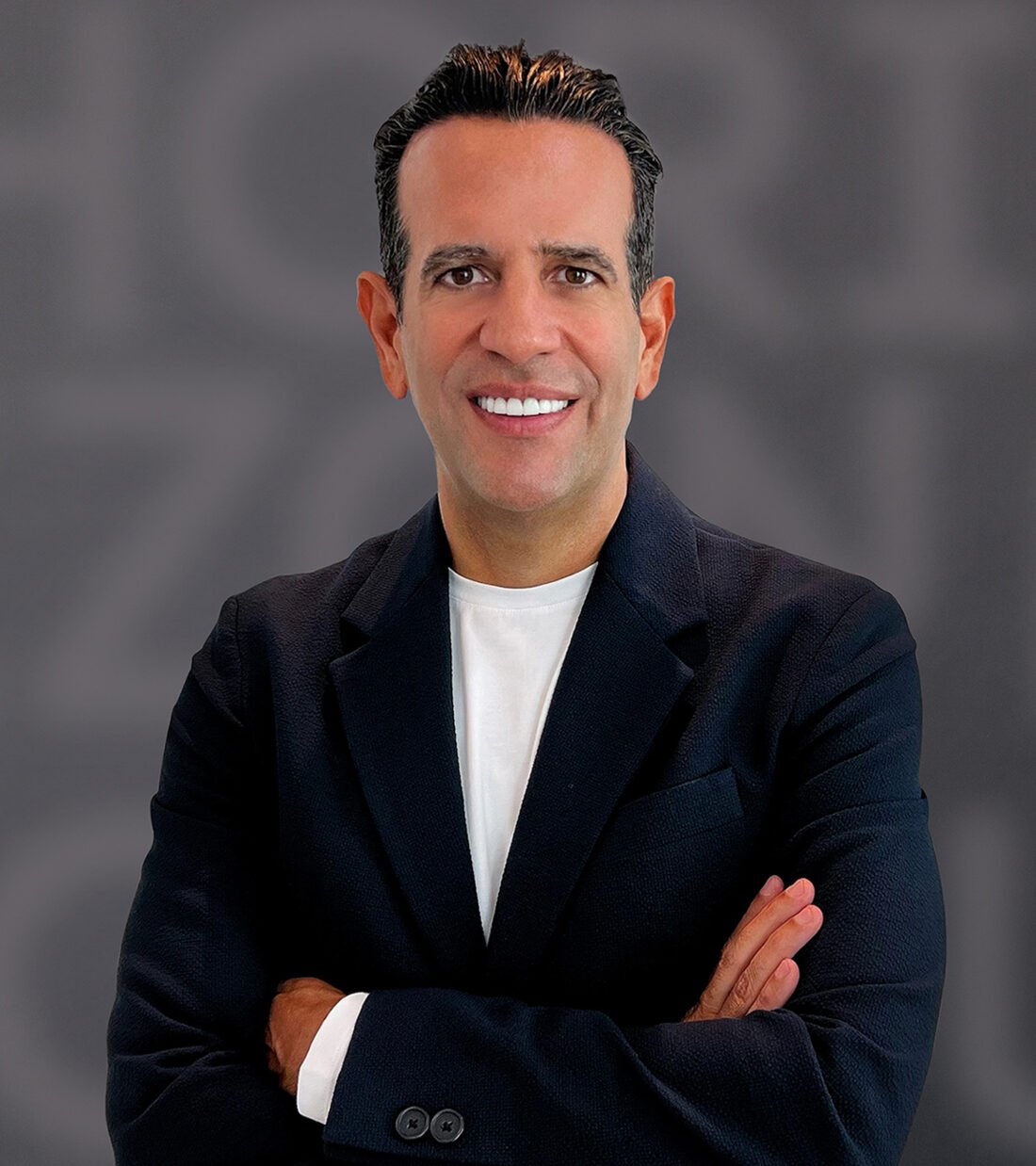
AInflation to AIuthenticity
2025 was the year of AInflation. We saw AI scan and analyze data at scale, track behavior to personalize communication, replicate and multiply creative assets, and programmatically automate media buying and placement—all in the name of agility, speed, performance, and sales.
In 2026, AI will become even more deeply embedded in our lives. It will further assist in identifying, generating, and automating creative and media solutions. We’re already witnessing AI generation in action—enhancing and duplicating content creators and celebrities who have long played a critical role in influencing choices and shaping trust.
This is where a crucial shift is needed.
Today, we must embrace a human-first AI approach—one that creates or preserves the emotional and human connections at risk of erosion. Consumer sentiment is constantly evolving and may shift even faster when audiences can no longer distinguish what is real and authentic; otherwise this is when human skepticism follows.
Blending the efficiency of technology with authentic creativity and strong brand values is no longer optional. It is essential to maintain the authenticity, transparency, connection, engagement, and loyalty we build on behalf of our clients’ brands—especially as we continue to integrate creators and influencers into the ecosystem.
At the same time, we need clearer guidelines and regulations to disclose and identify the use of AI when it is applied in ways that could confuse or mislead consumers. Today, the cost may be low and the gain high. Tomorrow, that gain can quickly start evaporating if trust disappears.
We are all working in an exciting, fast-transforming industry—one dedicated to building brands, shaping culture, and driving the growth of products and services. Trust, authenticity, and transparency are not optional—they must remain at the core of our work.
Maybe the next chapter should be the year of AIuthenticity.
Melis Ertem: MMA MEA & DACH CEO

Looking back at 2025, the most defining shift was not technological. It was structural.
Across the MENA region, marketing moved from a phase of experimentation into integration, as the focus shifted from what we use to how it all works together.
We saw creativity mature into a strategic discipline, rather than an executional output. Trust emerged as a core performance indicator, not just a brand value. Search and discovery became fragmented across platforms, requiring marketers to rethink visibility and relevance. And AI moved from novelty to necessity, forcing leaders to confront questions of governance, ethics, and accountability.
The defining lesson of 2025 was that progress is no longer driven by optimisation alone. Improving individual parts of the system is no longer enough. Sustainable advantage now comes from designing how data, technology, creativity, culture, and people interact.
That shift requires leadership maturity. It demands comfort with complexity, a willingness to challenge legacy models, and the confidence to invest beyond short-term metrics.
Looking ahead to 2026, my strongest prediction is that trust will become the primary competitive differentiator in marketing.
As AI becomes embedded across workflows, content creation accelerates, and personalisation deepens, audiences will become increasingly sensitive to how their data is used, how messages are shaped, and how transparent brands really are. In this environment, speed and scale will be easy to replicate. Credibility will not.
The organisations that succeed in 2026 will be those that embed ethical thinking, cultural intelligence, and human oversight into their operating models. They will design systems that move quickly without losing coherence. They will treat creativity as a strategic asset, not a decorative one. And they will prioritise long-term relationships over short-term reach.
In many ways, 2026 will be less about doing more, and more about doing better.
The future of marketing in MENA will be shaped not by those who adopt new tools fastest, but by those who combine innovation with integrity, ambition with accountability, and growth with purpose.
Namrata Balwani: Chief Marketing Officer, TP Connects Technologies

One Defining Shift from 2025
2025 was the year of AI experimentation.
Across marketing teams, 2025 was defined by testing, piloting, and learning. New tools appeared faster than we could keep up. Keeping track of developments across OpenAI, Gemini, Anthropic et al was hard! We experimented with content generation, automation, analytics, and agents, often in silos.
That experimentation was necessary. It helped teams understand what AI could do, where it helped, by genuinely adding speed and scale, and just as importantly, where it didn’t. But it also exposed deeper issues: unclear strategy, fragmented data, misaligned teams, and skills gaps that technology alone cannot solve.
By the end of 2025, many teams realised that AI does not compensate for unclear strategy, weak positioning, fragmented data, or misaligned operating models. It amplifies whatever already exists. Experimentation without direction led to activity, not real advantage.
In the Middle East in particular, where optimism, ambition, and investment remain high, the conversation started to shift. It moved from “Can we use AI?” to “How do we use it at scale, and in a way that actually creates value?”
Narrowing use cases, embedding them deeply into workflows, and investing time in bringing teams along – this is the work that is ongoing. It requires leadership focus, change management, and patience. By the end of 2025, AI stopped feeling like novelty and started feeling like a leadership mandate.
One Grounded Prediction for 2026
2026 will mark the shift toward AI-enabled marketing engines.
A marketing engine will mean moving from isolated use cases to embedded workflows. From speed & experimentation for its own sake to real solutions and impact. AI will no longer sit at the edges of marketing.
In practice, AI-enabled marketing engines won’t be a single system or tool. They will shift AI upstream into planning, decision-making, and customer experience design with usage becoming more connected and embedded into planning, content, customer experience, and insight generation. These systems will continuously learn, adapt, and inform action rather than operate as isolated use cases, increasingly influencing not just how marketing is executed, but how priorities are set.
The next competitive edge will be empathy at scale: using AI not just to predict behaviour, but to understand intent and emotional context, responding with relevance and timing that feels more human. This is where differentiation will be created, especially in complex and culturally nuanced markets like ours.
CMOs who succeed in 2026 will be those who combine technological fluency with human judgement, who embed AI into everyday workflows while protecting the emotional core of the brand.
Natasha Chandnani: Head of Marketing, BANKE
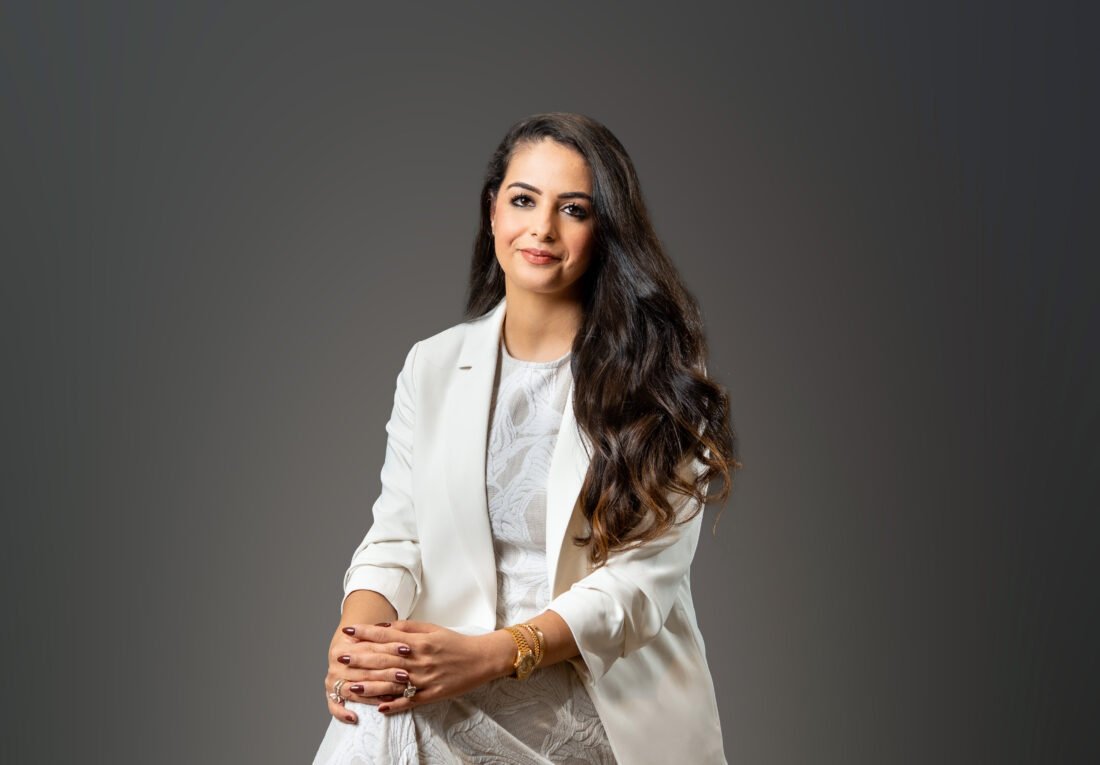
From Listings to Lifecycle: Why Real Estate Marketing Changed in 2025 and What 2026 Will Demand
As we reflect on the shifts that defined 2025, one defining shift which has reshaped real estate marketing across the MENA region has been the move from marketing listings to managing the entire customer lifecycle.
For years, success in real estate marketing was driven by volume, more listings, more leads, more portal visibility. In 2025, that model began to show its limits. Rising acquisition costs, duplicated leads, and increasingly sophisticated buyers pushed brands to rethink how demand is created, qualified, and sustained over time.
2025 marked a clear turning point for the industry. This was the year real estate marketing evolved. The focus shifted from lead quantity to lead quality, and from short-term campaigns to long-term relationships. CRM systems, first-party data, and owned platforms became strategic assets, enabling brands to engage buyers, sellers, and investors across multiple touchpoints, rather than only at the moment of enquiry.
AI played a meaningful role in accelerating this transition. Listing creation, media buying, and follow-ups became faster and more automated. However, the real advantage came from using AI to better understand buyer intent, anticipate behaviour, and personalise journeys, not simply to push more inventory into the market. Technology enhanced execution, but strategy continued to define results.
The brands that stood out in 2025 were those that prioritised trust. Authority-led content, transparent communication, and human-centred storytelling consistently outperformed aggressive sales tactics. In an industry built on high-value, long-term decisions, credibility emerged as one of the most powerful drivers of conversion.
Now, as 2026 unfolds, real estate marketing will be defined not by campaign volume, but by its ability to shape buyer perception, accelerate decision-making, and deliver measurable ROI at every stage of the customer journey.
Marketing leaders will be expected to contribute directly to pipeline quality, deal momentum, and customer lifetime value. Portals, communities, and proprietary data ecosystems will play a greater role in shaping competitive advantage. Brands that continue to rely solely on paid platforms to generate demand may find it harder to scale sustainably.
Therefore, in 2026 and beyond, real estate marketing won’t be defined by who has the most listings, but by who owns the relationship.
Natalie Cooke: Chief Client Partner M+C Saatchi UAE

The defining shift of 2025 was not the rise of AI. It was the return of humanity as a competitive advantage.
As technology dominated industry conversation, clients were quietly recalibrating what they valued. Automation became widespread, efficiency became expected, and sameness crept in. What stood out instead were brands that made people feel something. Work rooted in emotional truth, cultural relevance, and human storytelling began to outperform work built purely for optimisation.
2025 exposed a long standing industry myth. That progress is driven by speed. In reality, progress comes from judgement. From knowing what matters, when it matters, and to whom. Culture is not a trend to mine or a moment to hijack. It is context. And without context, creativity collapses into content.
In moments like this, independence became a meaningful advantage.
Free from the drag of bloated structures and diluted accountability, independence proved to be more than an operating model. It became a strategic advantage.
In a year defined by uncertainty, clients looked for partners who could take a position, not just process a brief. Who could sit at the table with confidence, make decisions, and turn cultural understanding into commercial impact without hiding behind layers of approval.
Size stopped being impressive. Substance did not.
Looking ahead to 2026, the industry’s obsession with technology will finally give way to something more uncomfortable. Effectiveness.
AI will be embedded, expected, and largely invisible. The question will no longer be who has the best tools, but who has the clearest point of view. Measurement will shift away from vanity metrics and towards signals of real relevance. Influence, advocacy, emotional connection, and cultural impact.
We will also see a decisive move away from monolithic agency models towards more fluid creative ecosystems. Independent agencies collaborating with specialists, creators, and partners to deliver depth, not breadth. This is not fragmentation. It is how culture actually behaves. Dynamic, interconnected, and human.
In 2026, creative power will belong to those brave enough to slow down their thinking and sharpen their intent. To balance intelligence with intuition. To use technology with taste.
The future of advertising will not be built by the loudest platforms or the biggest machines.
It will be built by those closest to culture, confident enough to lead it, not follow it.
Osama Siddiq: CoFounder and Executive Creative Director, LION

2025, the year we forgot humans.
Last year we got lazy. AI became an excuse to stop thinking. People produced more and decided less. Work moved fast and said nothing. It looked finished but felt empty.
AI doesn’t have taste. It doesn’t know when something feels wrong or when it feels done. AI can edit. It just wont care. It only follows direction. Most of the direction last year was weak.
The work that landed didn’t feel automated. It felt controlled. Someone had made decisions. Someone knew what to remove. Someone trusted silence. That didn’t come from tools. That came from people.
OpenAI understood this. Their ChatGPT films avoided spectacle. Shot on 35mm. Real faces. Real pacing. No need to prove anything. Apple did the same. Technology stayed quiet. The idea stayed in charge.
This was never human versus AI. That framing is lazy. AI without humans is noise. Humans without tools are slow. The problem starts when no one is steering.
2026 will reward judgment. Taste. Restraint. People who know when to push and when to stop. AI will still be everywhere. The difference will be who’s actually in control.
Humans decide and AI accelerates. So this year, we bring back the Human and make magic with AI.
Rami Rihani: Group Chief Marketing & Communications Officer, Alsulaiman Group

The unfinished work that will shape 2026.
Growth in 2026 will not come from doing more of what has already worked. It will come from finally doing the work brands have delayed for too long.
For past couple of years, marketing success was driven by familiar playbooks—proven channels, predictable audiences, and safe storytelling. That era is close to an end. Attention is more fragmented and incremental optimization no longer delivers meaningful returns. The brands that move forward in 2026 will be those willing to confront their unfinished work and invest in what truly differentiates them.
One of the most critical evolutions ahead is how brands balance acquisition and retention. Sustainable growth depends on treating them as interconnected, not competing, priorities. Acquiring new customers remains essential, but doing so without a clear strategy to engage, retain, and grow their lifetime value is no longer viable. At the same time, meaningful investment in existing customers—through better experiences, relevance, and ongoing value—creates momentum that fuels smarter, more efficient acquisition. Marketing’s role will expand from driving volume to driving quality: long-term relationships, loyalty, and advocacy.
Another reality brands must confront is the end of channel certainty. The platforms and tactics that delivered results in the past cannot be assumed to perform in the future. In 2026, marketers will need to test new channels deliberately, guided by where attention and culture are moving—not simply where budgets have historically flowed. This requires a willingness to experiment, learn quickly, and accept short-term inefficiencies in service of long-term relevance. Winning brands won’t try to be everywhere; they will focus on showing up meaningfully in the places that matter most.
Brand storytelling remains unfinished work as well. In an environment saturated with content, generic narratives disappear instantly. In 2026, brands must continue sharpening their point of view—clarifying what they stand for, what makes them distinct, and why they matter now. Storytelling is no longer about saying more; it’s about saying the right things with consistency, conviction, and cultural awareness.
As marketing moves into 2026, its role will continue to shift—from execution engine to true growth partner. Competitive advantage will not come from louder campaigns or broader reach, but from clarity, focus, and the willingness to do the work that has been postponed for too long. The brands that win will be the ones that stop chasing comfort—and start finishing what they began.
Rasna Al Khamis: Chief Marketing and Engagement Officer, Emirates Nature WWF
One defining shift or lesson from 2025
The defining lesson of 2025 was that more marketing did not lead to more meaning. In fact, in many cases, it did the opposite. As brands accelerated content production, often powered by AI, audiences didn’t become more engaged; they became more discerning. Studies throughout 2024 and 2025 consistently showed declining engagement rates across social platforms, even as posting frequency increased. At the same time, the 2025 Edelman Trust Barometer reported that fewer than half of consumers trusted brands to “do what is right,” marking one of the lowest confidence levels in years.
What emerged was a clear fatigue with constant campaigns and reactive messaging. People didn’t stop paying attention altogether, they became more selective. They questioned brand motives more closely, trust grew increasingly fragile, and attention shifted from passive scrolling to a conscious, limited choice. In an environment where the average consumer is exposed to thousands of messages a day, attention stopped being something brands could assume they were entitled to.
We saw this contrast most clearly in brands that chose restraint over volume. Companies like Patagonia continued to resonate not because they were louder, but because their communication remained tightly aligned with their values and actions. Their consistency signaled credibility, not performance.
Importantly, the lesson of 2025 wasn’t that technology or AI failed us. If anything, it proved how powerful these tools can be. But it also made something equally clear: strategy must lead execution. When speed replaces clarity, brands begin to blend into sameness. The strongest performers were those that slowed down enough to define what they stood for, communicated with intention, and treated trust as something to be protected, not assumed.
One bold, grounded prediction for 2026
Looking ahead to 2026, I believe marketers will need to prioritize storytelling with intention, not volume. People are overwhelmed by content, but they still respond to stories that feel grounded and honest. Brands like Patagonia and Nike work because their messaging reflects clear values, not fleeting trends. Another key focus is precision over noise, where strong positioning will matter more than constant campaigns. Finally, marketers must think long-term. In a fast, automated world, brands that build trust through consistency and purpose will outperform those chasing short-term attention.
Additionally, I believe trust will become the central filter for marketing decision-making. AI will be expected, not exceptional. The real differentiator will be how responsibly it is used and how transparent brands are about the value exchange. Decision-making will shift from “what can we automate?” to “what have people trusted us with?”. Platforms like Spotify offer a useful reference point, using first-party data to improve experience without crossing into discomfort and giving users a clear sense of benefit and control.
I also expect a continued move away from broadcasting toward participation. Younger audiences want to engage with brands that invite collaboration rather than simply push messages. Co-creation and community-led ideas will matter more than polished campaigns, which is why brands like LEGO continue to resonate. This doesn’t mean co-creation will be a constant, but brands will require active listening, responsiveness, and space for audiences to feel seen.
At the same time, nostalgia is being reworked, not repeated. Brands like Gucci succeed by honoring heritage while making it relevant now. In 2026, the strongest strategies will blend participation with emotion, connecting generations through shared stories, collaboration, and evolving identity, remixing legacy rather than repeating it – so that history feels relevant rather than static.
In 2026, the brands that stand out will be those that combine clarity with restraint, technology with ethics, and storytelling with participation. They will essentially treat data, culture, and community as long-term relationships, not short-term assets. That approach won’t just improve performance, it will redefine what credible, sustainable brand leadership looks like in an increasingly automated world.
Reine Hammoud: General Manager, Boopin KSA

Markets shift; fundamentals don’t!
I can’t think of a time when this basic marketing truth applied more than it does today.
As AI, algorithms, optimization trends, data obsession, and economic uncertainty dominate conversations, one thing remains unchanged: the fundamentals of marketing. And they always will. What we’re witnessing especially over the past few years is a clear case of Marketing Myopia: Chasing trends. Blindly inserting AI into plans and deliverables. Trying to be everywhere and ending up nowhere. Marketers sticking a finger into shifting winds, hoping for better tides.
Amidst the noise, we forgot the basics.
Marketing has never been an afterthought, nor a magic wand that miraculously answers unasked questions. It is the execution of a solid, well-structured business strategy grounded in real consumer needs. Without a clear brand story; one that defines who you are, who you serve, and where and how you show up; no marketing plan can succeed, no matter how many influencer campaigns or tools you invest in.
Today, almost every business has access to the same data, platforms, and optimization capabilities. What differentiates successful brands is how they interpret and act on that data through a distinct strategy and point of view.
People will always buy solutions to their problems. That’s what marketing is at its core: problem-solving.
My most valuable 2025 lesson: Stay away from Marketing Myopia
-One Bold, Grounded Prediction for 2026
Back to the roots: Plan. Execute. Learn. Repeat.
In an increasingly volatile economic and marketing landscape, 2026 will be about going back to the drawing board.
After years of hard lessons since late 2021, one truth stands out: what we already know is more valuable than what we’re chasing.
The fundamentals of business, marketing, retail and sales haven’t changed. They’ve always been about deeply understanding consumers and adapting to their needs. Trends and tools are just platforms to enhance that understanding, not replace it. The rules of the game are the same.
AI doesn’t exercise judgment, but humans do. And better judgment comes from practice, experience, and accumulated knowledge.
That’s the real competitive advantage in 2026: Invest in research. Revisit past campaign results. Trust market veterans who’ve weathered similar storms. Re-examine the foundations of your business, Re-evaluate priorities. Re-apply lessons learned. Re-learn what works.
Then do it all over again.
Rory McEntee: CMO, GymNation
If 2025 taught me one defining lesson as a marketer, it’s this: attention is no longer something you buy – it’s something you earn repeatedly.
For years, marketing playbooks have been built around scale: bigger budgets, broader reach, louder messaging. In 2025, that model finally broke under its own weight. Audiences became immune to polished ads, algorithmic hacks lost their edge, and brand loyalty stopped being a given. What replaced it was far more uncomfortable – and far more powerful: brands had to show up like real people.
At GymNation, we felt this shift firsthand. The most effective campaigns weren’t the most expensive or the most visually impressive. They were the ones that sounded human, took a point of view, and reflected the lived reality of our members. Content that acknowledged the grind. Messaging that didn’t pretend fitness was easy. Humor that felt local, not global. When we leaned into honesty over perfection, engagement didn’t just rise – it stuck.
The biggest unlock in 2025 was realizing that brand is no longer a layer on top of performance marketing; it is performance marketing. The lines blurred completely. Our best-performing ads looked less like ads and more like conversations. Our strongest acquisition drivers came from moments where we were willing to be opinionated – about pricing transparency, gym intimidation, or industry nonsense that members were tired of.
Another critical lesson was speed. Not just speed to market, but speed to relevance. Cultural moments moved faster than approval chains, and the brands that won were the ones that empowered teams to act, not ask. In 2025, perfection became the enemy of momentum. The brands that waited to be “ready” were invisible by the time they launched.
My bold but grounded prediction for 2026 is this: In 2026, people won’t choose brands just for what they offer, but for how they make them feel.
We’re entering a phase where consumers are no longer looking for brands to impress them; they’re looking for brands to include them. Transactional relationships are being replaced by participatory ones. In 2026, marketing won’t just be about telling stories – it will be about creating spaces where stories happen.
In fitness especially, this shift will accelerate. Gyms won’t compete purely on equipment, price, or location. They’ll compete on identity. People won’t ask, “Which gym is cheapest?” They’ll ask, “Which gym feels like my gym?” The brands that win will be the ones that act less like corporations and more like platforms for belonging.
From a marketing perspective, this means a fundamental reallocation of effort. Less spend on one-way messaging. More investment in two-way ecosystems – member-generated content, local activations, micro-influencers who are actual customers, not rented faces. The strongest brands in 2026 will blur the line between marketing and operations because every touchpoint will be marketing.
I also believe we’ll see a backlash against over-automation. AI will absolutely power efficiency, but brands that outsource their entire voice to algorithms will sound hollow. The winners will be those who use technology to scale authenticity, not replace it. Human-led brands, supported by smart systems – not the other way around.
For GymNation, and brands like it, 2026 is about doubling down on what can’t be copied: culture, tone, conviction. Anyone can match pricing. Anyone can replicate features. But not everyone can build a brand that members defend, joke about, and proudly associate with.
Marketing in 2026 won’t be about shouting louder. It’ll be about standing for something clearly enough that the right people choose to stand with you. And in a market full of noise, belonging will be the ultimate competitive advantage.
Roxane Magbanua: Marketing and CX Director, Al-Futtaim Automotive

When AI Scales, Humanity Differentiates: Why Human Leadership Matters More Than Ever
By 2025, the conversation around GenAI in the Middle East decisively shifted. Leaders stopped asking whether to adopt AI and focused instead on how to integrate it meaningfully into the business. AI moved from experimentation to expectation: embedded in workflows, analytics, customer journeys, and decision-making.
Yet the most important lesson of 2025 wasn’t technological. It was human.
What became clear is that people remain the core of the business. The organisations that performed best weren’t those that automated indiscriminately, but those that developed AI-powered People Managers. Leaders who used AI to remove friction, surface insight, and reclaim time for judgment, coaching, and leadership. AI didn’t replace human intelligence; it amplified it.
As we move into 2026, the next evolution is already taking shape, and it will require a different mindset.
“In 2026, the most effective marketers won’t think in funnels or campaigns. They’ll orchestrate adaptive journeys, and knowing where human judgment still matters.”
Quantum thinking will surge in relevance. In an environment defined by volatility, ambiguity, and rapid technological change, linear thinking will no longer suffice. Leaders will need to hold multiple simulations at once, connect systems rather than silos, and make decisions without waiting for perfect information. This shift from sequential to systems-based thinking will define how brands navigate growth, talent, and customer experience in the year ahead.
Alongside this, agentic AI will move from theory to practice, particularly in customer experience. In 2026, we will see autonomous AI agents that can act, decide, and adapt across CX journeys in real time. These agents will handle service recovery, personalise interactions at scale, and optimise experiences continuously, working alongside human teams. The real value of AI will be felt in speed, consistency, and operational excellence, areas where machines genuinely excel.
Creativity, however, will take a different path.
After a wave of fully AI-generated campaigns, the industry is already seeing the limitations. Some global campaigns, while technically impressive, failed to emotionally resonate. They were efficient, but hollow. Perfectly generated, yet culturally flat.
As a result, 2026 will mark a return to human-led creative storytelling. Emotional resonance, cultural nuance, intuition, and lived experience cannot be synthesised at scale. The strongest brands will recognise that creativity is not a data problem to be solved, but a human craft to be protected.
The winners in 2026 won’t be the brands that deploy AI everywhere.
They’ll be the ones that apply it with intent, using agentic AI to power experiences, quantum thinking to guide leadership, and human creativity to build meaning.
Because in the end, technology may accelerate the journey, but people still define the destination.
Roxana Nicolescu: VP Brand Marketing & Social Media, Wego

Looking back, 2025 quietly taught me to always expect the unexpected.
What felt solid in the morning could unravel by the afternoon. Plans changed more often than they held. Things we thought were “set” suddenly weren’t. In marketing, in business, and honestly in everyday work life (and even beyond), there was a constant sense that the ground could move at any moment. And it often did.
Long-term planning, at least in the traditional sense, stopped making much room for reality. The idea that you can map things out far in advance and simply follow the line feels outdated now. What mattered more was having a clear sense of direction, while staying loose enough to adapt when things inevitably shifted.
The real lesson wasn’t about giving up on planning altogether, it was about learning to stay open and to adapt. To respond instead of resist. 2025 reminded me that progress doesn’t always come from sticking to the plan, but from knowing when to let it evolve.
I think 2026 will be a year of profound change, where the human side of work really comes back into focus.
Technology is getting louder and faster by the day. New tools arrive before we’ve fully mastered the last ones, and skills that once took years to build can suddenly feel fragile, even threatened. A lot of what we worked hard to learn (our knowledge, our technical expertise) will be challenged, automated, or reshaped in ways we can’t fully control.
And that’s exactly why the skills that will matter most won’t be technical ones alone. They’ll be the softer skills: listening well, reading the room, communicating clearly, staying calm in uncertainty. The things that don’t always fit neatly into a framework, but make all the difference when everything else is in flux.
There will be more value placed on people who can bring clarity without oversimplifying and confidence without pretending to have all the answers. In business especially, trust, empathy, and good judgment will quietly become essential.
2026 feels like a year where being human isn’t a weakness to smooth out, but a strength to lean into.
Sary Hamadeh: Marketing Manager, Volkswagen Middle East

From Proving to Positioning
2025 introduced a different kind of friction. Not resistance to our ability, but resistance to our direction. Not every problem was asking for our competence. Some were asking for our consent.
In a world driven by algorithms, trends, and constant performance pressure, this shift mattered. It didn’t make us reckless. It made us selective. Being understood became optional. Being aligned was not.
Across the marketing and creative landscape, we saw the change.
Creators stopped chasing virality for its own sake.
Brands stopped trying to sound like everyone else.
Identity began to matter more than reach.
Consistency more than campaigns.
We stopped trying to be useful everywhere and started wanting to be true somewhere. We stopped fixing broken stories we didn’t write. We started writing new ones, clearer, more focused, and rooted in belief rather than approval.
From Noise to Direction
2026 won’t be louder. It will be sharper.
We will explain ourselves less and feel lighter because of it. Not because the world suddenly understands us, but because we stop needing it to.
Misunderstanding will become a filter, not a threat. Not every audience is meant to be kept. Not every metric deserves to be chased.
For brands, this means standing for something even if it limits scale.
For creators, it means choosing coherence over constant reinvention.
For marketers, it means direction over activity.
Attention will follow alignment, not the other way around.
2026 is not the year we do more. It is the year we stand somewhere on purpose. It is a quiet confidence shift.
Less noise. More intent.
Less borrowed language. More original voice. Less chasing relevance. More earning resonance.
The work becomes simpler. The thinking becomes deeper.
And the impact, over time, becomes harder to ignore.
Not overnight, but through consistency, clarity, and the courage to choose direction again and again.
This is how trust compounds, culturally, commercially, and creatively in the years ahead.
Sherine Abdel Moneim: Executive board member, marketing and commercial head Unilever north Africa and Levant

The modern marketing landscape has transformed dramatically as consumers become more empowered, attention spans fragment, and markets evolve faster than traditional organizational charts. In this environment, marketing is no longer about broadcasting messages but about building deep, and meaningful connections. Brands that win are those that move with speed, listen actively, and stay relentlessly relevant to consumers.
- Social-first MINDSET: Listening as a growth engine
social media has shifted from being a communication channel to becoming the most dynamic and real-time source of consumer insights. It serves as an always-on research lab, capturing cultural conversations, emerging trends, and evolving behaviors. Leading brands leverage social listening not only to shape communication but also to fuel product innovations and build engagement. Brands that win are those that listen obsessively, spot cultural signals early, and co-create with their consumers rather than talk at them.
2. Stability of a giant, agility of a startup
The most successful organizations balance between 2 opposite forces, the credibility and scale of large organizations and speed, curiosity and experimentation mindset of startups. Slow decision-making and pursuit of perfection are liabilities. Instead, brands need agile ways of working: rapid testing, empowered teams, and continuous learning loops. Scale becomes a competitive advantage only when paired with speed, curiosity, and boldness.
3. Polarized markets require differentiated propositions
The “vanishing middle” is reshaping the market. Consumer behavior is no longer centered around the middle, it’s increasingly polarized. Inflation has made consumers highly selective and value-conscious; however, they still reward brands that offer trust, quality, and moments of real results.
Brands must navigate a polarized market by catering to both premium and value segments, offering differentiated propositions. Premiumization is a growth lever, while affordability remains crucial for mass-market appeal. Local relevance, cultural sensitivity, and purpose-driven narratives are vital to building long-term loyalty.
4. The attention economy reshapes media
We now operate in an attention economy where forced, brand-led communication struggles to break through and advertising has diminishing impact. Consumers ignore messages that feel imposed. Growth comes from earning attention through authentic participation in social conversations, creator partnerships, culturally relevant moments, and community-led storytelling. Brands must shift from buying attention to earning it.
5. Premiumization goes beyond price
Premiumization succeeds when brands create perceived value through a mix of product superiority (ingredients, efficacy, design), emotional storytelling, lifestyle alignment, and digital influence. Influencers and modern content formats reinforce aspirational positioning, but authenticity remains critical.
Prediction for 2026- we will see more of the below
AI-driven, social-first digital marketing acceleration
Marketing is shifting toward AI-enhanced, socially powered ecosystems. AI is transforming brand discovery, requiring a shift from traditional SEO to Generative Engine Optimization (GEO). Influencer marketing is expanding, though performance-based partnerships and micro-influencers are gaining traction due to ROI scrutiny. Omnichannel strategies are essential as consumers fluidly move between digital discovery and offline purchase. Personalization and seamless experiences will determine brand success.
Digital-first brand growth before retail expansion
Brands increasingly scale online first—testing propositions, building communities, refining messaging—before entering retail. By the time they reach shelves, demand and advocacy already exist, turning retail into an amplifier rather than a validator.
In a year defined by disruption and opportunity, brands that adapt quickly, stay close to consumer needs, and lead with purpose will be best positioned to grow.
Sonia Kapoor: Head of Omnichannel, GSK

2026 Marketing Trends & Predictions
Marketing in 2026 is not short of technology. What it is short of is patience, attention, and emotional headroom. Two forces are shaping the year ahead: consumers quietly opting out of digital overload, and AI compressing the journey from curiosity to decision into fewer visible moments. Together, they are forcing marketers to rethink not just what we do, but why it works.
The return of experience in a digital-first world
After years of platform growth, content acceleration, and algorithmic optimisation, consumers are tired in a deeper, more structural way. The fatigue isn’t only about screen time; it’s about emotional depletion. Constant news cycles, performative social feeds, and increasingly synthetic content have made many digital spaces feel extractive rather than rewarding.
The response isn’t outright rejection of digital channels, but a recalibration of what people value from them. Consumers are gravitating toward brands and moments that feel grounding, comforting, or quietly joyful, experiences that ask less and give more. Nostalgia, escapism, and playful formats are resurfacing not as trends, but as signals of a broader desire for emotional relief.
This is where experience regains strategic relevance. Growth is increasingly coming from reducing psychological friction rather than adding stimulation. The most meaningful brand-building is happening beyond classic advertising: in experiential formats, physical and hybrid events, product design, packaging, community spaces, and service interactions. These touchpoints create memory and meaning in a landscape where digital impressions are abundant but increasingly forgettable.
Crucially, this is not a reversal of digital-first thinking. It’s an evolution of it. The brands that are winning are those designing experiences that flow seamlessly between digital and real-world contexts.
Zero-click journeys and the new rules of influence
Running in parallel to emotional fatigue is a structural shift in how consumers discover and decide. AI-driven search, summaries, and assistants are turning many journeys into zero-click experiences, where answers are delivered instantly and the traditional path through websites fades into the background.
This doesn’t signal the end of search or performance marketing, but it does change the rules. Visibility is moving from ranking pages to being referenced, trusted, and surfaced by AI systems.
What remains constant is the role of brand. Even as AI intermediates choice, both people and machines rely on mental shortcuts, familiarity, credibility, and perceived leadership.
What this means for senior marketers
The irony of 2026 is that as technology accelerates efficiency, differentiation shifts back to fundamentals that cannot be automated easily: meaning, trust, and emotional relevance.In a year defined by speed and compression, the advantage may belong to the brands that slow things down thoughtfully.
Suad Merchant: CMO, GEMS Education
The Defining Shift of 2025: When Brand Became an Organisational Mandate
The most consequential shift in brand and marketing in 2025 was not driven by a new platform, tool, or technology. It was a reset in where brand power truly sits.
For much of the past decade, brand strategy focused on clarity of message, consistency of expression, and scale of distribution. In 2025, that logic reached its limits. Organisations discovered that visibility no longer guaranteed credibility and that trust could not be sustained through communication alone.
What distinguished high-performing organisations was not how well they told their story, but how consistently they acted in alignment with it. Decisions made in boardrooms, how leaders showed up during moments of scrutiny, how employees were supported during change, and how organisations responded when expectations were tested began to matter as much as any campaign. Brand moved upstream from a communications discipline to an organising principle.
This shift changed the question leaders had to answer. Instead of How do we communicate our purpose? the more relevant question became, Where are we structurally credible enough to be believed?
In practice, this meant some organisations choosing not to comment when they had little to add, delaying launches until operations could sustain them, or redesigning policies quietly rather than announcing intent loudly. In a climate of institutional scepticism and constant scrutiny, restraint emerged as a strategic advantage. The brands that carried the most authority in 2025 were often the least performative.
The lesson was clear. Brand is no longer what an organisation says about itself. It is what remains consistent when messaging fades and behaviour becomes visible.
Looking ahead: the rise of the structural brand
In 2026, the most durable brands will not be defined by purpose statements or campaign excellence alone. They will be defined by structure.
The next phase of brand evolution will favour what can be described as the structural brand. These organisations function as systems rather than storytellers. They do not rely on persuasion. They earn reliance. They embed themselves into how people learn, work, heal, transact, and belong through dependable experiences rather than repeated claims.
In practical terms, brand will not be an output of marketing. It will be an input into governance, product design, policy decisions, and organisational culture. Marketing leadership, as a result, will evolve from managing perception to stewarding long term trust architecture. The remit expands from growth to resilience.
Artificial intelligence will accelerate this shift, not by amplifying creativity, but by exposing misalignment faster and at scale. When systems surface inconsistency instantly, credibility matters more than consistency of tone. The brands that endure will not be those that speak most eloquently, but those that behave most predictably when tested.
The quiet reality is this: the strongest brands of 2026 will feel less like brands and more like institutions.
They will be clearer, calmer, and harder to displace, not because they demand attention, but because they have become essential.
The future of branding is no longer about storytelling alone. It is about institutional relevance, and the discipline to earn trust without asking for it.
Tarek Miknas: CEO – FP7 McCann MENAT

At McCann, our philosophy is grounded in Truth Well Told – and one truth that stood out in 2025 was the undeniable power of consistency.
Today, we spend an enormous amount of time focused on lower-funnel, executional, transactional work with a 3-day lifespan, or less. But the real lesson is this: when you get the creative thinking and ‘Truth’ right up front and tell it Well with fresh executions to stay relevant to the ever-evolving consumer, consistency compounds value year after year.
You see this play out in some of the world’s most enduring brands. Mastercard is inseparable from ‘Priceless.’ L’Oréal’s iconic line, “Because I’m worth it,” continues to define its voice and value across generations. They’re the result of long-term commitment to a singular, coherent truth. One that’s told well, time and again.
Brand spend will make a comeback.
As the value of long-term brand building becomes clearer, marketers will naturally shift more focus in that direction. But this work will need to earn its place – by driving consideration, influencing purchase, and delivering measurable business outcomes. Importantly, it won’t replace performance marketing; it will work alongside it, seamlessly connected as part of a unified strategy.
However, the expectations will be higher. Creativity must be powered by intelligence – with the right tools, talent, and technology working in harmony. And as AI becomes more integrated into the creative process, we have a responsibility to apply it thoughtfully, ensuring we uphold the highest standards of ethics, transparency, and brand safety in an increasingly dynamic landscape.
In 2026, the most successful brands won’t necessarily be those that do the most – they’ll be the ones that connect the dots best and prove the value of everything they do.
Tarek ElSarw: Senior Manager | Digital Marketing, Al-Futtaim Electric Mobility
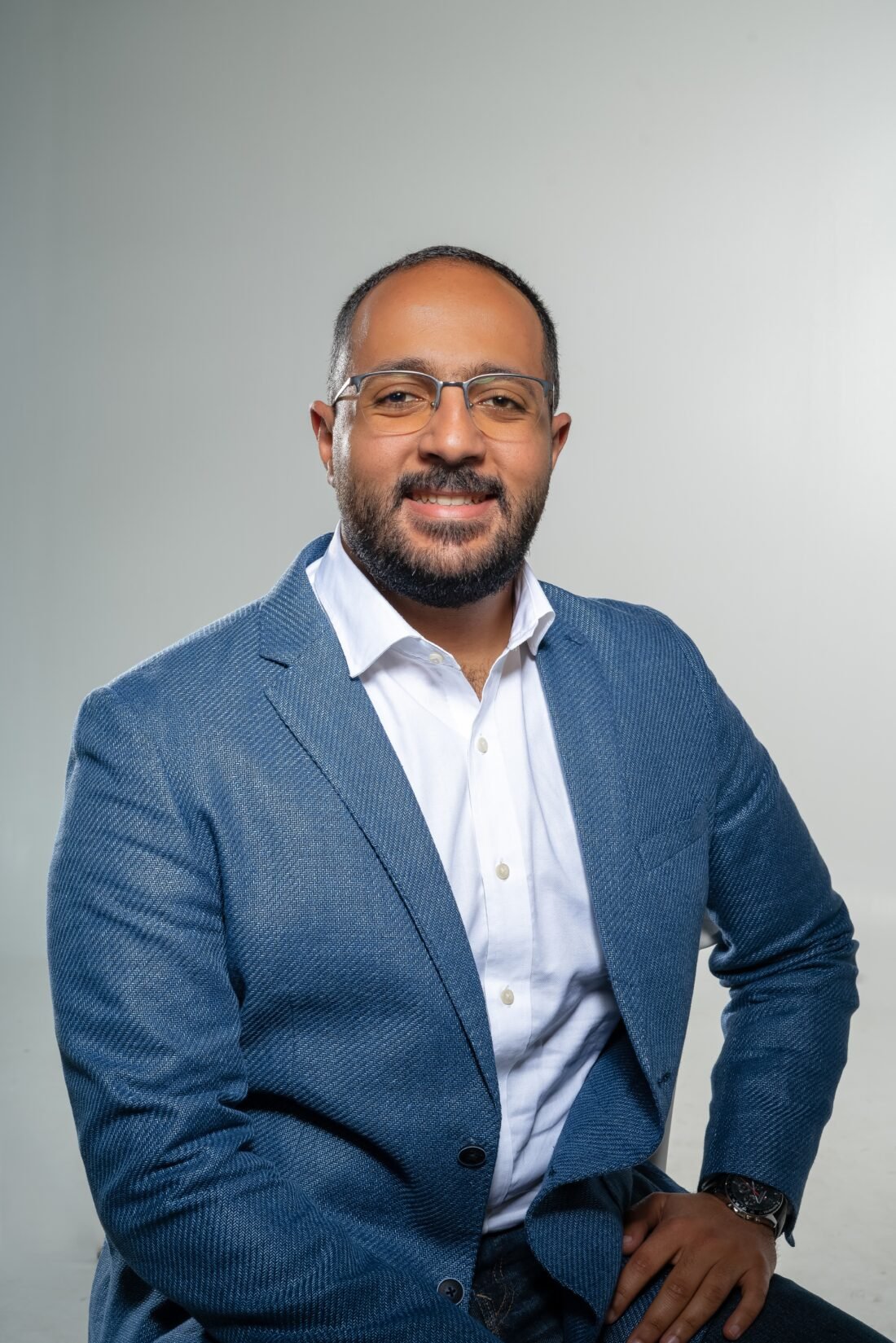
2025’s Costly Lesson: Shiny Tech, Isolated Frameworks
The real story of 2025 isn’t what technology could do. It’s what it failed to accomplish when nobody fixed the human side first.
Last year, one in four senior marketers admitted they lost customers because of technology failures not because platforms weren’t sophisticated enough, but because teams rushed implementations without building organizational readiness, broke systems into incompatible islands, and bolted AI onto foundations that were never designed to hold it.
The pattern is universal across industries financial services, Retail, CPG even SAAS. Everywhere you look, the same story repeats:
– Companies spent millions on solutions.
– Deployed them in the tightest timeframe
– Watched them underperform because integration was sloppy, stakeholders weren’t aligned, and fundamental process redesign never happened.
What’s revealing is that 97% of organizations experienced a technology-driven misstep that hurt customer relationships in 2025. Yet fewer than half of those teams did anything differently. They didn’t redesign broken workflows. They didn’t consolidate fragmented systems. They just waited for the next tool to fix the previous tool’s problems.
Implementation discipline beats vendor sophistication every single time.
Across various industries, majority of digital transformation initiatives stall or fail not for technical reasons, but because organizations treat new solutions as a substitute for difficult decisions about operations, governance, and team structure. They hope the software will solve what leadership failed to organize.
The 2025 lesson cuts across sectors: Stop buying capabilities and start building competence. The gap between owning the best tool and extracting value from it isn’t technical. It’s organizational. And organizational problems are always cheaper to solve than another vendor license.
Autonomous Agents Will Accelerate the Gap Between Winners and Laggards
By late 2026, businesses that invested in foundational work (unified systems, cross-functional governance, documented workflows) will deploy autonomous agents that operate without constant human oversight.
Those that skipped the hard work will still be managing broken software stacks and won’t have the organizational infrastructure to use agents even if they buy them.
Autonomous agents aren’t assistants. They’re decision engines trained on your actual business rules, customer patterns, and operational constraints. They identify opportunities, execute transactions, adjust tactics, and report outcomes all while humans handle exceptions and strategy.
An agent in financial services doesn’t wait for a meeting. It spots a customer pattern across holdings, identifies cross-sell potential, validates risk appetite, and initiates an offer. An agent in retail doesn’t compile reports about inventory. It watches real-time supply trends, adjusts pricing signals, and coordinates campaigns before demand shifts.
The catch: These systems only work if the organization behind them is structured. They automate workflows, not problems. If your information is fragmented, your business rules are scattered across tribal knowledge, and teams don’t trust each other’s metrics, an autonomous agent will just amplify your existing friction.
Gartner projects 40% of agentic projects will fail by 2027 not because the technology is broken, but because organizations are automating fractured processes instead of redesigning them first.
The winners? They spent 2024-2025 doing unglamorous work: consolidating systems, documenting workflows, building shared metrics, aligning stakeholders. By Q2 2026, they’ll activate autonomous systems and see measurable efficiency gains, faster decision-making, and competitive advantage.
The rest will be stuck trying to make new platforms work inside outdated organizational structures.
Why This Distinction Matters Now
If you lead marketing, manage strategy, or oversee customer experience, the uncomfortable reality is this: 33% of an organization’s technology capabilities go unused. Not because teams are unprepared. Because the architecture around those systems was never built to support them.
The 2026 advantage doesn’t belong to companies with the shiniest platform or the newest acquisition. It belongs to those with the discipline to put their customers first (Both internal & External), simplify processes, and align stakeholders before introducing another layer of automation.
Platforms are commoditizing. Leadership, structure, and execution are not.
Yara Milbes :Senior Vice President, Marketing & Growth, Lucidya
AI moved from experimentation to infrastructure. It stopped being a “nice to have” and became embedded in how teams listen, predict, personalize, and act. The real differentiator here was not adoption, it was judgment. The companies that pulled ahead were not the ones using the most tools, but the ones that knew where not to automate, specifically where human context still mattered, and where trust had to be protected.
Marketing teams will shrink (as they should) but their influence will grow. I believe in 2026, high-performing teams won’t be the biggest ones, they’ll be small, senior, and deeply integrated with product and commercial teams! With unlimited data and infinite dashboards, leaders who can’t prioritize, say no, or commit will slow their organizations down; execution will be automated and judgment and orchestration will become the real leverage.
Zeinab Elamrawy: Marketing Director EMEA, Subway

One Lesson from 2025 and One Grounded Bet on 2026
If 2025 taught me one clear lesson in marketing, it’s that attention—not technology, creativity, or budget—is the real constraint. For years, we relied on volume to make up for weak positioning: more content, more channels, more campaigns. In 2025, that stopped working. Audiences didn’t disengage; they became selective. The shift wasn’t driven by algorithms as much as by people protecting their time and focus.
The defining lesson of 2025 was that clarity beat scale. Brands that knew exactly who they were for, what they stood for, and why they existed cut through. Everyone else blended into noise. I saw campaigns with impressive reach but no lasting impact, while smaller, more focused efforts actually changed perception and behavior. That forced a reset in how I approach marketing. Instead of asking how fast we could grow something, the better question became whether it deserved to exist at all.
2025 also reframed trust. It stopped being a brand value and became a performance metric. Overpromising caught up with companies quickly. Messaging that drifted too far from product reality eroded credibility, not just conversion rates.
Looking ahead, my grounded but bold prediction for 2026 is that marketing will move from persuasion to proof. People don’t want to be convinced anymore; they want to verify. Brands that show their work—how they think, build, decide, and improve—will win. Transparency, consistency, and product truth will matter more than clever narratives.
2026 won’t reward louder marketing. It will reward disciplined marketing—Local relevance, clearer positioning, and the confidence to commit to less, but do it better. Fewer, Bigger, Better !
Chapter 2: Trust, Reputation & Brand Meaning
Claudine Tass: Client Director Middle East, Interbrand

Defining shifts or lesson from 2025
Brand accelerated by AI
2025 marked a pivotal transformation as AI accelerated at unprecedented speed, fundamentally reshaping how work is approached. This shift compelled organizations and individuals to embrace agility, foster continuous learning, maintain intellectual curiosity, and harness AI as an amplifier of human intelligence.
Actions continue to speak louder
A critical insight emerged in 2025: brand perceptions became increasingly defined not by messaging, but by authentic action. As technological disruption intensified and stakeholder expectations soared, the strongest brands distinguished themselves through unwavering consistency between their stated values and lived behaviors. Success demanded crystal-clear purpose paired with rigorous execution.
Building relationships through behaviours
At Interbrand, our pride extends beyond what we’ve delivered, to how we’ve done it. 2025 demanded more of our behaviors: empathy and leading with love in how we supported one another and our partners, the discipline to truly listen—not just to stakeholders, but to the data—the courage to be bold and brave in our thinking and choices, and the determination to make things happen with both strategic clarity and accountable outcomes.
One bold, grounded prediction for 2026
Using data to guide brand decision making
Yet authenticity alone is not sufficient. Equally important is the strategic application of brand economics: the discipline of translating brand and marketing data into measurable business outcomes. Today’s brands sit atop vast reservoirs of information that remain largely untapped for strategic decision-making. The competitive advantage belongs to those who harness this intelligence to build performance models that deliver actionable insights. By analyzing brand tracking data, own media customer interactions and competitive positioning, brands can now see clearly which initiatives drive the greatest returns and which align most directly with overarching brand objectives.
This data-driven approach to brand economics is especially critical for stretched marketing teams operating under budget and time constraints. Rather than distributing resources evenly across all initiatives, brands can now prioritize with precision, allocating budget and talent to projects that generate the greatest impact on both brand strength and business performance. The proprietary Interbrand Brand Strength framework serves as an essential guide in this process, providing a structured methodology that directly links brand data with activation. By understanding how specific brand factors influence the performance of the brand teams can make confident roadmaps to prioritise efforts and justify their initiatives to leadership.
The brands that will thrive in this era are those that combine purposeful action with economic discipline: those that measure what matters, learn from the data, and redirect resources with agility toward initiatives that strengthen brand while advancing business objectives.
Olena Lemeskho, Managing Partner Middle East, ROOTS Brand Strategy Consultants

In 2025, the defining shift in marketing has been from staged brand narrative to authenticity. Consumers no longer respond to overly polished brand campaigns, they seek emotional connection that can only be build through transparency and trust. I’ve seen brands and content creators lose relevance when their communication felt overly curated, disconnected from reality or not rooted in substance. Consumers expect brands to clearly articulate what they stand for beyond product. At the same time, craving for human connection has intensified, AI written copies or even campaigns led to disengagement and got punished by platform algorithms.
In 2026, AI will advance from experimentation to operational backbone in marketing and branding. Businesses that use AI with precision will have a massive competitive advantage vs those that use it blindly or don’t use it at all. AI will keep driving efficiency, speed and smarter decision making especially when in comes to research, data analytics or media optimization. I also predict that attempts to substitute human connection through machine automation will lead to loss of trust with consumers, because AI generated communication misses tone of voice, language nuances and cultural sensitivity. I believe, strategic edge in AI will come from augmenting human intelligence with it and let it handle analytical and optimization tasks, whereas strategy, creativity and tone of voice must remain human-led.
Fouad Bou Mansour: Burson CEO, MENAT

2026’s AI Mandate: Balancing Augmentation and Authenticity to Build Reputation
The era of indiscriminate AI adoption is over. Frenetic experimentation characterised 2025 as the year of the great AI land grab, driven by a feverish pace where participation often stood as the primary metric of success. This is clearly reflected in the data: by late 2024, nearly 60% of Middle Eastern organisations reported fast or very fast AI adoption[1], a stark contrast to the mere 15% taking a more cautious approach. Fuelling this enthusiasm, bold economic forecasts have predicted hundreds of billions of dollars[2] in AI-driven regional growth by 2030, with businesses seeking enhanced productivity, streamlined workflow automation, and unprecedented content velocity.
However, this feverish pursuit of augmentation risked coming at the direct expense of impact, value, and ultimately, reputation. Almost universally (97%), marketers reported that they were “struggling to craft emotionally resonant messaging” to connect with consumers[3].
As the race to integrate AI intensified, a significant and measurable deficit in public confidence emerged. Qualtrics confirmed a notable decline in consumer comfort with using an organisation’s AI for common activities, a sentiment that directly impacts brand reputation. In the UAE, this comfort level plummeted by over 20%[4], further underscored by growing concerns regarding the loss of human connectivity. Despite this, data suggested that nearly half (43%[5]) of UAE consumers still believed organisations would use AI responsibly.
The lesson here is clear: simply leveraging emerging technology is unsustainable without having a deliberate framework in place to drive genuine value and impact.
This brings us to the strategic mandate for 2026 – building reputation through a balanced approach.
This year won’t be about retreating. Instead, it will pivot from the binary choice of human vs. machine to a sophisticated strategy that marries augmentation with authenticity. The central challenge is no longer merely how fast we can implement AI, but where, why, and how we can deploy it to genuinely enhance human capability and unleash new forms of value, without eroding the confidence we’ve built over decades.
For communications leaders, this means moving beyond simple prompts to craft strong human-in-the-loop workflows to solve complex business and communications problems. It means truly empowering people to steer the wheel. Smart diversification of creative strategies will undeniably prevail, leveraging AI for scale and efficiency where appropriate, while consistently championing human-led creativity for high-stakes brand moments.
Looking ahead, successful tech implementation will hinge on deeply embedded solutions that deliver quantifiable business outcomes, aligning with Gartner’s prediction that 40% of enterprise applications will feature task-specific AI agents by 2026[6]. Crucially, this must emphasise AI-enhanced specialists, where technology meets upskilling to amplify human judgment, empathy, and cultural understanding, rather than replacing it.
The winners of 2026 will not be the companies that use the most AI, but rather those that deploy it to drive distinct impact, blending relentless innovation with human insight to build enduring reputation.
Lara Geadah: Founder, Cameo Comms

In 2025, one of my biggest learnings has been just how powerful PR really is — far beyond the way it’s traditionally been perceived.
For years, PR has often been boxed into a single function: visibility. Being featured in the media, getting logos on a “featured in” slide, or collecting press clippings as proof of success. While visibility absolutely still matters, I’ve learned that PR’s real value goes much deeper than that.
When executed strategically, PR has the ability to influence real business outcomes. It can drive app downloads, increase footfall, support product launches, strengthen brand trust, and even directly impact sales. It shapes perception, builds credibility at scale, and creates long-term brand equity, something paid ads alone can’t always achieve.
What’s been especially interesting to see is how PR works best when it’s integrated into the wider business strategy. When storytelling, partnerships, media placement, and timing are aligned with clear commercial objectives, PR stops being a “nice-to-have” and starts becoming a growth engine.
Looking ahead to 2026, I strongly believe we’re entering a new era of performance-driven PR.
Brands are becoming more intentional, more data-led, and far more conscious of ROI. With tighter marketing budgets and increased pressure to justify spend, there’s less room for activity that doesn’t clearly contribute to business goals. As a result, PR is evolving and fast.
We’re moving away from vanity metrics and toward measurable impact. Reach and impressions alone won’t be enough. Brands will increasingly ask:
- Did this coverage drive traffic?
- Did it convert into downloads, sign-ups, or sales?
- Did it open doors to partnerships or long-term growth opportunities?
Performance PR doesn’t mean sacrificing creativity or storytelling. It means enhancing it with strategy, insight, and accountability. It’s about designing campaigns with a clear outcome in mind, tracking results, and constantly refining the approach to maximise impact.
In my view, the future of PR belongs to those who can combine creativity with commercial thinking. Those who understand that great storytelling should not only inspire, but also move people to act. And those who can confidently sit at the table as strategic partners, not just service providers.
That’s where PR is headed and that’s the space I’m excited to continue building in.
Lara Sous: Marketing & PR Lead for RØDE, MENA

The region witnessed a significant shift in 2025, with creators no longer asking whether they should invest in better tools, but instead actively sharing more content around the importance of having pristine audio, how to build and optimize audio tools for stronger and sharper outputs.
Across the MENA region, there was a clear move from complex content creation to seamless studio-quality home setups without compromise; whether its studios at home, warm podcast setups, or live on-the-go formats, genuine and authentic content has become the norm rather than the exception.
Creators in MENA and around the world don’t want complexity, they want empowerment. They are highly ambitious, fast-moving, and culturally fluent. What they value most with our fast-paced digital world are tools that remove obstacles, elevate quality instantly, and allow for authentic storytelling.
The brands that stood out in 2025 were the ones that enabled creators to sound pristine and professional without any compromise to their aesthetics.
In the middle of all the increasing noise, from copy-paste products to recycled taglines, brands who fail to earn their place in culture will simply be ignored.
The next wave of growth, especially in the creator and consumer tech space, will not be driven by louder campaigns or bigger budgets, but simply by credibility & authenticity. Collaborations between brands and creators will not be a one-stop-shop (i.e: transactional or one-off).
Collaborations need to be purposeful, insightful and deliver genuine value to the audiences consuming this content.
The brands who will succeed here are those who build meaningful & long-term relations with creators, allow for shared storytelling and knowledge exchange whilst maintaining strong local relevance and cultural nuance.
The non-negotiables remain clear: credibility, contextual relevance & consistency. Brands who treat creators as media channels: one stop shop will fade; those who treat them as partners will shape the future.
Ultimately, it’s about powering the voices of creators, supporting them as they share their stories uniquely, creatively and ambitiously across their platforms and at every stage of their journey.
Loretta Ahmed,: Founder & CEO, Houbara Communications
The defining lesson of 2025 was this: pace must be matched by judgement.

Across the Middle East, 2025 was marked by extraordinary momentum. Economic diversification, capital inflows, regional expansion and heightened global attention created intense pressure for organisations to move faster and be more visible. For communications teams, this often translated into a constant demand to respond, comment and publish. AI only amplified this expectation. However, the most effective communications leaders in 2025 were not those who produced the most content, but those who understood the region deeply. This included its stakeholders, sensitivities, regulatory environments and long-term ambitions. In markets such as the UAE and Saudi Arabia, reputation is built over years and across relationships, not through volume or virality. Silence, when intentional and well advised, proved as powerful as speech.
We also saw a clear distinction in how AI was deployed. Organisations that treated AI as a publishing engine often struggled with tone, cultural nuance and credibility. By contrast, those that used AI as an assistant for research, insight and scenario planning strengthened decision making while protecting human judgement. In a region where trust and precision matter, this difference was critical.
Another defining shift in 2025 was the repositioning of communications as a leadership function rather than a support service. As organisations navigated regulatory complexity, cross border expansion and increased scrutiny, senior counsel became essential. Communications leaders were increasingly asking not only what we can say, but whether we should say it at all, and what the downstream implications might be.
Looking ahead to 2026, my grounded prediction is that PR in the Middle East will be defined by its proximity to leadership and its ability to protect consistency, values and long-term reputation. Our profession will continue to move upstream, and communications leaders will be embedded earlier in strategy, governance and decision making, expected to advise with clarity, sound judgement and restraint when pressure rises.
In 2026, success will be measured less by reach and more by resilience. Metrics will still matter, but they will be considered alongside stakeholder confidence, regulatory alignment and reputation durability. Relationships with media, policymakers, partners and communities will remain the region’s most valuable currency.
Ultimately, the Middle East rewards conviction with perspective. In 2026, the discipline of PR will be strongest where it holds steady on the long view, even as short term noise grows ever louder.
Lynn Al Khatib: VP of Communications, Chalhoub Group

Communicating with Meaning: The Human Advantage Brands Can No Longer Fake
Over the past year, communication shifted from being a function to becoming a responsibility. An act of leadership. A pillar of reputation. A necessity for people, brands, and companies alike. It is no longer a nice to have. It is a must have.
You cannot not communicate.
Leading communication today also means accepting friction. Not every message is meant to please everyone. Communication is no longer about consensus, but about clarity. Choosing what to say also means choosing what not to say, and when silence is more responsible than noise.
At the same time, communication became radically democratized. More tools. More platforms. More content. More AI powered feeds. Yet people crave less noise and more meaning. More truth. More real stories, even when AI assisted.
The defining shift of 2025 is clear: we moved from messaging to meaning. Meaning collapses the moment internal culture and external narrative diverge. In an age of radical transparency, communication cannot compensate for misalignment. It requires governance: shared values, clear decision making, and consistency across leadership, HR, ESG, marketing, and operations. What a brand says must be recognizable in how it behaves.
2025 also proved that reach, frequency, and polished narratives no longer guarantee relevance. Brands that sounded human and emotionally grounded stood out. Storytelling evolved, and the kind that is unfiltered and owned by the brand itself, and not only through influencers. While AI became a powerful amplifier, but purpose and responsibility stayed at the core.
Luxury offered some of the clearest proof points. Pamela Anderson redefined beauty by showing up makeup free, sparking a global conversation on ageing and female power. In fashion, Jacquemus wins by turning heritage into brand language, where farming, family, and memory feel inseparable from the product – all the while disrupting his campaigns with great use of AI.
The second shift was impossible to ignore. Brands became inseparable from the people leading them. Luxury’s creative director musical chairs turned leadership changes into cultural events. A brand must remain bigger than any individual, yet the individuals behind it shape meaning, relevance, and trust. The same applies to corporate leadership. Personal branding is no longer optional. People choose brands, invest in them, and work for them because of the humans behind them, not just the balance sheet.
Employees are no longer an internal audience. They are the first credibility test. Before a message reaches the public, it is evaluated inside the organization. People instinctively know whether communication reflects reality. When they believe, advocacy follows. When they don’t, no campaign can compensate. This is the power of internal communication.
Moments of crisis reveal the true role of communication. When pressure rises, communication stops being narrative and becomes character. It is no longer about framing, but about judgment, restraint, and responsibility. Trust is built through coherence and courage.
The 2026 prediction
Culture will matter more than generic personalization. Missing cultural nuance, fluency, heritage, or craftsmanship can trigger reputational damage, and this will intensify. Global brands can no longer impose a single identity across markets. The future belongs to those who co create with cultures, amplify local craftsmanship, and acknowledge the sources they borrow from. Cultural fluency is becoming a license to operate. And with that, loyalty will follow humans, not logos.
Community will also be redefined. A CRM database is not a community. A targeted algorithm is not a community. Real communities form when people connect, influence the brand, and lead conversations on its behalf. Courageous brands will let go of control and listen more than they speak.
A final word to leaders behind brands and companies. Thought leadership is not a posting calendar. It is how you show up daily. It should serve ideas, people, and progress, not ego. This is where the role of the Chief Communications Officer fundamentally evolves: not a storyteller at the end of the process, but a custodian of meaning, a strategic advisor, and an architect of trust.
Maha Ayash: Head of UAE, TEAM LEWIS

Throughout 2025, we witnessed a significant acceleration in the adoption of interactive digital campaigns across the MENA region. Brands and organisations invested heavily in immersive experiences, real-time engagement and data-driven content, reflecting the region’s digitally savvy audience. However, despite frequent predictions that traditional PR would be eclipsed by digital, this year demonstrated that the most powerful and effective campaigns are those that successfully blend both disciplines.
Rather than operating in silos, PR and digital strategies increasingly worked in tandem, leveraging the credibility and narrative strength of PR with the reach, agility and personalisation of digital platforms. This integrated approach enabled brands to amplify their stories, respond rapidly to trends and foster authentic connections with diverse audiences.
Success in today’s communications landscape requires a holistic strategy, where storytelling, reputation management and digital innovation are seamlessly aligned. Those who embraced this synergy achieved greater impact, stronger trust and long-term engagement. The future of communications lies in integration, adaptability and a deep understanding of both the art and science of engagement.
In 2026, the integration of AI will become more transformative across PR and marketing campaigns. The role of AI as a creative partner will evolve, enabling hyper-personalised content, real-time audience engagement and dynamic storytelling at scale.
Brands and agencies will harness AI to unlock new levels of creativity, generating tailored messages, immersive experiences and interactive campaigns that resonate with diverse audiences. With advanced analytics, brands will be able to identify emerging trends, and ensure campaigns are inclusive and reflective of the region’s diversity.
As people become more invested in community, social responsibility, and authentic connections, AI will empower organisations to respond to what truly matters to their audiences. By leveraging AI, organisations can create purpose-driven campaigns that foster genuine community engagement and drive positive change.
The true winners in 2026 will be those who use AI not merely for efficiency, but as a catalyst for creativity, empathy and meaningful impact. This will set new standards for innovation and responsibility in communications and make a tangible difference in the communities they serve. Ultimately, the most successful brands will be those that combine technological innovation with human insight, building trust and lasting relationships in an ever-evolving landscape.
Mazar Masud: SVP, Corporate Affairs, M42
The defining lesson of 2025: Trust became strategic infrastructure; in 2026, communicators becoming ecosystem architects
2025 marked the moment that public and private institutions realised the value of trust in shaping local, regional and global progress. Those that prioritised narrow self-interest saw their influence diminish; those that contributed meaningfully to shared outcomes strengthened it.
This phenomenon was witnessed all over the world, playing out in the Middle East too. Focusing on the UAE, it moved decisively from being discussed as “emerging” to being relied upon as essential, bringing together capital, capability and conviction to address challenges that extend far beyond its borders.
What distinguished the UAE was the maturity with which it executed its ambition. Across finance, technology and healthcare, the country demonstrated an ability to convene diverse actors, invest with intent and translate innovation into real-world impact. In doing so, it strengthened its position as a trusted global partner that seeks and finds solutions.
The defining lesson of 2025 was that influence at this level depends on trust. In a year shaped by geopolitical volatility, economic recalibration and rapid technological acceleration, trust emerged as the most valuable form of currency in global engagement. It had to be built deliberately through consistency, transparency and genuine collaboration across borders and sectors.
This was evident in the rise of artificial intelligence (AI). As AI moved from experimentation to deployment, the way it was communicated proved as consequential as how it was developed. Responsible communication played a decisive role in framing AI as a tool that augments human activity and discovery, such as in health, rather than an existential threat. But, it also acknowledged the unresolved challenges that must be addressed. Progress in regulation has not kept pace with innovation, access to AI’s benefits remains uneven and fragmented ecosystems continue to limit its potential. These directly shape public confidence and determine whether technology delivers shared benefit or deepens divides.
In 2026, as these tensions intensify not only in AI but across geopolitics, climate and economics, the role of communicators will be elevated from narrators to integrators.
The most effective communications leaders will operate as ecosystem architects – part strategist, part technologist and part storyteller. They will translate complexity into strategic clarity; exercise human empathy and behavioural science, while immersing themselves in technology and AI; and, be honest, authentic and therefore imperfect in telling stories. Communicators will be expected to convene across sectors, cultures and disciplines. Their mandate will extend beyond shaping narratives to helping engineer the conditions for responsible progress: advocating for inclusive frameworks, encouraging collaboration and ensuring innovation serves the common good. Why? To align diverse, sometimes incompatible, stakeholders; build trust at scale for meaningful change; and create connected, cross-border ecosystems to serve humanity.
Nader Mashnouk: Head of Corporate Communications, MENA, Yango Group
Global/Regional leaders became the interface for trust

If there was one defining shift in 2025, it was this: leadership, not branding, became the primary interface through which trust is built, particularly in technology.
As technology became more complex and more deeply embedded in everyday life, audiences stopped relying on polished corporate narratives to make sense of it. Instead, they began looking to people. Beyond innovation, they wanted judgment, accountability, and clarity. In that environment, trust stopped being a by-product of visibility and became the central currency of credibility.
This shift was most evident in how leaders chose to show up. The voices that resonated in 2025 were not those chasing reach or virality, but those engaging consistently and thoughtfully across select platforms. Trust was built over time, through coherence, repetition, and a willingness to explain not just what decisions were made, but why they were made.
Long-form formats, particularly podcasts, played a defining role in this change. Over the past year, they emerged as one of the most effective leadership channels precisely because they allow for depth. Extended conversations created space for nuance and reflection in a way headlines rarely can. They enabled leaders to demonstrate how they think, not just what they want to say.
This was especially true for leaders operating in the AI space. As AI systems grow more powerful and more misunderstood, the need for patient, contextual explanation has never been greater. Podcasts mirrored how real decisions are made: layered, evolving, and rarely perfect. In a landscape increasingly shaped by algorithms and automation, human explanation became a differentiator.
By the end of 2025, leadership communication had shifted from representation to responsibility. The leaders who earned trust were not necessarily the loudest, but the clearest.
From visibility to value
Looking ahead, 2026 will measure communications less by the attention it generates and more by what it enables.
Reach and visibility still matter, but on their own they do little to prepare organizations for the realities tech companies inevitably face. They do not build regulatory confidence, align partners, reassure investors, or create resilience under scrutiny. Those outcomes require credibility and consistency, along with authority.
This is why communications has always been a strategic function tied to risk management and growth, not a reporting exercise. In 2026, the most effective communications leaders will be judged by business-adjacent outcomes: trust with policymakers, alignment across ecosystems, and confidence from the investment community.
At the same time, we will see a shift from broad visibility to editorial authority. Being quoted everywhere will matter less than being trusted in the right places. Fewer platforms, higher signal, clearer positioning. Influence will come from depth rather than frequency.
These shifts are inseparable. Authority is what turns communication into impact, and trust is what converts visibility into influence. Communications that cannot move conversations forward will struggle to move businesses forward.
In tech especially, 2026 will not reward noise. It will reward clear thinking, responsible leadership, and meaningful engagement. Because communication is no longer about amplification. It is about alignment.
Natasha Hatherall: Founder and CEO, Tishtash

2025 was a turbulent and at times, an unpredictable year for the media and PR industry. It was marked by lots of change, rapid shifts in audience behaviour and increasing pressure on traditional models. The most defining lesson to emerge for me was that scale no longer guarantees relevance. In an increasingly crowded landscape, broad, one-size-fits-all media struggled to cut through, while platforms with a clear identity, voice and purpose strengthened their influence.
Audiences became more selective about what they consumed and where they invested their attention. Engagement was no longer driven by volume, but by connection and trust. Media brands that understood their community, and served it with consistency, authenticity and cultural relevance, performed far better than those chasing mass appeal. The year reinforced that loyalty is built through depth, not noise.
From a business perspective, 2025 also forced a recalibration. Growth was rarely linear and agility became essential. In my experience, leaders had to make sharper decisions, focus on fewer priorities, and accept that resilience often comes from knowing exactly who you are speaking to – and who you are not. Ultimately, 2025 reminded the industry that clarity and credibility are the foundations of sustainable success.
// One Bold, Grounded Prediction for 2026
While 2026 I personally feel may not be the most buoyant year economically, I believe it will be far more stable and strategically important for the media industry. My bold but grounded prediction is that niche publishing and community-led platforms will continue to outperform traditional, broad-reach media, particularly in the Middle East.
Audiences are increasingly seeking highly tailored content that reflects their lifestyles, values and lived experiences. We are already seeing this play out with independent platforms such as SheerLuxe and Raemona – outlets that have found clear positioning, built strong communities and, crucially, commercialised effectively. In 2026, I expect to see more niche media launches following this model.
Community will remain central to growth. Micro and nano communities built around specific interests, life stages and cultural identities are overtaking broad messaging in both engagement and trust. Groups such as British Mums, Real Mums, That Dubai Girl, Women Who Thrive and The Big Beauty Scoop will continue to grow, evolve and deepen loyalty, becoming increasingly influential for brands.
Traditional media will also continue to transform. Many legacy publishers will further reduce print or reposition it as a premium product, while digital subscriptions, newsletters and curated branded content become core revenue drivers. The line between earned and paid media will blur even further, requiring agencies, brands and publishers to rethink their roles and partnerships.
The future of media in 2026 will not belong to the loudest voices, but to those that are focused, authentic and community-driven – platforms that understand their audience and serve them with purpose.
Noura Al Sarraj: Deputy Managing Director, Weber Shandwick Abu Dhabi

As I reflect on my experiences in marketing communications in the UAE during 2025, there is one realisation that stands out for me: celebrity-backed campaigns are still as engaging as they are impactful. In 2026 though, I also think we’ll see more brands actively shaping culture and transitioning from participants in cultural conversations to leaders of movements, both here and abroad.
2025 LEARNING: CELEBRITY-BACKED CAMPAIGNS SHINE
Campaigns featuring celebrities proved that star power remains a highly effective tool when strategically implemented.
Dubai Tourism’s “Find Your Story” campaign tapped actors Millie Bobby Brown and Jake Bongiovi to portray Dubai as a glamorous yet accessible destination through cinematic storytelling. It married global appeal, intrigue and curiosity around how Dubai continues to surprise travellers with new adventures and then invited visitors to continue ‘the story’.
The Department of Culture and Tourism Abu Dhabi demonstrated its forte in cultural communication with “Passion Is The Occasion” featuring Emirati actor Ahmed Al Jasmi, Hollywood comedian Steve Harvey, and later in the year even Bollywood stars Deepika Padukone and Ranveer Singh. The campaign encouraged people to shape their memorable moments as they avail Abu Dhabi’s exciting events lineup across sports, culture, music, and entertainment.
These campaigns drove engagement, elevated visibility and highlighted a key lesson: celebrity endorsements can be used to amplify narratives – but they don’t replace them. 2025 showed me that while celebrities can spark attention, brands can own cultural conversations without the dollar sign pegged to it.
2026 PREDICTION: BRANDS SHAPING CULTURE
In 2026, I see brands shifting from following culture to leading it; they’ll lean into the region’s thriving cultural scene and the growing prominence of its world-class museums. The GCC is fast becoming a global hub for culture, innovation and history, for example, Dubai’s Museum of the Future offers an innovative exploration of technology’s impact on humanity. Abu Dhabi has further cemented itself as a cultural capital with the opening of the Natural History Museum Abu Dhabi and the Zayed National Museum, alongside the highly anticipated Guggenheim Abu Dhabi, set to open soon. These museums provide brands with fertile ground for collaboration – whether through partnerships or activations – that marry art, innovation, and storytelling to engage audiences meaningfully.
Additionally, hyper-local movements that strengthen community ties while showcasing the best of Arab culture will continue to thrive. Events like Alserkal Avenue’s Quoz Arts Fest, which has amassed a loyal following over the past 14 years, highlight how art and creativity resonate deeply with the community. Today’s consumer is far more culturally attuned than ever before, demanding that brands step up as contributors to these cultural conversations.
LEADING MOVEMENTS
2025 proved to me that celebrity-backed campaigns can serve as powerful tools for connection. In 2026, brands will lead key movements, taking ownership of culture and drive meaningful change on both a regional and global scale.
The question is no longer “How do brands respond to culture?” Instead, it’s “How do brands create it?”
Omnia Samra: Communications Lead, Middle East, Russia and Africa (MERA) at Pfizer
Communications in Transition: Lessons from 2025 and Predictions for 2026
The past year has been transformative for communications and PR, marked by a defining shift that will shape the industry for years to come. 2025 was the year artificial intelligence (AI) moved to the core of communications strategy. AI-powered tools streamlined media monitoring, automated content creation, and enabled predictive analytics for crisis management. This technological spike has allowed Communications professionals to operate at unprecedented speed and scale. Yet, it also underscored a critical truth that technology cannot replace trust. As misinformation spread faster than ever, brands learned that authenticity is crucial!
In 2025, audiences increasingly valued transparency and narratives driven by clear purpose. The focus of influencer marketing shifted toward micro influencers, whose authenticity was perceived as more impactful than traditional celebrity endorsements. As a result, the fragmented media landscape prompted PR professionals to integrate omni-channel strategies, combining earned, owned, and paid media to sustain relevance. The principal takeaway underscored the importance of integrating AI-enabled efficiency with genuine human engagement, ensuring all communications uphold integrity and empathy.
Looking ahead, 2026 will be even more disruptive. With generative AI reshaping how people find and access information, there will be a shift towards Generative Engine Optimization (GEO). Securing credible media coverage from reputable sources will become crucial for being discoverable in AI-driven search results and language model summaries.
Yet authenticity and human storytelling will continue to be very valuable in a landscape saturated with AI-generated content. Unscripted, human-led communication and genuine, raw stories from real people will foster trust with audiences, making strong relationships with journalists and creators essential and leading to more in-person events in 2026.
Rana AlBorno: Assistant Vice President, Manager Corporate Communications, Mashreq

The communications landscape in 2025 was defined by acceleration of technology, rising of audience expectations, and an intensified demand for strategic clarity. Amid this pace, one lesson became clear. Simplicity, when guided by purpose and transparency, emerged as a powerful differentiator. In a region as diverse as MENA, teams that could turn complexity into clear and relevant messaging earned deeper trust from stakeholders and stronger engagement across channels. For communications leaders, this reinforced a fundamental principle. In times of transformation, clarity has a greater impact than volume.
In 2026, the field of communications is entering another important phase shaped by the development of Agentic AI. Unlike earlier tools, this new wave of intelligence is not meant to replace human insight but to enhance it. The most effective use of AI will be in helping teams work faster, draw better insights from data, and stay more closely aligned with audience needs. The real measure of success will lie in how naturally these tools fit within existing workflows. Communications professionals will look for AI solutions that support creative thinking, adapt across platforms, and respect the way teams already operate. The future of communications will not be driven by automation alone, but by technology that empowers people to focus on what matters most.
Rich Rust: Global Head of Communications & Marketing, V.Group

2025: Lesson – We’re all transformation specialists now
The single biggest lesson from 2025, for me, is that effective communicators are now always-on transformation specialists. Being “current” in change communications is no longer a niche skill, it’s a core capability.
With a confluence of factors impacting Communications and Marketing teams simultaneously; geopolitical instability, economic pressure, technological advancement we’ve entered an era where we are expected not only to navigate change, but to prove commercial value and reputational impact in real time, against constantly shifting conditions.
It’s easy to talk about transformation in broad, aspirational terms. It’s much harder to operate in a way that genuinely adapts to adopting new technologies, systems and ways of working, while still delivering high-quality output and keeping teams motivated and engaged.
That tension will only intensify in 2026. AI, in particular, is no longer a future consideration; it’s a present-day capability shift. Whether you’re an in-house team looking at systemizing workflows and content development, or an agency re-defining its value proposition amid changing client expectations and budgets, the implications are profound and wide reaching.
For teams that have yet to fully grasp AI’s impact, especially as it relates to search, discoverability and earned media, 2026 will represent a steep and unavoidable learning curve.
2026: Prediction – A fundamental rethink of where value is created
What this means, in practice, is a rethink of how capital, both economic and human, is deployed across the communications ecosystem.
Over the past year, I’ve heard growing discussion around “in-housing”. I see this less as a binary shift, and more as a re-allocation of value.
Done well, this should be positive for both in-house teams and agencies. A sharper focus on outcomes should mean agencies are engaged more deliberately – for higher-value, more strategic and creative work, rather than being absorbed by volume-driven “busy work” that so often serves to just frustrate everyone involved.
For in-house teams, it will demand a rapid sharpening of skills and accelerated capability-building. The reality ahead requires a deep understanding of how new tools, particularly AI-enabled ones, can be deployed intelligently, ethically and at scale to drive reputational and commercial outcomes.
It will also continue to blur traditional boundaries between Communications and Marketing. In a world where attention is increasingly scarce and fragmented, integrated thinking and execution won’t be optional, they’ll be essential.
Showkat Nabi Rather: Assoc. Account Director, Sustainability & ESG Comms, Gambit PR & Communications

I think the 2025 reiterated that credibility lasts much longer than noise and us as PR professionals now have a bigger role of not just providing strategic consulting or creating content but being curators of trust.
One of the biggest trends I noticed in the region, particularly in the UAE, was the rapid growth in markets such as real estate and AI, which made clients more demanding in getting attention and showing relevance. They want their brand or story to stand out and get noticed, and some have even taken major steps to rebrand their companies while feeling more competitive with existing and new players in the market. So the main focus for us was to make sure we communicated why a story mattered instead of simply trying to be the loudest.
Also, audiences and journalists are more selective now, and they quickly lose interest in content that doesn’t say anything meaningful. For example, broad statements and high-level commitments in subjects like sustainability are no longer sufficient unless you provide clear proof points and honest communication around impact. This is more important when you trying to get earned coverage.
Also, companies need to be more transparent to build trust in competitive and well-regulated markets like the UAE. This has helped both PR agencies and their clients share factual, evidence-based stories and improve their reputations.
We have also seen another important trend, which is the free access to AI tools, leading to their growing use for content creation, research, and insights. It might have increased efficiency to some extent but created a bigger issue to maintain credibility and justifying the real ROI. These concerns are echoed by multiple reports, including the 2025 PRCA MENA AI in PR Report, which cited that 39% of respondents expressed concerns about the reliability and accuracy of AI-generated outputs.
Looking to 2026 and beyond, I believe one of the biggest battles will be between content and credibility. With AI tools becoming more accessible and efficient, it will be even more challenging to authenticate content. In addition, new talent, particularly fresh graduates who rely heavily on AI tools, will need proper guidance and training, as heavy use of these tools can lead to reduced critical thinking, lower confidence, and weaker decision-making skills. This makes it essential for agencies and in-house communications teams to help young professionals use AI responsibly and develop stronger skills as they progress into more responsible roles.
Lastly, in fast-paced markets like the UAE, innovation, sustainability, and reputation building will continue to be key priorities for clients, and for PR professionals, a major differentiator will be credibility. I believe the future of PR belongs to those who are willing to adapt, embrace new tools and continue learning, while staying rooted in the fundamentals of good and ethical communication, which includes clarity, authenticity, and trust.
Chapter 3: Retail, Media, Platforms & Distribution Power
Stuart Mackay : Global Client Lead, Starcom

2025: Why Marketing Needs Explaining, Not Defending
As 2025 concludes, one insight stands out above all: marketing does not fail because of a lack of impact, but because its value is not effectively communicated to those at the top of the organisation.
Throughout the region this year, marketing teams have faced intense scrutiny. Budgets were reviewed, questioned, and, in many cases, reduced. What became evident is that marketing is often the first area targeted for cuts, not because it is ineffective, but because its role in driving growth is not explained in terms that resonate with senior leadership.
Too often, marketing is still viewed as a cost centre rather than a strategic investment that fuels demand, secures future revenue, and supports sustained brand growth. When results are presented solely through efficiency metrics or short-term performance indicators, marketing becomes vulnerable during periods of pressure. This is rarely a performance issue; it is a matter of communication.
WARC’s latest research on engaging the C-suite (2025) underscores this point. Boards and executive teams do not base decisions on media channel metrics. Their focus is on business growth, risk management, resilience, and long-term value creation. In my experience this year, the marketing leaders who made the most progress were those who identified this disconnect and actively worked to bridge it.
Instead of defending expenditure, they concentrated on educating their leadership teams. They articulated how brand investment sustains demand over time, why excessive cuts lead to future recovery costs, and how marketing builds pricing power and competitive advantage. Crucially, they also clarified the risks of inaction: What happens when demand generation stalls, brand visibility erodes, or mental availability diminishes?
These conversations transformed budget discussions. Marketing was no longer perceived as discretionary or “nice to have,” but as a catalyst for sustainable growth. Decisions shifted from short-term savings to long-term strategic trade-offs.
Looking ahead to 2026, the ability to translate marketing’s value will become even more critical. As scrutiny continues, marketing leaders who can clearly connect investment decisions to commercial outcomes will earn greater trust and influence at the executive level. WARC’s evidence consistently demonstrates that organisations balancing long-term brand building with short-term activation outperform those focused solely on efficiency, a reality increasingly recognised in boardrooms.
The task for the coming year is not to defend marketing’s existence, but to elevate the conversation. Those who succeed will be the ones who communicate marketing’s role in terms that leaders understand, ensuring it is seen as a driver of growth, not simply an easy place to cut.
Amal Alhomosany: General Manager, Etisalat Information Services EIS
2025’s Defining Shift: From Media Buying to Data Intelligence
If 2024 was the year AI entered marketing decks, 2025 was the year it entered billing lines — reshaping what performance means in practice. The most defining shift has been gradual move from media buying to data intelligence as the core driver of effectiveness. Marketers in MENA stopped asking only “Where should I spend?” and started asking “What signals are we using, how do we qualify, and what does incrementality look like?”
Three forces accelerated this shift:
- Retail & commerce media acceleration — First-party purchase, search, and store-level data turned into performance products.
- Telco and publisher identity partnerships — Clean-room collaborations enabled privacy-compliant deterministic targeting beyond walled gardens.
- Agentic AI in campaign ops, collapsing manual planning cycles and exposing how much time in agencies was non-value “process work.”
The lesson from 2025 is that reach and impressions remain abundant, but trust and qualification are scarce. The brands that won didn’t just target more — they targeted right through data fusion across telecom, OTT, retail, and mobility environments. As a result, the competitive edge moved upstream into data taxonomy, identity resolution, and closed-loop measurement, not necessarily downstream into CPM discounts or creative rotation.
2026 Prediction: The Market Will Reward Deterministic Accountability
2026 will be the year media stops being bought and starts being verified. The major shift underway is the industry’s move away from proxy performance toward deterministic accountability — knowing who you reached, what they did, and whether the outcome mattered commercially.
Three forces will define this break from legacy performance logic:
- Identity becomes the new inventory
With cookies collapsing and probabilistic targeting losing credibility, advertisers will demand deterministic audiences and authenticated reach. Telco, retail, and mobility data will form the new cross-domain identity fabric. - Clean rooms become utilities, not walled silos
Enterprise advertisers will require identity resolution, match rates, and incrementality measurement across media owners. That forces interoperability across clean rooms, retailers, and publishers, not just within walled gardens. - Outcome language becomes commercial, not media-led
CFOs and CMOs will converge around validated indicators like ROAS, LTV, new-to-brand, and new-to-category — replacing legacy proxies such as CPM, CTR, reach, or viewability.
Why MENA Will Shape This First
The region is structurally set up to lead this evolution — as it is less fragmented and more regularized.
- Integrated telco ecosystems
- Dense retail and payments infrastructure
- High mobile-first commerce behavior
- Many loyalty programs and OTT platforms with a signed in userbase
- Governments that legislate at the speed of markets, not beyond them
This creates a unique opportunity for MENA to become the first commercial testbed for identity-led, privacy-safe, deterministic media. An integrated spine will move from a theoretical future to live and operational solutions.
The global story will be written in many places, but the first real proof points — the ones that show how identity, attention, and outcomes converge into a new economic layer — are likely to emerge from MENA.
This is not just a change but whole shift that won’t just reshape advertising — it will reshape how digital economies are valued.
Maher Ghazal: Chief Growth Officer, Reach MENA
From Guesswork to Ground Truth: What 2025 Taught Us and What 2026 Will Demand
As 2025 comes to a close, one change stands out clearly in how marketing and media decisions are being made. We moved away from relying purely on inferred intent and began modelling intent using real, connected signals.
For years, marketing strategies were built by classifying people into abstract audience types: the luxury seeker, the trend setter, the impulse buyer and inferring behaviour based on who we believed they were. These frameworks helped organise thinking, but they were ultimately proxies for intent rather than proof of it.
In 2025, that approach continued to evolve. Across both Reach MENA and PiWheel, we saw further shifts toward using deterministic signals, actions such as searching, booking, purchasing, and travelling and, critically, connecting them rather than viewing them in isolation.
In ecommerce, more clients began relying on purchase behaviour not just to optimise conversion, but to inform how and when to engage audiences earlier in the journey. In travel, there was growing focus on in-market travellers, historic travellers, and travellers to competing destinations; people already expressing intent through action, not assumption. What had traditionally been treated as lower-funnel data proved invaluable in shaping higher-funnel decisions. Upper-funnel marketing became less about broad awareness and more about relevance, showing up at the right moment, not everywhere.
This shift required more than better data; it required new ways of working. In 2025, companies like ours had to invest in data science to help connect these signals and build more meaningful personas, and in engineering talent to translate insight into process. Understanding intent became less about defining audiences and more about designing systems that could interpret behaviour at scale.
This evolution was reflected on the human side as well. The people who stood out most weren’t those following established playbooks, or even those simply skilled at prompting AI. Single prompts didn’t scale. What made the difference were leaders who began building. In one case, a team lead went as far as learning how to code using AI, building an internal MVP to solve a real problem, and proving its value before developers were brought in to turn it into a full tool. Over time, this became a pattern, teams didn’t wait for new processes, they created them because the work demanded it.
Looking ahead to 2026, intent modelling will become even more layered. Human actions will remain central, but they will increasingly be combined with signals generated by AI systems working alongside people; tools that compare options, narrow choices, and shape decisions before a final selection is made. The challenge will be
bringing these human and machine signals together into a single, coherent understanding of the individual.
In 2026, competitive advantage will come from access to connected data including sales data, platform data, and media data, and from the ability to link these sources so AI models can meaningfully predict, model, and support decision-making. Without this foundation, AI remains theoretical; with it, it becomes practical.
The organisations that succeed will be those doing the deliberate, often unglamorous work of building systems, both technical and human, that allow them to understand intent clearly and act on it consistently.
Poonam Lakhani: Strategy Director, UM MENAT

The defining lesson of 2025 was not about media or platforms, but about product and the communities built around it.
Across markets, brands learned that attention could no longer compensate for weak or undifferentiated offerings. Content travelled fast, but audiences disengaged just as quickly when the experience did not live up to the promise. At the same time, trust shifted away from brand-led messaging toward peer validation. People relied less on what brands said in their marketing and more on what others in their space were actually experiencing and recommending.
This shift was accelerated by maturing audiences, converging formats, and a growing gap between promise and delivery. Marketing could spark curiosity, but belief increasingly came from community.
The strongest brands treated product as the foundation and community as the multiplier. In travel, Emirates continued to invest in experience and consistency, reinforcing trust through delivery rather than noise. In retail, IKEA benefited from decades of user-led advocacy built around usefulness and everyday problem solving. In beauty, Huda Beauty demonstrated how proximity to its audience and visible product iteration can turn customers into invested participants rather than passive consumers.
What stood out in 2025 was not who marketed best, but who listened best.
In 2026, growth will be driven by products that earn advocacy and communities that sustain momentum.
Media will not become less important, but its role will shift from persuasion to amplification. The most credible growth will come from users, creators, and operators who feel invested enough to speak on a brand’s behalf. Product excellence will be the entry point, but community engagement will be what compounds it.
Virality will still occur, but it will increasingly originate inside communities before spilling outward. In a market where audiences are informed, selective, and sceptical of polish, the brands that win will be those that build great products, invite people into the process, and let community do the talking.
Ramy El Kassis: Regional Business Director, DMS
2025 in Review, 2026 Ahead: From Reach to Real Impact
As we close out 2025, one lesson stands out clearly for anyone operating seriously in media and marketing across MENA: Scale alone is no longer a strategy.
For years, the industry has optimized for reach, impressions, and headline CPM efficiency. In 2025, that model finally hit its ceiling. Brands began asking harder questions. Not “How many people did I reach?” but “Who actually paid attention?”, “What environment did my brand appear in?”, and “Did this move the needle in a measurable way?”
The defining shift of 2025 was the re-evaluation of value in digital advertising. Attention metrics moved from “nice-to-have” to essential. Premium video environments outperformed open platforms not just in brand lift, but in trust and outcomes. Advertisers became less tolerant of low-quality inventory, opaque reporting, and inflated scale that delivered little business impact.
This was particularly evident in video and CTV. As budgets tightened and scrutiny increased, brands gravitated toward environments offering clarity, control, and credibility. Context, content quality, and first-party data became differentiators rather than buzzwords. In short, 2025 was the year the market matured.
Looking ahead to 2026, my prediction is both bold and grounded:
- Media buying in MENA will consolidate around fewer, stronger ecosystems rather than fragmented point solutions.
- Advertisers will increasingly favor partners who can offer unified access across screens, formats, and markets through a single commercial and measurement framework. Video will no longer be split into silos like VOD, CTV, instream, or Outstream. It will be planned, bought, and evaluated holistically.
- Retail media will accelerate this shift. As commerce data becomes more accessible and better integrated with premium media, the expectation will be simple: show me how brand, attention, and transaction connect. Players unable to bridge that gap will struggle to justify their place in the plan.
- Regional nuance will matter more than ever. Global strategies will continue to influence planning, but success in MENA will depend on local relevance, cultural alignment, and market specific execution. One-size-fits-all will quietly disappear.
In 2026, the winners will not be the loudest platforms or the cheapest CPMs. They will be the partners who deliver quality at scale, transparency by design, and outcomes that stand up to scrutiny.
The era of digital excess is ending. What comes next is more disciplined, more accountable, and ultimately, more effective.
Mohamed Mordi: Digital Acquisition & Retail Media Manager – MENA at Arla Foods

2025 marked a turning point for retail media in MENA, moving it from experimentation into clear commercial relevance for both retailers and brands. What changed was not simply the level of investment, but the expectations attached to it. Retailers increasingly positioned retail media as a meaningful profit contributor, monetizing first-party shopper data while strengthening joint business planning with brand partners. For brands, the lesson was more selective. Retail media delivered tangible results when it was tied to incremental sales, penetration growth, and category performance not when it was treated purely as paid visibility within retailer environments. At the same time, 2025 exposed a widening gap in retailer readiness across the region. While some players invested in data infrastructure, talent, and measurement capabilities, others focused primarily on monetizing inventory, limiting long-term value for brand partners. This uneven readiness led to inconsistent outcomes and reinforced the need for clearer standards, stronger collaboration, and more disciplined execution. In short, 2025 validated retail media’s potential while making it clear that scale without readiness creates friction rather than sustainable value.
In 2026, the focus shifts from proving relevance to building the foundations required for scale, with data collaboration at the canter. The next phase of retail media will be defined by how effectively brands and retailers adopt clean rooms, privacy-safe data sharing, and interoperable measurement frameworks. Access to retailer first-party data alone will no longer be sufficient; brands will expect environments where insights can be activated consistently across on-site, off-site, and in-store touchpoints, with clear accountability for incrementality. This evolution will also drive organizational change, as retail media moves closer to commercial and category leadership rather than remaining confined to marketing teams. Retailers that succeed will be those who standardize methodologies, simplify buying models, and build trust through transparency, while brands will increasingly concentrate investment with partners who enable smarter planning instead of fragmented execution. For MENA, where eCommerce adoption continues to accelerate and mobile-first behavior dominates the path to purchase, 2026 represents a decisive moment: those who treat data collaboration as foundational infrastructure will scale with confidence, while others risk stalling under fragmentation.”
Hamza Madi: General Manager Emerging Markets and Solutions, Platformance

Retail Media in MENA: Five Observations on What Comes Next
I have spent the last few years working closely with retail media across MENA. Sitting with retailers, brands, and partners across different markets gives you a very practical view of how things are evolving on the ground. What stands out to me right now is timing. Retail media in this region feels like it is coming together at a moment when experience, behaviour, and capability are finally aligned.
There is a sense that the market understands what retail media can be, and is now ready to focus on how it should work. These are five observations that, in my view, will shape how retail media develops across MENA over the coming years.
1. Retail media here benefits from experience Retail media across MENA is still taking shape. Some retailers are well advanced, others are earlier in their journey, and approaches vary widely by category and market. What is different this time is perspective. The region has watched how retail media evolved elsewhere and learned from it. There is a clearer understanding of where complexity can build too quickly, where measurement can fragment, and how early decisions shape long-term execution. That perspective creates space to be deliberate. To think about structure, scale, and consistency from the start. Retail media here has the opportunity to grow with clarity around how it fits into wider marketing activity and how its impact is understood.
2. Retail media brings richer signals into how we reach people One of the biggest differences I see with retail media is the quality of the signals it creates. When someone browses products, compares brands, checks prices, or adds items to a basket, they are leaving behind signals that are deeply tied to real buying decisions. These signals are specific, timely, and grounded in actual behaviour. In my experience, this changes how targeting works. Rather than relying on predicted interests or inferred intent, retail media allows marketers to respond to what people are actively doing inside a purchase journey. This is where trust starts to build. Retail media speaks the same language as the business at the point of purchase. The signals reflect demand as it forms, and that brings media activity closer to commercial reality.
3. Ecommerce behaviour is already embedded in daily life Across MENA, digital commerce is part of everyday behaviour. People are comfortable discovering products online, comparing options quickly, and completing purchases with ease. This matters for retail media because it builds on habits that are already established. The journeys are familiar. Expectations around convenience and speed are clear. Retail media fits naturally into how consumers already shop. From what I see, the focus now shifts from adoption to quality. How thoughtfully retail media is integrated into these journeys, and how useful and relevant it feels to the consumer, becomes the real differentiator.
4. Mobile-first journeys create clearer foundations MENA’s mobile-first reality quietly plays an important role in how retail media performs. Mobile journeys tend to be more direct. Signals are more consistent. The path from interest to action is often easier to follow. While there is still complexity, the foundations are strong. Over time, this makes learning easier. It becomes clearer what works, why it works, and how to apply those learnings again. Retail media built on mobile-first behaviour benefits from stronger signal quality, which supports better decision-making across campaigns.
5. Retail media has moved from trade activity to always-on media investment For a long time, retail media conversations largely sat within trade and shopper teams. Budgets were often tactical, campaign-based, and closely tied to promotions rather than broader media planning. That has changed as shopping online became part of everyday life. Retail environments are no longer just the final step before purchase. They are where discovery, consideration, and decision increasingly happen together. In my experience, this shift in consumer behaviour has forced a shift in how brands allocate media spend. Retail media is moving out of one-off activity and into always-on planning. By 2026, this continues to drive a meaningful reallocation of budgets, with money moving steadily from traditional channels into retail media environments where demand is active and measurable.
6. Accountability is becoming part of everyday marketing decisions As marketing investment grows across the region, scrutiny grows with it. Retail media brings clarity to these conversations because it operates close to transactions. It becomes easier to connect activity to outcomes and to have more grounded discussions about value. In my experience, this is where retail media starts to mature. The focus moves from testing formats to building discipline. Understanding what drives sales, applying those insights consistently, and improving over time. When a CMO can show finance that retail media delivered verifiable transactions rather than estimated conversions, the conversation changes.
A closing reflection
Taken together, these observations point to a clear direction. Retail media in MENA is ready to move forward with purpose, with structure, and with a stronger connection to outcomes that make sense to the business. Radius was built with this environment in mind. As execution infrastructure designed to help retail media operate consistently across a fragmented retail landscape, with accountability built into how it runs day to day. When timing, behaviour, and experience align, the way a market grows can look very different. That is where retail media in MENA finds itself today.
Mazen Mroueh: Head of Retail Media and Partnerships, Publicis Media

MENA Retail Media Outlook 2026: From Experimentation to Scaled Growth
Retail media in MENA is entering a defining moment. What began as pilot activity and isolated retailer initiatives is rapidly evolving into structured, outcome-driven Retail Media Networks (RMNs). In 2026, the market will move decisively from experimentation to scale powered by data, partnerships, and performance accountability.
The question is no longer if retail media works, but how fast it can scale and who is positioned to lead that growth.
Big Bet #1: In-store retail media becomes the most powerful and underpriced channel
By 2026, in-store retail media will be a key performance channel. In the MENA region, most purchases are still made in person, near the shelf, even with the ongoing expansion of e-commerce. The ability to use contextual messaging, measurable activation, and real-time shopper intelligence to influence those decisions has changed.
There is already a definite proof point. Publicis Groupe Middle East, Advertima, Sensodyne, and Majid Al Futtaim’s partnership proved the effectiveness of well-executed in-store marketing. The campaign increased sales by more than 68% by using in-store audience intelligence and shopper behavior signals to trigger contextual messaging at the point of decision. This outcome was influenced by relevance, accuracy, and closed-loop measurement rather than screen volume.
Retailers with strong governance, standardized formats, a clear audience logic, and the capacity to continuously demonstrate incrementality will emerge victorious in 2026, not those with the most screens.
Big Bet #2: Retail off-site media expands into the mainstream
In 2026, off-site retail media will expand quickly throughout the Middle East and North Africa (MENA) as retailers continue to engage their first-party audiences outside of their owned spaces. This gives retailers additional monetization tools outside of on-site inventory and enables brands to expand reach while preserving shopper context.
The effects of this change are already being felt. Through the use of identity-led targeting and performance measurement, a partnership between Publicis Groupe Middle East, Beiersdorf, and Majid Al Futtaim engaged retailer audiences offsite, resulting in a sales increase of over 100%. This illustrates how offsite retail media can outperform conventional upper-funnel media while still being outcome-driven if it is linked to solid data foundations and measurement.
Anticipate faster growth in 2026 in the areas of social media, open web, video, and CTV, empowered by identity solutions, clean rooms, and increased agency-retailer cooperation.
Big Bet #3: Partnerships will define scale
Retail media scale in MENA will be driven by partnerships, not isolation. Collaborations between retailers, Brands, agencies, and platforms will become commonplace. Participation in the ecosystem will unlock speed, reach, and operational efficiency; building everything separately will slow execution.
Big Bet #4: Brands transition from trial to full investment
At Publicis Groupe, retail media is already expanding rapidly as more brands transition from test budgets to repeat investment and structured planning. As advertisers become more confident in measurement, incrementality, and commercial transparency, this momentum is anticipated to pick up speed through 2026.
Big Bet #5: Retailers invest in RMN transformation
Retailers will handle RMN as if it were a separate business line. There will be investments in commercial governance, operating models, technology, and leadership. The most prosperous RMNs will function similarly to product organizations, with well-defined roadmaps, scalable offerings, and distinct propositions.
2026 will be the year retail media in MENA becomes more integrated, more measurable, and more ambitious shifting decisively from experimentation to sustainable, scalable growth.
Salma Sidki: Head of eCommerce, New Channels and Insights, Middle East

Over the past few years, my work in the MENA e-commerce ecosystem has been shaped by one central theme: helping brands grow sustainably in a market that is expanding faster than many strategies can keep up with. The region’s digital commerce boom has created enormous opportunity, but 2025 made one thing very clear: Growth without focus is a liability.
One of the most defining lessons from 2025 is the importance of strategic clarity in an increasingly crowded e-commerce landscape. As new platforms, marketplaces, tools, and service providers continue to enter the market, many brands feel pressure to “be everywhere.” In practice, this often leads to fragmented budgets, diluted execution, and inconsistent shopper experiences. When you attempt to work with every channel, retailer, and platform, you often lose sight of the fundamentals — availability, distribution, pricing consistency, and operational excellence — in the process.
Instead of chasing every new opportunity, double down on fewer, more relevant channels for your shoppers and invest in doing those exceptionally well. In a market as dynamic as MENA, focus has become a competitive advantage.
Looking ahead to 2026, my biggest prediction is the accelerated rise of social commerce across the region. Consumers have long been living online, but what’s changing is how aggressively social platforms are optimizing to keep users within their ecosystems. Social media is no longer just a discovery channel; it’s rapidly becoming a fully integrated commerce environment.
As shopping journeys become more seamless — from content to checkout — the friction of leaving a social platform to complete a purchase will increasingly feel unnecessary. When product discovery is driven by creators, influencers, and trusted voices, and transactions are embedded directly into the experience, consumer behavior naturally follows. In MENA, where mobile usage is high and social engagement is deeply embedded in daily life, this shift is especially powerful.
In 2026, I expect social commerce to move from experimentation to a core pillar of many brands’ e-commerce strategies, potentially reshaping more traditional online retail pathways. The brands that win will be those that adapt early, without losing sight of the operational fundamentals that make growth sustainable.
Chapter 4: Experience, Loyalty & Influence
Sagarika Nayak: Director – Customer Experience & Service Excellence, GMG

From Efficiency to Empathy: Why Trust Will Define Brand Experience Going Forward
For years, efficiency was the gold standard of customer experience. Faster responses, fewer clicks, smarter automation – these were the markers of progress. But in 2025, a quiet shift took hold. Customers stopped rewarding brands for being fast and started judging them for being human. Efficiency didn’t disappear; it simply stopped being enough.
The defining lesson of 2025 was that experience is no longer about how well a journey is designed, but how responsibly it is delivered. The real lesson of 2025 was this: customer experience is tested in failure, not success. Brands invested heavily in seamless digital touchpoints, yet many faltered in moments of friction – when a delivery was delayed, a policy failed the customer, or a complaint required judgment rather than a script. What customers noticed most was not the technology, but the response. Trust was built – or lost – in how brands acknowledged issues, communicated transparently, and empowered people to act.
This marked a turning point. Customer experience began to move out of dashboards and into leadership agendas. Voice of Customer insights evolved from performance reporting to strategic signals, influencing policy decisions, frontline empowerment, and brand behavior. The strongest brands were not those claiming perfection, but those demonstrating accountability and consistency – especially when things went wrong.
Equally important was another realization: brands cannot deliver empathetic experiences without enabling the people behind them. In 2025, the link between employee experience and customer experience became undeniable. Teams that felt trusted, coached, and supported delivered interactions that felt authentic and human. Where employees were constrained by rigid rules or disconnected systems, brand promises broke at the point of contact.
As we move into 2026, this shift from efficiency to empathy will only accelerate. AI and automation will become embedded across the experience ecosystem – but they will no longer be differentiators. Customers will expect brands to use technology intelligently, knowing when to automate and when to escalate, when to optimize, and when to pause and listen.
The future of brand experience will be defined by humanity at scale. Success will be measured less by speed or satisfaction scores and more by trust, effort recovery, and emotional resolution. Frontline teams will be augmented by AI copilots, not replaced by them – freeing them to exercise judgment, empathy, and accountability. In 2026, customer experience will no longer sit at the intersection of service and marketing. It will function as a trust system – a reflection of how a brand thinks, behaves, and values its customers. Those who get this right will not just meet expectations; they will earn belief.
Mohamed Abdelsalam: Group Head of Customer Engagement & Experience, Magrabi Retail Group

2025 has been a year marked by the rapid acceleration of AI, with organizations across different industries focusing on AI applications that are highly relevant to their specific sectors and when it comes to customer experience, the platform for AI innovation has really flourished and accelerated in a visible way
As end consumers we can see this everywhere and in many forms: things like smart chatbots, near human experience call center AI conversations, AI generated engagement content, products recommendations and next best action/personalized offers recommendations as well.
These capabilities are catered by the SaaS customer experience platforms scene, they are really great and saves a lot of operational hours and in few cases full roles.
I think all of the above innovations in customer experience had shown a growing curve of remarkable impact on customer satisfaction and retention which is translated into incremental revenues.
However the challenge over the coming few years is how to keep the human element in the mix giving that most of customer experience platforms are providing similar AI applications for end consumers which basically started to feel repetitive and pragmatic and soon to be reflected in stagnancy in the growth unlocked by AI adoption
AI can be a great tool to help many different sectors in the business world but in some sensitive areas like customer experience, I think a successful timeless AI applications should be built around customer and not around saving the operational cost or improving the P&L.
This means using AI to help customers by facilitating the journey itself to eliminate frictions and unnecessary steps that requires customer to waste time, effort or energy, to get his problem solved. When AI genuinely makes the customer life easier, customer will be satisfied and satisfied customer naturally returns
In a nutshell focusing on customer happiness is directly proportional with revenue growth and success of a business.
Maha Mahdy: Business Head, Content, Creator & Influencer Marketing Businesses MENA, India and Emerging Markets, AnyMind Group

From Influence to Infrastructure: How MENA’s Creator Economy Grew Up
2025 was the year the creator economy in MENA stopped being forgiving.
For a long time, influence carried weight on its own. Reach, relevance, and a strong audience relationship could take a creator far. Brands were experimenting, budgets were flowing, and the market rewarded visibility. That dynamic shifted this year.
What became clear in 2025 is that influence without structure does not scale, and it does not hold up under pressure.
On the creator side, the gap widened quickly. Creators who treated their work like a business pulled ahead. They built systems around content instead of relying on momentum. They invested in teams, understood their data, priced their value properly, and made deliberate decisions about which partnerships were worth taking. Others felt the squeeze as virality became unpredictable and campaign income less consistent.
Discipline was the real differentiator. Discipline in focus, in output, and in commercial decision-making. The creators who won in 2025 were not everywhere at once. They were consistent, selective, and intentional.
On the brand side, 2025 marked a shift in strategy, not just expectations. Many brands moved away from relying on a single creator or hero campaign and started building more layered creator strategies. We saw brands deliberately working with multiple creators across categories, platforms, and audience segments, with each creator playing a specific role and delivering tailored content to different communities rather than repeating the same message at scale.
This approach allowed brands to test formats, speak to niche audiences more credibly, and build frequency without fatigue. It also forced better planning, clearer briefs, and stronger alignment between content, platform, and objective. Brands that invested in this level of structure saw far more consistent results than those chasing isolated moments of reach.
In a region like MENA, where audiences are diverse and culturally nuanced, this shift mattered. Creator marketing moved from trial-and-error into something far more intentional.
The core lesson from 2025 is simple but decisive. Influence creates attention. Structure determines whether that attention turns into impact.
2026 Prediction: Creators Become Operating Models
In 2026, the creator economy in MENA will move from collaboration to integration.
Creators will increasingly be treated as operating models, not just partners. We will see more creators co-owning brands, launching serious D2C businesses, building live commerce capabilities, and developing IP that can scale across platforms and markets. Not as ambassadors or campaign faces, but as embedded partners with ownership, accountability, and long-term upside.
At the same time, brands will stop thinking in isolated campaigns. Instead of asking which creator fits a brief, they will focus on how to plug into creator ecosystems that already have trust, distribution, and cultural relevance built in. The most effective brand strategies will start to resemble portfolio thinking, with creators playing different roles across awareness, conversion, and retention.
Technology will accelerate this shift, but it will not define it. AI-assisted production, virtual personas, and live formats will make scale easier, but they will not replace credibility. The creators who succeed will be the ones who use technology to amplify what already works, not to compensate for what does not.
What will matter most in 2026 is operational maturity. Creators who understand structure, pacing, and audience trust will outgrow those chasing constant visibility. Brands that align with creators at a strategic level will outperform those still optimizing for reach alone.
The creator economy in MENA is entering its next chapter. And in that chapter, ownership, structure, and long-term thinking will separate momentum from scale.
Chapter 5: Technology & AI as Infrastructure
Dalia Abi Mosleh: Director of Technology, Gartner
One defining shift or lesson from 2025
AI Moved From Experimentation to Enterprise Redesign
2025 marked the year AI stopped being a side project and became a core strategic lever for the region’s most ambitious organizations. Across the UAE and Saudi Arabia, we witnessed a profound shift in executive thinking: AI was no longer framed around efficiency gains or “quick wins,” but around enterprise redesign, reshaping operating models, decision frameworks, and value creation itself.
Working with C-level leaders at Gartner, one lesson became universal: the organizations that advanced the fastest were not the ones with the most sophisticated algorithms, but the ones with the clearest leadership alignment.
The real transformation came from establishing AI governance early, re-skilling talent around decision intelligence (not just data literacy), moving from siloed digital initiatives to cross-functional transformation agendas, and anchoring every AI use case in measurable business impact.
2025 also exposed a gap: many enterprises underestimated the cultural transformation required to make AI successful. Technology accelerated faster than leadership behaviour, and companies learned that AI maturity is a human journey long before it is a technical one.
One bold, grounded prediction for 2026:
Enterprise Value Shifts From Data to Decision Intelligence in the Cognitive Economy
In 2026, the region will accelerate into what we call the Cognition Economy, an economic phase where enterprise value is defined not by the volume of data collected, but by the quality, speed, and intelligence of decisions made across the organization.
The Middle East’s most competitive enterprises will shift from data-centric strategies to decision intelligence ecosystems, where AI, human judgment, predictive modeling, and real-time insights converge into seamless cognitive workflows.
In the Cognition Economy, organizations will become more adaptive, anticipatory, and strategically aligned than ever before. This means:
- Leaders move from dashboards to simulations and scenario intelligence
- Strategy becomes continuous, no longer bound by annual cycles
- AI copilots embedded across every enterprise function
- Cross-functional cognitive systems replace traditional hierarchies
For MENA, the implications are profound. Countries investing heavily in AI infrastructure, digital policy, and talent ecosystems, such as the UAE, Qatar, and Saudi Arabia, are uniquely positioned to lead this transition. Their ambition, pace, and long-term orientation will set new global benchmarks for this transformation.In 2026, we will see the early winners of the cognition economy emerge. Enterprises harness decision intelligence not just to operate better, but to think differently, lead differently, and compete differently.
TJ Lightwala: Data& AI & Marketing Practice Lead , Accenture SONG, MEA
AI’s greatest promise: GROWTH
2024 could be labeled as year of learning, 2025 for experimentation and potentially 2026, scaling. It’s hard to keep up at times for all the deals, and market movements in AI with new pathways to forge growth, yet we know that the last couple years have triggered a lot of learnings to create roadmap of future, applications of AI that are required to rewire the digital core and therefore what that value could mean. Now, real reinvention does indeed beckon the question – of mindsets, GROWTH or PRODUCTIVITY. I lean towards Growth.
Global executives expect even more disruption in 2026 than 2025 yet feel increasingly confident because they are doubling down on digital and AI investment. In Accenture’s Pulse of Change, 82% of C-suite leaders anticipate higher levels of change, and 86% plan to increase AI spending, with most now seeing AI as a revenue driver rather than just a cost lever.
For the Middle East, Accenture’s reinvention work shows that roughly 8 in 10 companies already have a reinvention strategy, but many still struggle to scale beyond pilots, even as governments push ambitious national transformation agendas. In parallel, Life Trends 2025 highlights shifting relationships with work, technology, and brands, and shows how people are re-negotiating trust, attention, and wellbeing in a digital-first world.
There are few themes I see when speaking to clients, especially in the consumer facing business:
- AI Personalized content and multilingual highlights, we see it especially important in Tourism, Entertainment, Retail and Banking. For example, in Sports, using AI to generate customized recaps, commentary and highlights in many languages, reshaping production workflows and fan engagement.
- Data Driven Performance and use of AI Insights to continuously manage the planning and activation of segments to next best action. For example, in Banking shifts in customer segments to lifestyle-based activation based on behaviors and insights to generate incrementality.
- AI Academy and Innovation design to start the conversation and expose the art of the possible. A conversation opener using human centered design and customer, visitor experiences to shape the needs, solve the pain points. For example, AI powered assistant during your duty free and travel journey sharing personalized options, and information based on your context, location to the gates, dietary records et al
What does this mean to the consumer facing business:
In tourism, retail, sports, and entertainment, this translates into AI copilots for planners, merchandisers, revenue managers, coaches, and front-line hosts, and into AI concierges and advisors for customers. Retail research already highlights AI advisors in stores and online that recognize customers, remember preferences, and curate choices, which are directly transferable to trip planning, venue ticketing, and fan engagement experiences.
Implications and outcomes:
- Move from pilots to scaled platforms: consolidate fragmented experiments into a few enterprise-grade AI platforms spanning marketing, operations, and experience orchestration.
- New KPIs: Add “experience-driven revenue”, AI-assisted gains, and time-to-innovation alongside traditional occupancy, RevPAR, same-store sales, and ticket yields
- Focus on human-AI collaboration: In-store associates, hotel staff, call-center agents, coaches, and event hosts will be augmented by AI recommendations, freeing them to focus on empathy, complex situations, and upsell and personalized opportunities
Despite the reinvention of our times, and its truly Cambrian in nature, we as consumers still seek balance, meaning, and real-life experiences. In tourism, retail, and live events, this plays out as demand for authentic local experiences, curated journeys that reduce cognitive load, and hybrid digital-physical spaces that enable community rather than just transactions. Accenture’s retail research underlines a future where stores become localized, community-centric hubs with interactive, digitally powered experiences—equally relevant to airports, destinations, and stadiums.
Implications and outcomes:
- Reimagine physical assets: Malls, stadiums, heritage sites, and resorts can become platforms for rotating experiences, creator activations, and wellness-centric offerings, underpinned by data on flows and preferences.
- Simplify choice with AI curation: Holiday shopping and retail research shows that consumers welcome AI that simplifies decision-making and acts as a trusted guide, which can be extended into itinerary design, membership benefits, and fan experiences.
- Monetize beyond tickets and room nights: Experiences open new revenue through memberships, retail media, digital collectibles, and partnerships with health, education, and culture entities
I love creativity in creation. The magic in math. The possibilities of tools and tech in new experiences, the speed of marketing and personalization at scale. The difference will be the knowledge gap of companies and talents that try, fail forward and retry versus the vastly diverging gap of those that don’t.
#AIRants #RetailRants
Fares Akkad: Regional Director| Middle East and Africa at Meta

One defining shift from 2025
AI stopped being a product conversation and became a power conversation.
2025 made it clear that the hard part is no longer models or capability — it’s trust, governance, and who gets to deploy AI at scale, where, and under whose rules. The leaders who mattered most were not the most technical, but the ones who could bridge technology, policy, and real-world execution without breaking confidence on any side.
One bold, grounded prediction for 2026
By 2026, the most valuable AI leaders won’t run companies — they’ll run corridors of trust between governments, enterprises, and platforms.
Success won’t be defined by who builds the best model, but by who is allowed to operationalize AI inside national systems, regulated industries, and critical infrastructure. Titles will matter less than credibility, and influence will flow to those who can translate frontier capability into something institutions are willing to adopt, defend, and scale.
Dr. Noha Ahmed Al-Harthi: Global AI & Emerging Technologies Leader

2025: The Shift from Tools to Systems
2025 was the year organizations finally understood that AI is not a tool. It is a system.
The most costly mistake of the year was treating AI as something to add on rather than something that reshapes decision making, accountability, and power structures. Many organizations deployed advanced models but failed to redesign how decisions were made, who owned outcomes, and where human judgment intervened.
The defining lesson of 2025 is that AI maturity is not about model sophistication, but about system design. Without clear decision rights, escalation paths, and governance, AI amplifies confusion instead of intelligence.
In regions like MENA, this realization accelerated quickly. AI moved beyond experimentation and innovation narratives and began to be treated as national and organizational infrastructure. Something that must be reliable, auditable, and aligned with long term objectives.
2026 Outlook: AI as Structural Power
In 2026, AI will no longer be discussed as technology. It will be felt as power.
Competitive advantage will shift away from who has the most advanced models toward who designs the most coherent systems around them. AI will be embedded into planning, risk management, and resource allocation, shaping outcomes quietly rather than visibly.
The organizations and nations that lead will not be those that automate everything, but those that define clear boundaries for what should never be automated. AI advantage will come from governance, clarity of intent, and human judgment, not volume or speed.
Muhannad Nabulsi: Director, AI Alliances & Partnerships, Schneider Electric

The Defining Shift of 2025: From Ambition to Execution
Looking back at 2025 across the Middle East, Türkiye, and Africa, one shift stands out: AI progress is no longer defined by ambition. It is defined by execution.
The conversations I had this year were fundamentally different. At GITEX, in boardrooms across the Gulf, at workshops in Istanbul, executives weren’t asking whether AI would transform their operations. They were asking how fast they could move from pilot to profit.
The hype cycle has matured. Leaders are comparing deployment strategies, ROI timelines, and scalability models. They’re designing AI around business outcomes, not algorithms. And they’re confronting harder, structural questions: Can power and cooling scale sustainably? Can infrastructure keep pace with AI demand? Can ecosystems align fast enough to deliver real results?
This is where the convergence of electrification, automation, and digitalization becomes critical. AI doesn’t run on ambition. It runs on energy infrastructure. The organizations that moved fastest in 2025 understood this. They started with a single profit lever and built backward from impact. They kept humans in the loop, pairing operators and clinicians with AI agents to build trust and adoption. And they scaled by pattern, not by project, creating replicable frameworks across markets.
This shift from experimentation to execution separated the AI pioneers from the AI tourists.
My 2026 Prediction: Ecosystem Orchestration Becomes the Competitive Advantage
In 2026, the winners won’t be the companies with the best models or the biggest budgets. They’ll be the ones who assemble the strongest ecosystems.
No single organization can own the full AI value chain. The complexity is too high, the infrastructure demands too great, and the pace of innovation too fast. What we’ll see is a new model of competition: orchestrated ecosystems where energy technology partners, hyperscalers, system integrators, and domain experts align around shared outcomes.
The Middle East is positioned for this shift. The region isn’t adopting AI. It’s architecting the next era of intelligent infrastructure, building with scale, efficiency, and sustainability in mind from day one. From sovereign AI programs to hyperscale data centers and edge-to-cloud innovation, the building blocks are being assembled.
At Schneider Electric, we see our role clearly: to be the energy technology partner that helps unlock the full value of these ecosystems. Converging electrification, automation, and digitalization to drive efficiency and sustainability across industries, businesses, and infrastructure.
The companies and countries that thrive will move from transactional partnerships to true ecosystem orchestration. Communities will outperform campaigns. Timing will outperform speed. And scale will reward strong foundations.
We’re entering an era where ecosystems outperform standalone brilliance.
Ahella El Saban: Cofounder and Executive Vice Chairman, Exits MENA

From AI Hype to AI Power: What 2025 Really Taught Us — and Why 2026 Will Redefine Winners in MENA
If you were paying attention in 2025, you probably noticed something shift quietly:
AI stopped being impressive—and became expected.
Across the MENA region, generative AI moved from experimentation to execution almost seamlessly. Marketing teams automated content at scale. Creative studios embedded AI into design and production workflows—startups launched with AI baked in by default, riding an unprecedented wave of momentum and investment. Enterprises moved past pilots into real deployment. For the first time, AI wasn’t a future promise—it was an operational reality.
But here’s what 2025 really taught us: access to AI does not create advantage.
As generative tools became widely available, markets filled with fast, efficient, and increasingly indistinguishable output. Creativity accelerated, but differentiation weakened. The fundamental shift of 2025 wasn’t technological—it was strategic. AI revealed itself as an amplifier, not a substitute. Without clarity of brand, human judgment, and cultural context, AI doesn’t elevate ideas. It scales noise.
In MENA, especially, this became impossible to ignore. The organisations that pulled ahead were not those stacking tools, but those using AI with intent—rooted in local consumer behaviour, Arabic language nuance, and a clear link between creativity, performance, and business outcomes. AI worked best when it augmented human intelligence rather than attempted to replace it.
This sets the stage for what 2026 will bring—and the shift will unfold on two levels at once.
On the surface, AI will move closer to the creative core. AI-generated content and experiences will become mainstream for consumers—personalised, interactive, and endlessly generative. We will see the rise of AI-native media formats and applications that blend creation, utility, and entertainment, competing directly with traditional media and even social platforms for attention. Marketing will evolve from static campaigns into adaptive systems, where content and experiences respond in real time to context, behaviour, and audience signals.
But beneath that visible creative transformation, a quieter shift will matter far more.
In 2026, AI will increasingly disappear into infrastructure. The real competitive advantage will no longer belong to those who generate content the fastest, but to those who embed AI across their entire operating model—marketing, media, customer experience, personalisation, analytics, and decision-making.
In MENA specifically, this shift will be driven by three forces.
First, localisation at scale. As Arabic-first and dialect-aware models mature, enterprises will prioritise AI systems trained on regional data, cultural nuance, and consumer realities—capabilities that global, off-the-shelf tools cannot fully replicate.
Second, performance pressure. The post-hype phase demands measurable ROI. Marketing and creative output will be judged not by volume, but by impact. AI investments will be tied directly to conversion, retention, media efficiency, and speed-to-market.
Third, startup and investor maturity. The most investable AI startups will not be horizontal platforms chasing attention, but vertical, enterprise-ready solutions solving real problems across marketing, fintech, retail, media, and government. Execution—not experimentation—will win capital.
The uncomfortable truth is this:
In 2026, AI will stop being a differentiator. Strategy will be.
Those who treat AI as a shortcut will be left with impressive output and declining relevance. Those who design AI as a foundational layer—aligned with human creativity and business reality—will define the next era of growth in the region.
Because in the end, creativity without structure is noise—and infrastructure without imagination is empty.
Remo Giovanni-Abbondandolo, General Manager, MENA at Checkout.com
One defining shift or lesson from 2025?
A defining takeaway from 2025 has been the acceleration of tokenisation, both as a critical security layer and as a powerful enabler of faster, more intuitive payment experiences. Throughout the year, consumers increasingly demonstrated a clear preference for journeys that deliver convenience without compromising security. Tokenization emerged as the bridge between these two expectations.
We’ve seen a marked increase in the adoption of token-based payment flows, reducing fraud while enabling frictionless, one-tap customer journeys. Features like Checkout.com’s Remember Me allow shoppers to save their card details once and use them instantly across merchant networks globally. Remember Me users complete transactions in just 13 seconds, an 88% reduction in checkout time compared to non-Remember Me users. Merchants have observed up to a 7% uplift in Remember Me transactions, particularly among returning customers, with 24% of payments processed using saved Remember Me credentials. Crucially, this experience is powered by network tokenisation, ensuring sensitive card data is never exposed while improving authorisation rates and lowering fraud for merchants.
This level of convenience has quickly become a baseline expectation. Customers want to authenticate once and move effortlessly through subsequent purchases, with confidence that their data remains protected. In 2025, tokenisation proved it is no longer just a security or compliance tool, but a growth driver that strengthens trust, drives performance, and enables scalable, customer-centric payment experiences.
Ultimately, 2025 reinforced a defining principle for the future of payments: speed must be delivered without sacrificing safety. Tokenization has quietly powered both trust and convenience over the past year and will continue to shape how we design, optimize, and scale payment experiences going forward.
One bold, grounded prediction for 2026?
Across the evolution of commerce, every major milestone has focused on reducing friction and expanding access. E-commerce, mobile commerce, and social commerce have each played a defining role in that journey.
We believe agentic commerce is the next major inflection point, set to shape 2026 and the years ahead. Agentic commerce represents a future where technology understands user intent and acts on it securely, responsibly, and within clearly defined parameters. It operates as a trusted digital assistant, recommending and executing purchases, anticipating needs, and acting autonomously on behalf of consumers. By accelerating human decision-making, agentic commerce removes friction from the buying journey. Crucially, it introduces a powerful new channel where intent becomes the currency, making listening, context, and feedback more valuable than ever.
At Checkout.com, we are investing meaningfully in agentic capabilities to build enterprise-grade, merchant-centric systems that deliver tangible commercial outcomes. In 2026, our focus is on deepening customer understanding, forming strong partnerships, and developing agentic commerce solutions that create measurable value for our merchants. We are excited about what agentic technologies mean for the future of payments and for the ecosystem we serve.
Selina Bieber, Vice President, International Markets at GoDaddy

2025: Acceleration Exposed Alignment
In 2025, digital execution accelerated across product and marketing teams.
AI adoption moved from experimentation into embedded workflows. In 2024, Google indicated that over 16% of newly indexed web pages showed identifiable characteristics of machine-generated structure. By early 2025, that figure had risen to nearly 25%, meaning synthetic content now represents a significant share of the global web (Source: NineStats, AI Content Growth Trends 2025 https://ninestats.com/ai-content-growth-2025-global-trends/).
At the same time, roughly 89% of small business owners and marketers reported using AI for content marketing and SEO, not surprising given that nearly 70% reported seeing higher content marketing ROI. (Source: DemandSage, Content Marketing Statistics https://www.demandsage.com/content-marketing-statistics/).
How is AI driving this shift?
It dramatically reduces production time, enables rapid iteration across creative variations, and lowers the cost of testing messaging, formats, and channels. More experiments can be run in less time, with fewer resources.
But efficiency alone did not create durable growth.
As content production scaled, competition for attention intensified. When output increases exponentially, differentiation becomes harder. Attention does not scale at the same rate as volume.
What 2025 ultimately exposed was alignment.
The distance between what brands promised and what customers experienced narrowed. Faster execution amplified both strengths and weaknesses. When product–market fit was strong and value delivery was clear, acceleration compounded results. When positioning was generic or product value was thin, faster campaigns simply surfaced the disconnect more quickly.
Across markets, including MENA, audiences became more discerning. Growth stopped behaving like a pure distribution challenge and started behaving like a diagnostic tool. The lesson was clear: growth is not a volume problem. It is an alignment problem. Product, value delivery, and go-to-market must operate as a single system.
2026: Builders, Validation, and the Democratization of Growth
If 2025 was about acceleration, 2026 will be about who gets to participate.
Builder platforms, from no-code app tools to full business builders, are lowering the barrier to launching real products. What once required engineering teams and months of development can now be validated quickly and at lower cost.
This has direct implications for digital marketing.
Marketing will no longer operate ahead of product. It will operate alongside it.
Campaigns will drive users into live workflows, not static landing pages. Pricing experiments will happen inside real transaction environments. Positioning will be tested against behavior, not internal opinion.
Builder tools compress the distance between product development and market feedback. That fundamentally changes product–market fit validation. PMF becomes something observed through live usage and transaction data, not something approximated through pre-launch assumptions.
For marketing teams, this means a shift from broadcasting messages to orchestrating experiments. For product teams, it means separating exploration from specialization, validating broadly before committing deep engineering resources.
As access to building becomes more widespread, the playing field levels. Competitive advantage shifts away from capital intensity and toward clarity, experimentation discipline, and learning velocity.
In regions such as MENA, where digital entrepreneurship continues to expand, this matters. Lower barriers to entry mean more founders can launch, test, and compete earlier in their lifecycle.
In 2026, growth will belong to teams that treat building, validation, and marketing as one continuous loop. The tighter the connection between product, PMF, and go-to-market execution, the stronger and more resilient the growth engine becomes.
The tools are more powerful than ever. The opportunity is more accessible than ever.
The differentiator will be clarity.
Closing Remarks: Where the Signals Lead
Signals don’t offer certainty. They offer direction.
Taken together, the perspectives in this feature reveal an industry in motion rather than transition. The questions shaping 2026 are no longer about tools or tactics, but about operating models, trust, relevance, and long-term value. Growth is being redefined, creativity is being reframed, influence is becoming relational, and technology is settling into the role of infrastructure rather than novelty.
Some signals are louder than others. Some are still forming. But all point toward a common reality: progress in 2026 will favour organisations that are clear-eyed, adaptive, and deliberate in how they build, communicate, and grow.
This outlook is not a conclusion. It is a reference point — one that will continue to evolve as these signals sharpen and intersect in the year ahead.