Your Ad Is Giving Ramadan. But Is It Giving Brand?
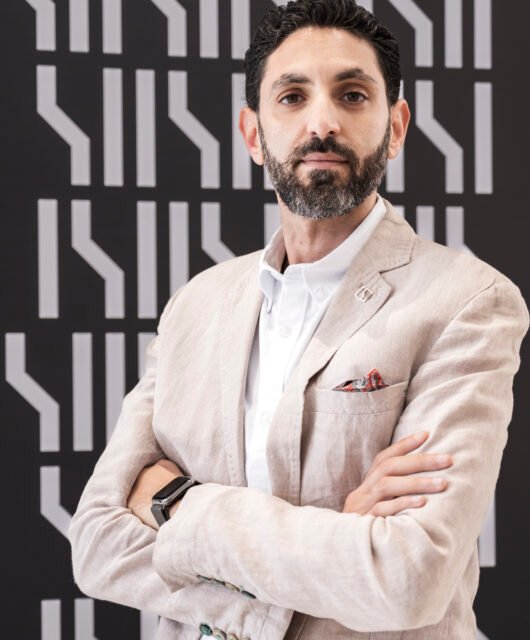
By: Rania Gueneid, Strategy Director, VORX MENA

Ramadan in Egypt isn’t just a season; it’s the cultural heartbeat of the year and the industry’s brightest spotlight. Media consumption spikes, emotions run high, budgets grow bigger, and suddenly every brand wants to be part of your iftar conversation. For thirty days, culture and commerce move in sync. Screens stay on longer. Expectations rise. And we become seasoned critics.
Ramadan turns everyone into a creative director. We don’t just watch the ads; we study them. We notice the casting. The soundtrack. The line that almost worked. We debate the storyline. We share the good ones. We roll our eyes at the predictable ones. And of course, we compare. Because Ramadan ads aren’t fighting to be seen. They’re fighting to be remembered.
And memory is selective.
We don’t remember the loudest ad. We remember the one that felt true. The one that reflected something we recognize. The one that belonged to the brand. Not just to the season.
That’s where the real challenge begins: Ramadan is a cultural moment. But cultural moments are not insights.
Insight is what makes an ad stick. Relevance is what makes it ownable.
Every year, we see variations of the same emotional formula; togetherness, generosity, nostalgia … and some humor. But here is a question often asked in campaign reviews: “If we remove the logo and replace it with another brand’s, would it still work?” If the answer is yes, then the idea belongs to Ramadan. Not to the brand.
Insight brings to the surface the tensions people feel more intensely during the month. Relevance ties that tension to what your brand uniquely offers. Without that connection, the idea may resonate. But it won’t belong.
The campaigns that win aren’t necessarily the biggest productions or the ones with the longest celebrity lists. They’re the most aligned. The ones that stay with us sit at a powerful intersection: the product’s real role, the consumer’s lived reality, and the cultural rhythm of the month.
Not just emotion. Alignment.
Relevance during Ramadan isn’t about saying something beautiful. It’s about saying something only your brand can say. The strongest campaigns understand how routines shift, how behaviors change, what tensions surface. They understand the pre-maghrib rush. The late-night scrolling. The spike in family gatherings. The financial stretch. The quiet spiritual moments. They don’t decorate their message with Ramadan. They embed their storytelling in the product’s genuine place within those moments. That’s where real insight lives: at the intersection of product truth and human truth, amplified by culture.
Campaigns don’t just air. They are dissected in real time. On social media, ads are reviewed, memed, ranked, and debated within hours. A weak insight doesn’t quietly fade; it gets exposed. Viewers question casting choices. They analyze scripts. They compare narratives across categories. The month has become a live creative audit. Because in a month where every brand shows up, volume is easy. Ownership is rare. And when ownership is fragile, brands often reach for the fastest amplifier available. This is where celebrity either elevates the work… or exposes its weakness.
Celebrity is not a strategy. It’s an amplifier.
When a celebrity’s persona reinforces the insight, the story feels earned. Their presence adds credibility. But when they’re cast purely for attention, playing roles detached from who they are, audiences sense it instantly. Ramadan viewers are generous with emotion, but unforgiving with inauthenticity.
We don’t mind seeing celebrities. We mind when they feel rented instead of relevant.
There’s also a longer-term question that often gets overlooked in the Ramadan rush: what happens after the crescent moon disappears? Does the campaign strengthen distinctive brand assets? Does it reinforce positioning? Does it build memory structures that last beyond the season? Or does it dissolve with the decorations? The strongest Ramadan campaigns don’t feel seasonal in strategy, but only in context. Strip away the lanterns and the soundtrack, and the core idea still belongs to the brand. It still reflects its role in people’s lives.
That’s when Ramadan stops being a performance and becomes a multiplier. Because ultimately, Ramadan is a stress test. It magnifies everything. Strong strategies become iconic. Weak ones become louder. The brands we remember aren’t the ones who spoke the loudest. They’re the ones who had something truly their own to say.