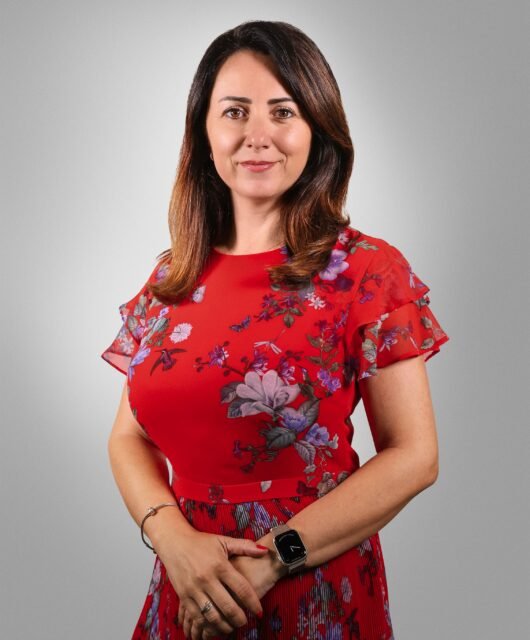
Signals For 2026: Exits MENA’s Ahella El Saban
By: Ahella El Saban: Cofounder and Executive Vice Chairman, Exits MENA

From AI Hype to AI Power: What 2025 Really Taught Us — and Why 2026 Will Redefine Winners in MENA
If you were paying attention in 2025, you probably noticed something shift quietly:
AI stopped being impressive—and became expected.
Across the MENA region, generative AI moved from experimentation to execution almost seamlessly. Marketing teams automated content at scale. Creative studios embedded AI into design and production workflows—startups launched with AI baked in by default, riding an unprecedented wave of momentum and investment. Enterprises moved past pilots into real deployment. For the first time, AI wasn’t a future promise—it was an operational reality.
But here’s what 2025 really taught us: access to AI does not create advantage.
As generative tools became widely available, markets filled with fast, efficient, and increasingly indistinguishable output. Creativity accelerated, but differentiation weakened. The fundamental shift of 2025 wasn’t technological—it was strategic. AI revealed itself as an amplifier, not a substitute. Without clarity of brand, human judgment, and cultural context, AI doesn’t elevate ideas. It scales noise.
In MENA, especially, this became impossible to ignore. The organisations that pulled ahead were not those stacking tools, but those using AI with intent—rooted in local consumer behaviour, Arabic language nuance, and a clear link between creativity, performance, and business outcomes. AI worked best when it augmented human intelligence rather than attempted to replace it.
This sets the stage for what 2026 will bring—and the shift will unfold on two levels at once.
On the surface, AI will move closer to the creative core. AI-generated content and experiences will become mainstream for consumers—personalised, interactive, and endlessly generative. We will see the rise of AI-native media formats and applications that blend creation, utility, and entertainment, competing directly with traditional media and even social platforms for attention. Marketing will evolve from static campaigns into adaptive systems, where content and experiences respond in real time to context, behaviour, and audience signals.
But beneath that visible creative transformation, a quieter shift will matter far more.
In 2026, AI will increasingly disappear into infrastructure. The real competitive advantage will no longer belong to those who generate content the fastest, but to those who embed AI across their entire operating model—marketing, media, customer experience, personalisation, analytics, and decision-making.
In MENA specifically, this shift will be driven by three forces.
First, localisation at scale. As Arabic-first and dialect-aware models mature, enterprises will prioritise AI systems trained on regional data, cultural nuance, and consumer realities—capabilities that global, off-the-shelf tools cannot fully replicate.
Second, performance pressure. The post-hype phase demands measurable ROI. Marketing and creative output will be judged not by volume, but by impact. AI investments will be tied directly to conversion, retention, media efficiency, and speed-to-market.
Third, startup and investor maturity. The most investable AI startups will not be horizontal platforms chasing attention, but vertical, enterprise-ready solutions solving real problems across marketing, fintech, retail, media, and government. Execution—not experimentation—will win capital.
The uncomfortable truth is this:
In 2026, AI will stop being a differentiator. Strategy will be.
Those who treat AI as a shortcut will be left with impressive output and declining relevance. Those who design AI as a foundational layer—aligned with human creativity and business reality—will define the next era of growth in the region.
Because in the end, creativity without structure is noise—and infrastructure without imagination is empty.