Egypt’s ChatGPT Advertisers: The First Movers
Six brands across five categories went live within days of the channel opening. After one month, their main finding is about creative, not media: when the ad follows the answer, it has to close rather than land.
When OpenAI opened ChatGPT Ads to advertisers across the Middle East and North Africa on 31 August, nobody in Egypt had a playbook, a benchmark or a case study. Within days, six brands had moved anyway: Lipton, Zanussi, L’Oréal Paris, Banque Misr, Grova Developments and Madinet Masr.
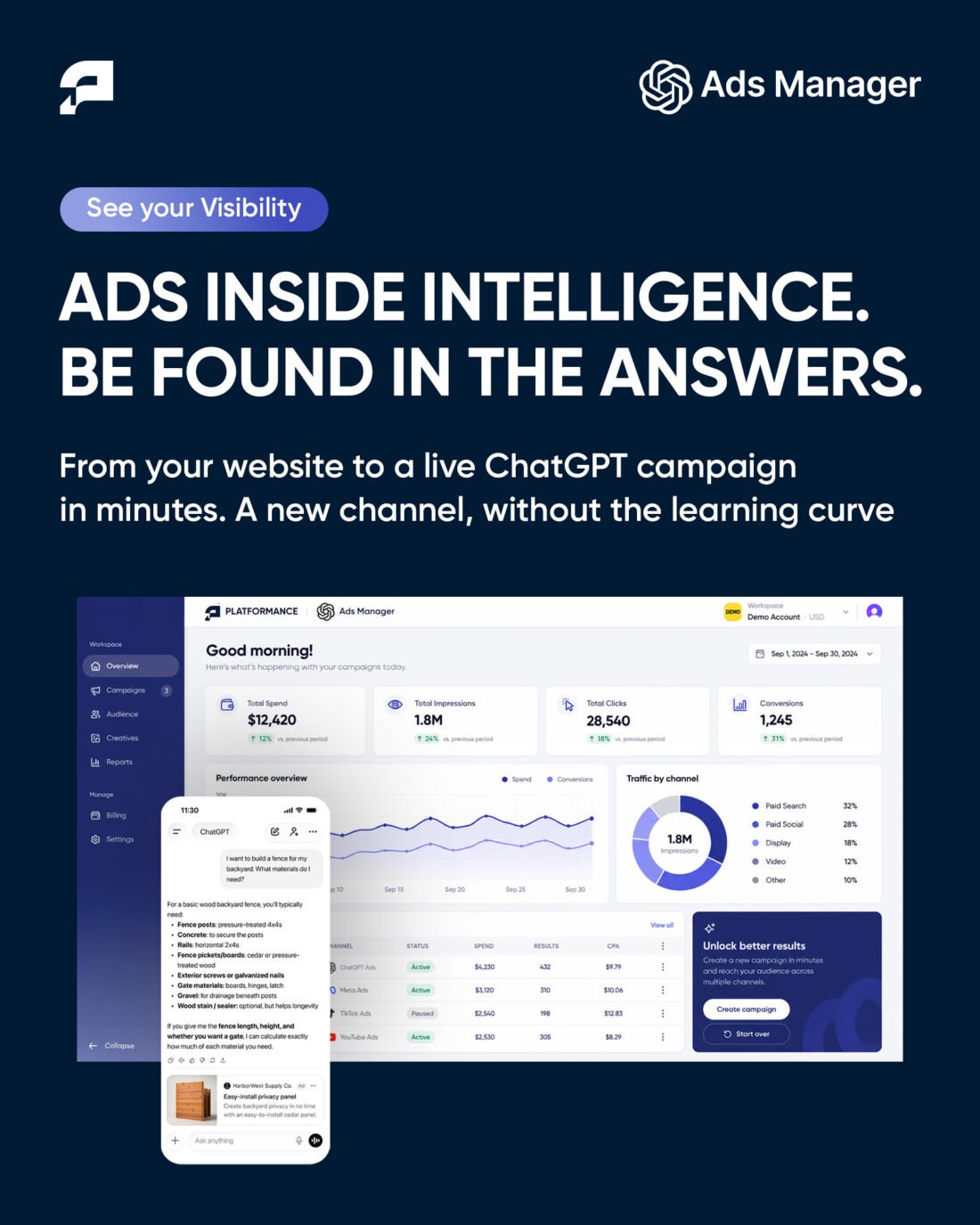
They span FMCG, home appliances, beauty, banking and real estate. The brands were onboarded by Camel Ads, and the campaigns are run by Platformance through its ChatGPT Ads product, Ads Inside Intelligence. A month in, they are the only Egyptian advertisers with live experience of the channel.
The sequence has flipped
In search, the ad arrives before the answer, so the page it leads to has to supply the answer. In ChatGPT, the person asks a question, reads the answer, and only then sees the ad. The creative has to build on what the user has just read, and the page behind it has to confirm that answer rather than reopen the argument.
Platformance calls that destination a Closing Page: a closer rather than a lander. For marketers, this is the practical lesson. Creative briefs and landing page templates built for search or social assume an audience that has not yet been informed. In ChatGPT, the audience already has been.
What the early data shows, and what it does not
Click through rates across the six campaigns are running ahead of what these brands see from comparable digital channels. The platform’s reporting is limited for now, covering delivery and engagement, while conversion measurement is still maturing. No figures have been published, so readers should treat the engagement signal as directional.
Hamza Madi, General Manager, Emerging Markets at Platformance, was candid about it: “The engagement is stronger than comparable channels and the data is thinner than any of us would like, which is where every channel starts.” Search and social began the same way, with simple buying tools and thin data that improved as more advertisers and campaigns went in.
Why these brands moved early
Ahmed Madkour, co founder of Camel Ads, said the agency was upfront with clients. “We had no benchmarks and no case studies to show these brands, because none existed yet,” he said. “Egyptian advertisers are usually asked to wait until a channel has been proven somewhere else. This group decided a month of their own learning was worth more than a year of reading about someone else’s.”
His co founder, Mahmoud Gamal, framed it as a pattern. “Search, social, programmatic, all of them were cheapest to learn in the first year and most expensive to catch up on later,” he said. Camel Ads is now onboarding the next group of advertisers.
What to watch
Platformance and Camel Ads say they will report fuller results as measurement matures. The questions worth tracking are whether conversion data arrives, whether Closing Pages measurably outperform standard landing pages, and how quickly category competitors follow. For now, the six advertisers hold the only live learning in the market.