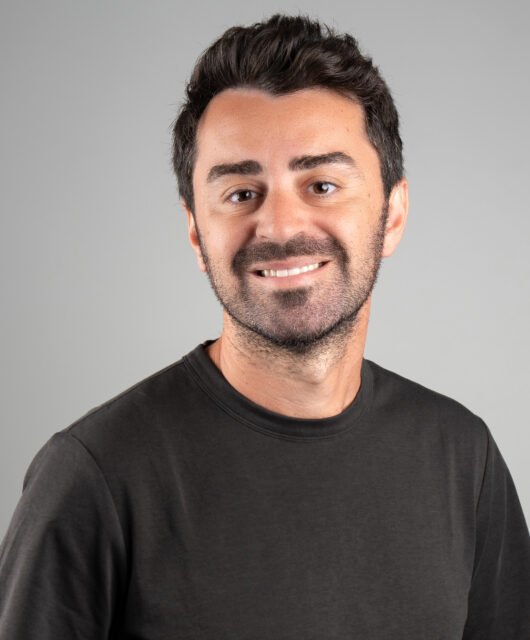
Beyond the Cancellation Count, By Northbourne Advisory’s Justin Kerr-Stevens
The Gulf’s events economy proved more resilient than the headlines suggested. Northbourne’s “Mapping Disruption” research finds a market that postponed rather than retreated, held back less by the conflict itself than by its failure to give a clear account of itself.

Let’s start with the small, slightly odd things. For over a hundred days (and counting) my team and I at Northbourne have been tracking how the Gulf’s events sector held up during the conflict between Iran, Israel and the United States. Disruption we’d expected. What struck us from the outset was the mess. The same event would be listed as going ahead on one site and quietly called off on another. Social media would say something entirely different.
Reddit sub-posts would give you another branch of speculation alongside some exceptionally entertaining conspiracy theories. Recurring shows were rebuilt from scratch every year, each new site seemingly celebrating an event like it was the first time it had happened. In one instance, we found a countdown clock for an event that had happened three years ago. None of it was sinister. All of it pointed the same way. This was the kind of everyday muddle the industry had tacitly relied on never being tested, until it was.
For more than three months, an enormous amount of commercial planning across the UAE, Saudi Arabia, Qatar and Bahrain turned on one question: “is it still happening?” The hard part was that our region so often couldn’t answer that question about itself.
As is almost always the case, in a complex information environment, it’s the easy story that most of the outside coverage told: the conflict scared everyone off and the Gulf dream, alongside its event calendar, was emptying. It’s not an absurd story. Airspace did close, insurers did pull cover (and in some cases still haven’t restored it and a handful of events simply could not run. But it was not the story our data tells.
Our Mapping Disruption research has now tracked 285 events across four markets and over 100 days. We found that postponements beat cancellations by almost two to one, 97 against 50, and more than thirty of the postponed events already have new dates this year. That difference is everything. A cancellation takes activity out of the market for good; a postponement just moves it, with the sponsors, the budgets, the wider economic spend, and the reason for holding it still attached. Sectors in retreat don’t behave like that. They stop. These events waited rather than folding, and in most cases are still going ahead.
So, the thing that broke was not really the events, it was the information about them. Picture an organiser weighing whether to commit, or a corporate board signing off travel for forty staff. The obstacle was almost never that the answer looked dangerous. It was that there was no single answer anywhere to be found. The Gulf’s account of its own calendar sat scattered across dozens of owned channels that flatly disagreed, and nobody took on the job of making them line up.
And this is the part outsiders tend to miss. Part of our decision to commit resources to Mapping Disruption was that we saw it as a proxy for business and economic confidence. A venue can be open, the airport working, the city perfectly calm, and the ‘thing’ still stalls, because the people who have to say yes cannot agree on what the risk actually is. When the information points three ways at once, caution wins without anyone deciding it should.
That, more than any missile, is what slowed the Gulf down.
Meanwhile the outside world was busy making things worse. Just as the region struggled to describe itself clearly, the insurance market repriced the whole of it in a single stroke. In early March, Lloyd’s Joint War Committee added the waters around Bahrain, Kuwait, Oman and Qatar to its high-risk list, treating the Gulf as one conflict zone rather than weighing each market on its own facts. The premiums moved fast. Cover for a tanker through the Strait of Hormuz jumped to between 3 and 5 per cent of the vessel’s value, up from something nearer 0.2 to 0.5 per cent before the strikes, according to the broker Lockton. Aviation war-risk rose by anywhere from 50 to 500 per cent as airspace shut across the UAE, Qatar, Bahrain and Kuwait.
The same flattening the insurers applied to the Gulf, everyone else applied to its events.
Four very different markets were read as one risk. The UAE, which absorbed the most disruption, also carried the largest pile of deferred activity, 143 events tracked and 67 postponed, and looks less like a casualty now than a waiting room, full of events booked in for later. Bahrain, more exposed to flight disruption, has had a rougher time. Saudi Arabia landed in between. And the events that bled most were the ones leaning on international crowds, because those calls were made thousands of miles away by people reading the headlines rather than the runway. The events built on regional audiences, run by people who actually know what operating here involves, barely flinched. The bill for all that caution is about to land and most of the postponed activity is now aimed at the last quarter of the year.
That repricing reached events more directly than you might think, and by more than one road. Shipping does not only move oil. Along with air freight, it is the unglamorous backbone of the events business, the thing that gets the stands, the rigging and the exhibits themselves into the hall. Slow the Gulf’s shipping lanes and load them with war-risk premium, and the cost and certainty of physically building an event move too. Insurance is the other road. Event-cancellation policies exclude war and terrorism as standard, so organisers bolt the cover on separately, and it is written in the same London market, off the same Joint War Committee lists, that prices the ships and the planes. Reclassify the region and you reclassify their cover with it. The airspace closures finished the job. An exhibition does not need an unsafe venue to be in trouble. It needs its freight stuck at the port, or too many of its people unable to fly, or simply unable to get the insurance cover to be able to.
The impact of insurance isn’t speculation and we’re now seeing some Gulf States move to support confidence in the market where Western insurers have not. This month we have seen Etihad and Abu Dhabi’s Department of Culture and Tourism supporting international visitors with free medical cover the moment they fly in: automatic, no forms, valid from July to December. The official line is tourism. The real message is harder-edged. If the market will not supply confidence, a carrier and a government will, over exactly the months the postponed events are now piling into.
Recovery, when it came, has been lopsided in a way worth noticing. By early June the Gulf carriers had rebuilt most of their networks. Emirates claims close to 90 per cent of its pre-conflict schedule, and Etihad, Qatar Airways, flydubai and Gulf Air are all substantially back in the air. The foreign carriers have been slower, still holding their Gulf routes thin into the summer. Aircraft, it turns out, return faster than confidence does. You can put a plane back on a schedule in an afternoon. Rebuilding the belief that fills its seats takes a good deal longer.
LEAP, GISEC, SEA Expo, F1, MotoGP and a long tail of cultural and business events have crowded into the same handful of months, where they will fight over the same sponsors, the same venues and as always, the same attention. The first half of the year was defined by uncertainty. The second may be defined by a traffic jam. So, the question remains: how can we fix something that is largely of our own making, and hasn’t mattered so much before?
Recurring events need one permanent, authoritative home online instead of a throwaway rebuild every year. Organisers and venues need to say the same thing as one another, and to scrub from every corner of the internet whatever is no longer true. And the argument the Gulf has to win with underwriters and with jittery boards, that it is four distinct markets and not one undifferentiated hazard, gets a great deal easier to make when its own information stops contradicting itself. The events themselves were rarely the real problem. Demand held. Suppliers stayed put. Most of what moved was delayed, not lost. What wobbled was the region’s ability to say so plainly, at the one moment saying so plainly counted.
The Gulf has come through this in far better shape than almost anyone expected it to. Whether that ever shows up in how the place is seen will come down to something much duller than security, and much more fixable: how it keeps its own story straight.
Justin Kerr Stevens is CEO of Qatar-based start-up strategic communications firm Northbourne Advisory and Chair of the Middle East Public Relations Association. A senior advisor with nearly 30 years of experience at the intersection of culture, public life and policy, he has worked with governments, global companies and cultural institutions across the Middle East, Europe, Central Asia and Australia, and previously served in government with the Australian Government and the UK Cabinet Office.