
Fragile Consumer Sentiment Drives Spending Towards Small Comforts Amid Financial And Geopolitical Strains
| The WARC 2026 Consumer Trends report explores key issues influencing consumer purchase decisions across brands and categories |
| 23 April 2026 – WARC has today released its 2026 Global Consumer Trends report exploring the key issues that will influence consumer purchase decisions across brands and categories over the next year. |
Based on a comprehensive set of GWI surveys combined with WARC’s own research, case studies and analysis, the report focuses on five trends influencing brand selection, each examined through the lens of WARC’s proprietary GEISTE framework: consumers’ pivot to comfort consumption amid prolonged uncertainty, the rise of AI companionship, escalating restrictions to youth social media access, a reassessment of ‘Made in China’ brands, and the growing demand for authenticity and transparency in AI generated content.
Stephanie Siew, Senior Research Executive, WARC, says: “Consumer sentiment in 2026 remains fragile, shaped by financial pressures, geopolitical turbulence, and a growing need for escape, with spend shifting to small comforts that bring joy. Brands that forge emotional connections will thrive, but must navigate rising scrutiny on technology, authenticity, and trust to make a meaningful impact.”
“Our annual Consumer Trends report provides a broader view of the major issues confronting our industry from the perspective of consumers, with suggestions to help businesses create the most impact in the year ahead.”
The consumer trends that will shape spending decisions in the year ahead, identified by WARC are:
- Uncertainty fuels comfort consumption: Nearly half (45%) of employed consumers are concerned about their job security. One third (33%) are either saving more or cutting back on expenses due to job market conditions
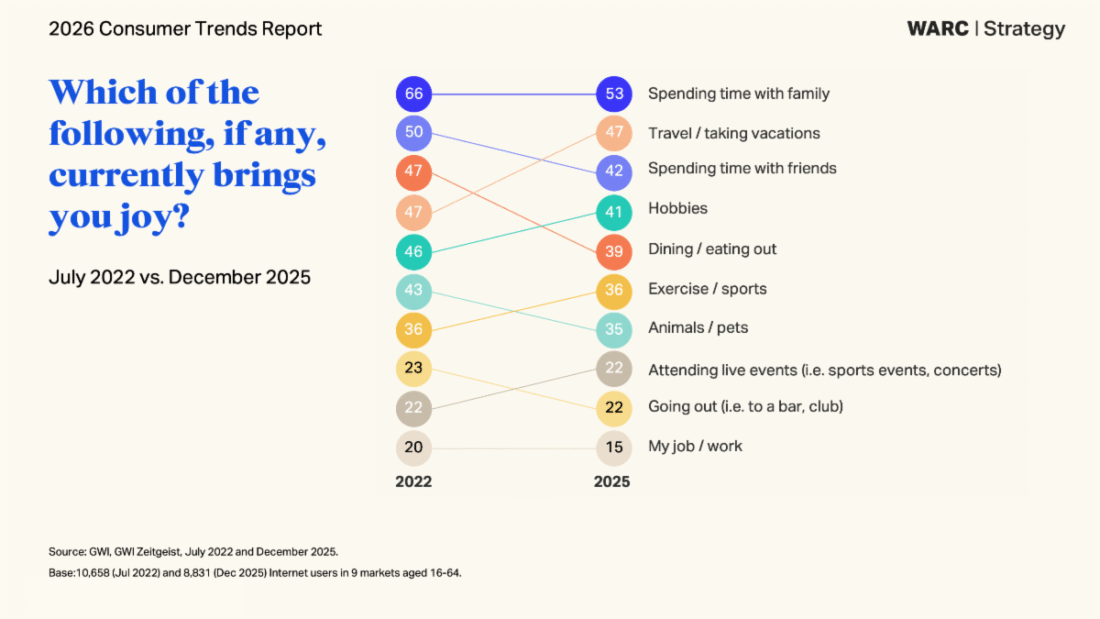
Ongoing macroeconomic turbulence, geopolitical conflict, and employment anxiety have created a sense of emotional and financial fatigue among consumers. Half (50%) of consumers view financial stress as the biggest contributor to their unhappiness.
Consumers are reacting to uncertainty by being more intentional with their money, channelling spending toward purchases that bring them joy at minimal cost, such as wellness and hobbies. While there is also a desire for travel, ongoing geopolitical conflict threatens to dampen this demand as safety concerns and potential fuel price increases impact affordability and destination choices.
To tap into consumers’ desire for accessible joy, marketers are recommended to explore ways to align brand offerings with these smaller comforts that consumers are prioritising.
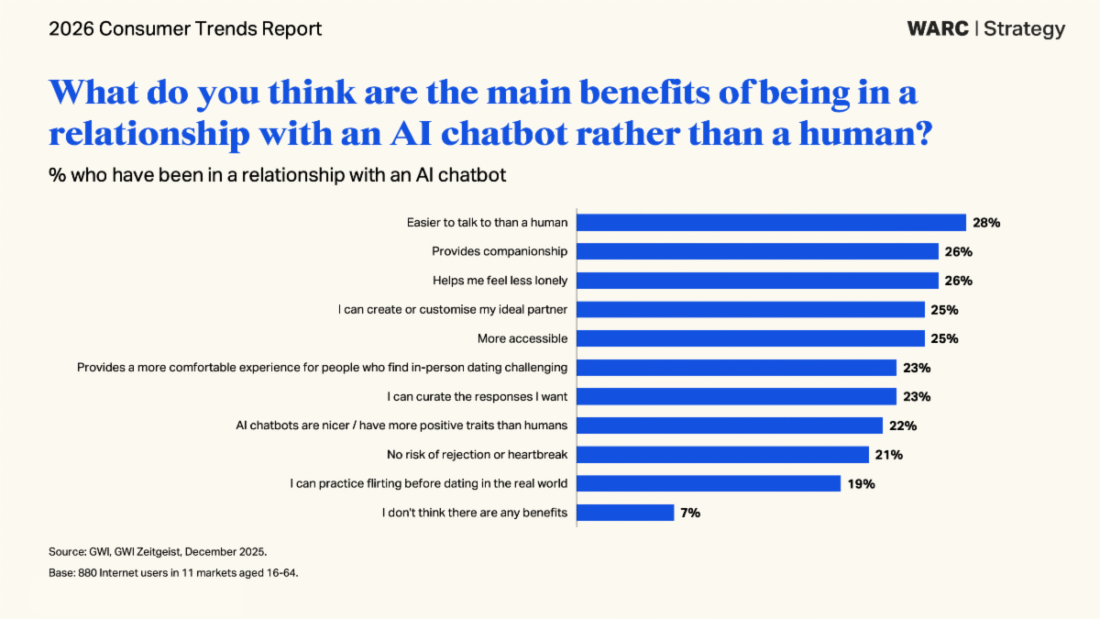
- AI redefines companionship: 1 in 10 consumers globally report having been in a relationship with an AI chatbot. 62% of users in these relationships say they are likely to turn to an AI chatbot rather than a human friend for personal advice
Consumers are increasingly using AI tools for social fulfilment including companionship and emotional support, which is redefining interpersonal relationships: 1 in 10 consumers globally report having been in a relationship with an AI chatbot. AI companions appeal to users by reducing loneliness and removing the complexities of human interaction.
This demand for frictionless connection is driving innovation across categories, such as AI-powered toys and companion devices designed to meet the emotional and safety needs of the elderly. Consumers are also becoming more trusting of AI as their relationships deepen.
Marketers must tread carefully when leveraging AI to engage with vulnerable populations – particularly younger demographics – and address potential safety and mental health risks.
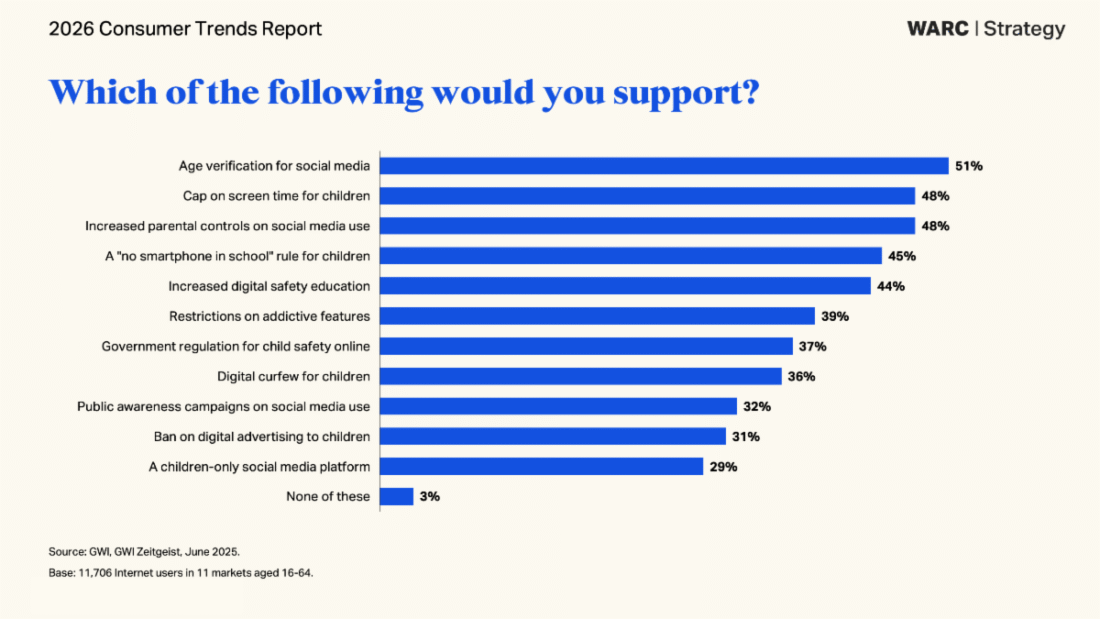
- Challenges to youth social media access: 64% of consumers believe social media is harmful to children. Half (51%) would support age verification for social media
Concerns around the potential harms of social media for teens and children, such as cyber bullying and exposure to harmful content, have escalated, triggering a wave of legislation and debate around social media bans for minors.
Restrictions on younger audiences pose challenges for marketers, as platforms play a growing role in Gen Alpha’s purchasing journey, from product discovery to reviews and style inspiration. Social media restrictions may redirect media investments toward alternative channels such as private messaging apps and family-friendly streaming services.
Brands should consider creating their own channels and community spaces to enhance content control and customer relationships. With tighter restrictions on reaching younger audiences, targeting parents as key decision-makers and prioritising child safety and transparency can build trust and offer a competitive edge. Influencer marketing must adapt with robust safety measures, regulatory compliance, and audience verification to ensure responsible engagement.
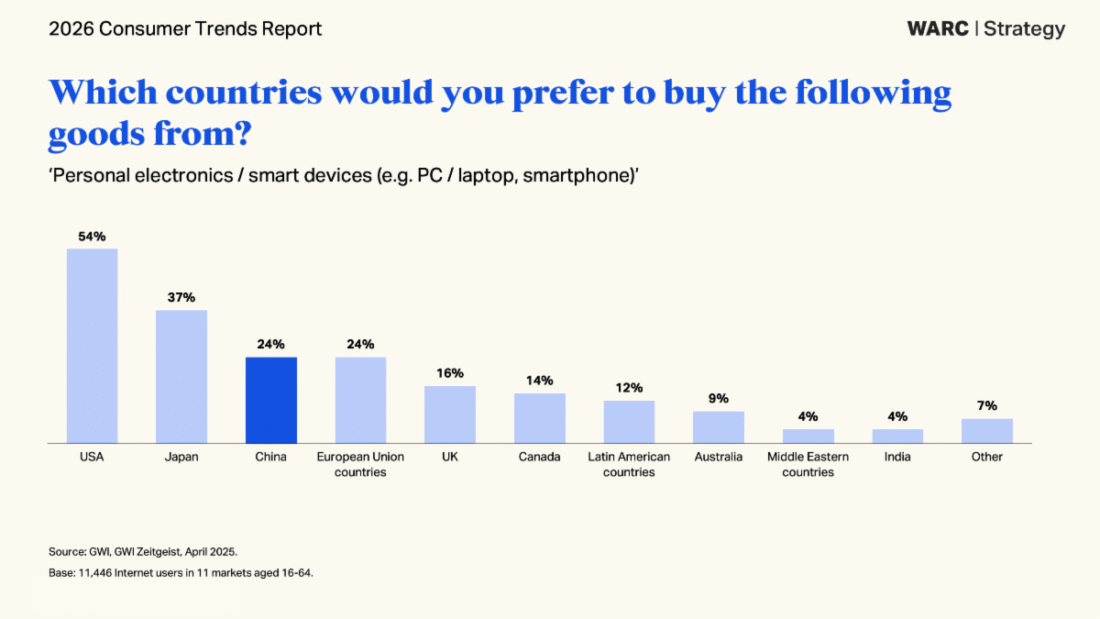
- Reassessment of ‘Made in China’: 36% of consumers now recognise Chinese apps and tech products as “innovative”. 1 in 4 people globally now prefer to buy their personal electronics and smart devices from China, ranking it behind only the US and Japan
Chinese companies are moving beyond traditional manufacturing roles, establishing themselves as influential global players and focusing on building highly valued, emotionally resonant brands. Consequently, the “Made in China” low price perception is changing, particularly in the tech, automotive and personal lifestyle categories, although affordability remains a key association with Chinese-made products.
Marketers should focus on building trust through quality, technological innovation, and emotional connections to drive sustainable premium pricing, and should consider investing in deep local market insights, cultural nuances, regulatory frameworks and consumer behaviour to build authentic connections.
Legacy global brands can leverage established distribution channels, which present immediate barriers to entry for emerging competitors, and may be better positioned to cope with energy shortages compared to some Asian economies.
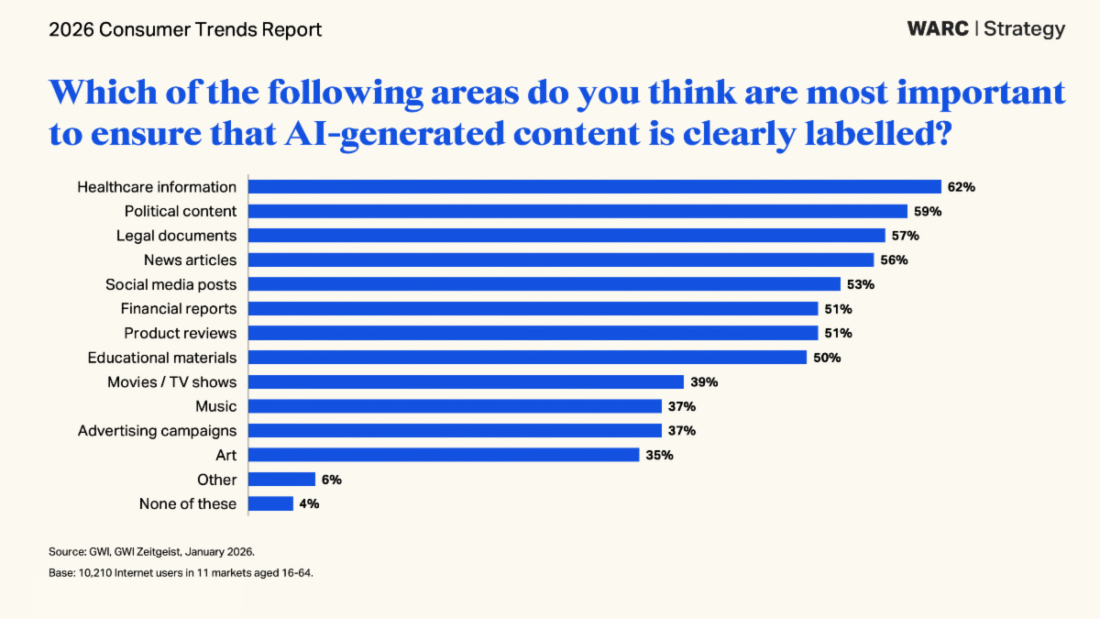
- The promise and threat of AI in content: 85% of people say knowing an artwork is made by a human makes it more meaningful. 78% of consumers believe it is very or extremely important for AI-generated content to be clearly labelled
The flood of AI-generated content in digital spaces has sparked pushback from consumers over quality and ethical concerns. In entertainment sectors such as gaming, some fans are actively opposing the use of AI, forcing several developers to rethink their releases.
At the same time, a portion of consumers see potential for AI to improve creative quality. According to Billion Dollar Boy, around four in ten consumers believe AI has improved both the quality and diversity of creator content.
Authenticity and transparency remain top priorities for consumers as many already struggle to differentiate AI-generated from human-made content. Eight in ten (78%) demand clear labelling and disclosures when AI has been used, especially in high stakes contexts such as healthcare, politics, or law. They hold similar disclosure expectations for social media.
| Part of WARC’s Evolution of Marketing programme, WARC subscribers can read the 2026 Consumer Trends report in full here. |